Showing 1826–1850 of 2362 resultsSorted by latest
-
$4.99 – $5.99Price range: $4.99 through $5.99
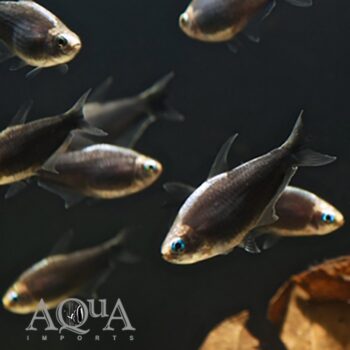
The Black Emperor Tetra is a line bred color variant of the popular Emperor Tetra selected over generations for its unique, deep blue-black body coloration and striking blue eyes. In the aquarium, they are hardy and adaptable, perfect for most medium community aquariums or planted/aquascaped tanks. Like most tetras they should be kept in groups of at least 5.
-
$89.99 – $219.99Price range: $89.99 through $219.99
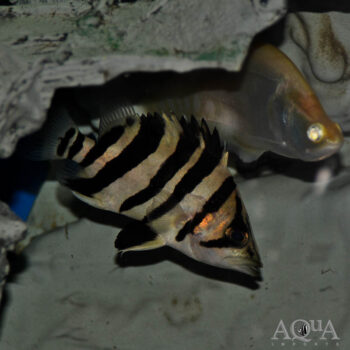
The Indo Datnoid or Indo Tigerfish (IT) is found throughout Peninsular Malaysia and the Indonesian islands of Sumatra, Borneo, and likely parts of East Java as well. In the wild, they inhabit a variety of habitat types but are typically found in warm, slow moving stretches of rivers or lakes in areas close to overhanging vegetation. An ambush predator, they tend to hang motionless in the water awaiting smaller fish or invertebrates to swim by, using quick reflexes and a huge protrusible jaw to literally inhale prey items. Specimens from Sumatra are especially colorful and well-marked, with the 4 bar variant found in the region among the more sought after varieties of Indo Datnoid in the trade. In the aquarium, they require well-oxygenated water and are sensitive to water quality, so regular water changes are important to keep them thriving. Tankmates should be chosen carefully as they can eat surprisingly large fish and other more aggressive or very active fish will likely stress them out and potentially cause their distinct pattern of bars to fade.
-
$24.99
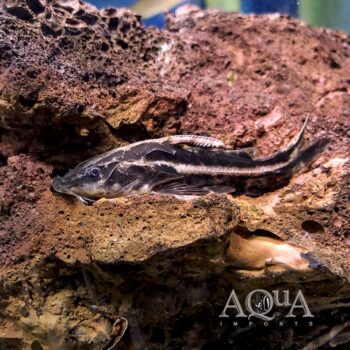
The Orinoco Talking Catfish is a medium sized Doradid Cat found throughout the Orinoco drainage in Colombia and Venezuela, where it inhabits a variety of shallow water habitat. Named for its ability to make a croaking or squeaking sound by rapidly moving their pectoral fins. This species looks very similar to the well-known Striped Raphael Catfish (P. armatulus) and is sometimes misidentified in the trade but can be distinguished by its longer snout, more slender body shape, and distinctive tail pattern. In the wild, they are a cryptic species which tends to inhabit leaf litter and driftwood piles in warm, acidic water. A hardy, adaptable and uncommon catfish, they make an excellent addition to most medium or large community aquariums and are peaceful towards all tankmates.
-
$99.99 – $134.99Price range: $99.99 through $134.99
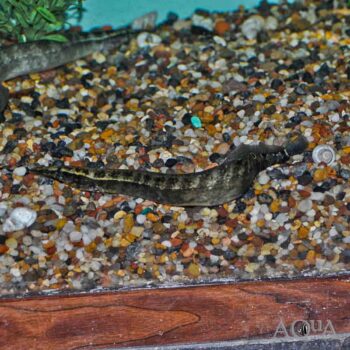
An uncommon and intricately patterned freshwater eel from the acidic peat swamps of Borneo, the Tapir Spiny Eel is a well-camouflaged ambush predator in its natural habitat. In the aquarium, they are hardy but can be shy at first – be sure to provide plenty of cover. Although recently imported fish can be finicky eaters, they will usually learn to accept a variety of frozen foods over time. Like most freshwater eels, these fish should be kept in tightly covered aquariums as they will utilize even small openings to escape.
-
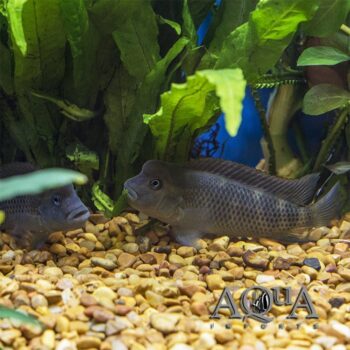
$14.99
A medium-sized, stream dwelling cichlid originating in the Congo River basin in Central Africa, the Buffalo Head, Lionhead, or Blockhead Cichlid has been popular in the aquarium hobby for many years and is now commercially bred for the trade. In the wild, these fish are adapted for life in fast-flowing waters, and are powerful swimmers with reduced swim bladders which spend most of their time on the bottom of the aquarium. An active and interesting aquarium resident, they prefer fine substrate and plenty of structure in the form of rocks or driftwood. Males will pick out and actively defend a territory from rivals but are generally peaceful towards other tankmates. Although hardy and adaptable, they will do best in conditions similar to their wild habitat, especially well-oxygenated water with moderate to strong current.
-
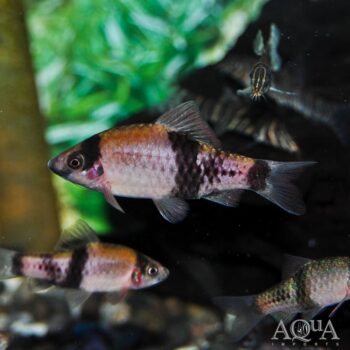
$7.49 – $11.99Price range: $7.49 through $11.99
A vibrantly colored, medium-sized barb found throughout India’s Western Ghats range, the Red Melon or Red Panda Barb is a robust and colorful schooling fish ideal for the medium to large community aquarium. In the wild, it inhabits a wide range of habitat types but most typically can be found in more slow moving waters near aquatic plants or overhanging vegetation. A peaceful species, they are best kept in groups of at least 5-10 and require plenty of swimming space. Although they rarely bother tankmates, they are fast-moving and aggressive eaters so should be kept with similarly sized (or larger) fish.
-
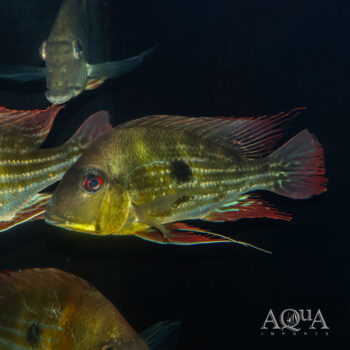
$24.99 – $159.99Price range: $24.99 through $159.99
One of several similar looking species from the ‘surinamensis’ group of the genus Geophagus found in the acidic, soft waters of the Orinoco Basin in Colombia and Venezuela, the Winemilleri Eartheater can be distinguished by its lack of black bars on each cheek and their distinctive bar pattern. A peaceful cichlid, they generally do well in a community cichlid aquarium with sandy substrate and lots of open swimming space. Like all eartheaters, they are highly specialized bottom feeders, using their downward facing mouths to inhale mouthfuls of fine substrate and then sifting it through their gills in order to pick out small invertebrates or other tiny prey. In the aquarium, they will accept a variety of sinking foods but will do best when offered a combination of small sinking granules and frozen foods like bloodworms, mysis shrimp, or spirulina enriched brine.
-
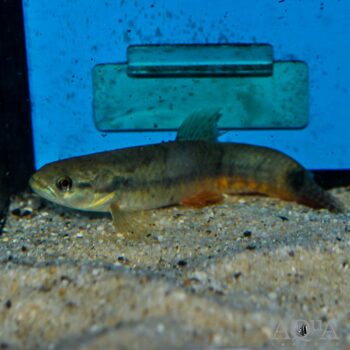
$69.99 – $79.99Price range: $69.99 through $79.99
Very similar to the Rainbow Wolf, found in the Amazon basin, the Orinoco Red Wolf is a smaller species of found in parts of the Orinoco River basin in Colombia and Venezeula. A fast moving and aggressive predatory fish, they are likely to attack even larger tankmates and are best kept alone or with large, fast moving fish or heavily armored catfish. Smaller specimens can be shy at first and appreciate plenty of cover, and be sure to keep their tanks tightly covered as they are prone to jump if spooked.
-
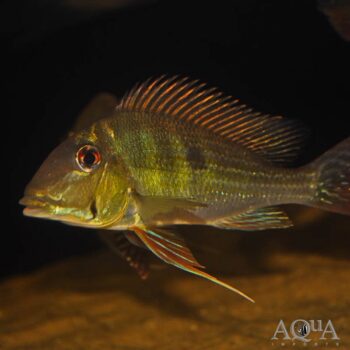
$49.99 – $119.99Price range: $49.99 through $119.99
One of several similar looking species from the ‘surinamensis’ group of the genus Geophagus found in the acidic, soft waters of the Orinoco Basin in Colombia and Venezuela, the Dicrozoster Eartheater can be distinguished by the prominent black bar on each cheek and their distinctive bar pattern. A peaceful cichlid, they generally do well in a community cichlid aquarium with sandy substrate and lots of open swimming space. Like all eartheaters, they are highly specialized bottom feeders, using their downward facing mouths to inhale mouthfuls of fine substrate and then sifting it through their gills in order to pick out small invertebrates or other tiny prey. In the aquarium, they will accept a variety of sinking foods but will do best when offered a combination of small sinking granules and frozen foods like bloodworms, mysis shrimp, or spirulina enriched brine.
-
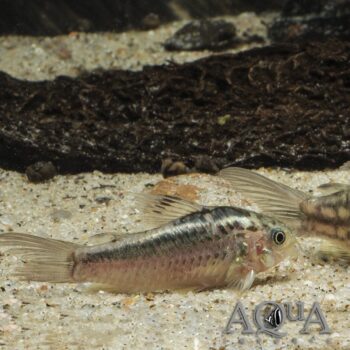
$4.99 – $5.99Price range: $4.99 through $5.99
The Elegant or Elegans Cory is an attractively marked medium-growing species widespread throughout the middle Amazon in Brazil, Peru, and Colombia where it is found in large shoals in a variety of shallow water habitats. This species is one of several very similar looking Corydoras often found in mixed schools in the wild, including the Napo Cory (G. napoensis), Nanus Cory (G. nanus) and the so-called CW044. Like most Corys, they are peaceful, hardy, and best kept in groups due to their schooling nature. This species is sexually dimorphic, with adult males having a tall dorsal fin and displaying a more reticulated pattern around the face. Like most Cory Cats, they will do well with nearly any non-aggressive tankmates.
-
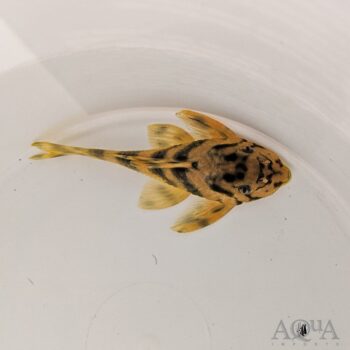
$34.99
A medium sized and attractively marked species of Peckoltia very similar in pattern to the sought after L134 Leopard Frog Pleco from Brazil, the L202 False Leopard Frog or Lineola Pleco is found in the Rio Ventuari and its tributaries in Venezuela. In the wild, they are found in warm, acidic, fast-moving waters and will do best in similar conditions in the aquarium. A hardy and easy to care for pleco, they will do well with most tankmates but should be given plenty of cover in the form of driftwood or caves so they can establish territories. False Leopard Frog Plecos will eat a variety of sinking, gel, and fresh foods in the aquarium, and should be offered a varied diet high in protein.
-
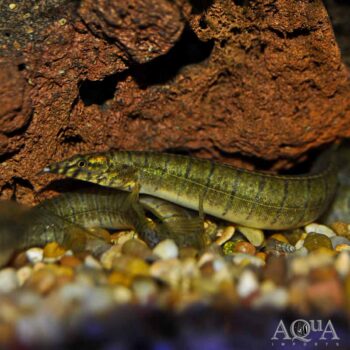
$19.99 – $34.99Price range: $19.99 through $34.99
A medium-growing and intricately patterned freshwater eel, the Zebra Spiny Eel is found in a variety of habitats throughout Myanmar, Thailand, and other parts of Southeast Asia. Hardy and more outgoing than many of their relatives, these fish make a unique addition to medium to large aquariums and will generally do well with any fish too large to become a meal. Like most spiny eels, they can be a bit slow to feed at first, so care should be taken to ensure they are getting enough food. Frozen bloodworms are usually accepted readily.
-
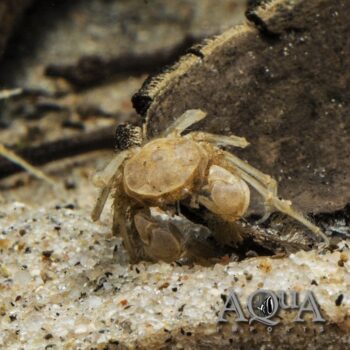
$5.99
The Thai Micro Spider Crab (Limnopilos naiyanetri) is a small and highly specialized freshwater crustacean found throughout shallow waters and partially flooded rice fields in Central and Eastern Thailand. In the wild, it tends to inhabit warm, slightly acidic, slow-moving (or still) water, usually in areas of dense vegetation. They are usually found in large groups clinging to floating plants, grasses, or root systems where they use their unique hair-covered claws to filter out tiny food particles from the water. In the aquarium, they make a fascinating addition to a nano invertebrate tank or with select (very small, peaceful) fish tankmates. They prefer heavily planted tanks with plenty of cover and structures, and will do best in slightly soft water. Although they will filter feed and graze on algae or biofilms to to some degree, they should be provided with very small sinking granules or flakes regularly.
-
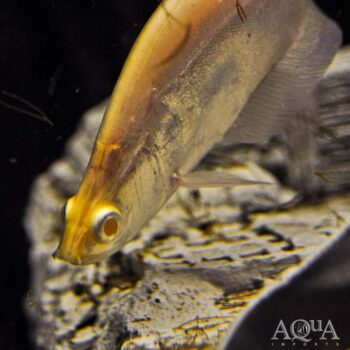
$39.99 – $169.99Price range: $39.99 through $169.99
One of the larger species of knifefish, the Clown Knife is found throughout much of Southeast Asia, where it is an important food fish. It is now extensively farm raised for food and for the aquarium trade. The Red Eye Albino color form is a rare line bred variety of the fish that exhibits true red eyes and a light pink body color. A predatory species with a surprisingly large mouth, Clown Knives can easily eat fish up to 1/3rd their size in many cases. Despite their predatory nature, they are peaceful towards nearly all tankmates too big to be eaten.
-
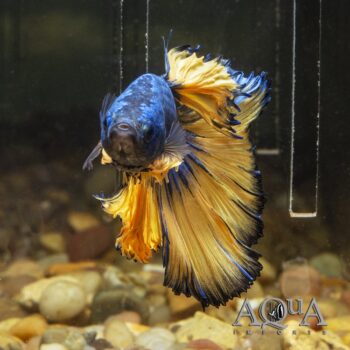
$20.99
Probably the single most popular fish kept around the world, the Betta or Siamese Fighting fish has been popular in its native Thailand for centuries, and has been bred into dozens of color forms and strains. The Mustard Gas color variant is a somewhat recent addition to the hobby, distinguished by its vivid iridescent blue or green body and yellow-orange fins. Incredibly hardy, and with the ability to breathe air from the surface, these fish are popular “bowl fish” but really will do best in a small aquarium with a heater and some form of filtration. As their name implies, males of this species will fight and must be kept singly but females can be kept in groups.
-
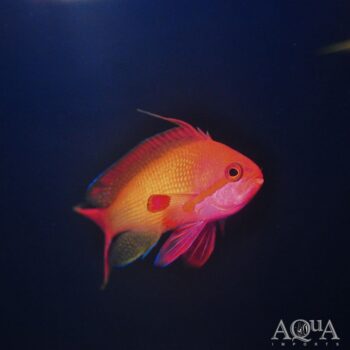
$39.99 – $49.99Price range: $39.99 through $49.99
Product description coming soon.
-
$119.99
Product description coming soon.
-
$299.99
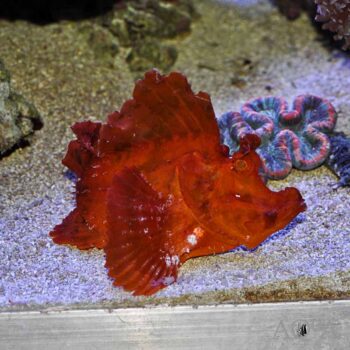
The Orange Eschmeyer’s Scorpionfish (Rhinopias eschmeyeri) is a rare fish in the aquarium hobby. This ambush predator, can be found in Southeast Asian waters and has evolved to resemble seaweed to hide from small prey which include fish and crustaceans. Due to their sedentary lifestyle, spacious accommodations are not as important as they would be for more active, open-water-swimming fish. It is possible to wean these fish onto frozen silversides. If you are considering adding this fish to your tank, it is important to keep in mind that this fish is venomous.
-
$9.99
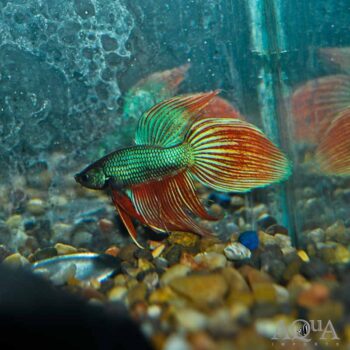
The gorgeous Dragonscale Betta (Betta splendens), with its distinctive scale pattern, is popular variant of the selectively bred Betta fish. These fish do well in an aquarium that is shaded, well-planted and has driftwood. Because of their lavish tails, they prefer slow-moving waters. These fish will happily consume any kind of frozen or prepared food. While keeping several bettas in the same tank is not advised, it is feasible to keep bettas with other fish in your tank, though compatibility is never guaranteed.
-
$59.99 – $129.99Price range: $59.99 through $129.99
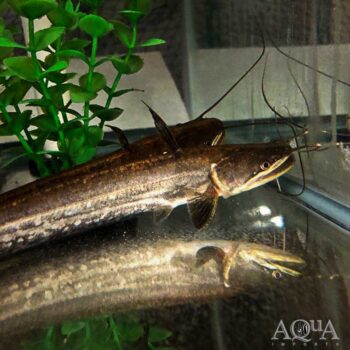
An enormous predatory catfish from the larger river systems of Thailand, Myanmar, and India, the Big Mouth Wallago Cat is a true monster fish and an important food fish species throughout its native habitat. Relatively hardy and undemanding, their main requirement in the aquarium is ample space for a fish that can grow to over 6 feet in size. Realistically only a heated pond or enormous custom aquarium can house this species for life. Although generally not aggressive with comparably-sized tankmates, they will attempt to swallow fish nearly their own size.
-
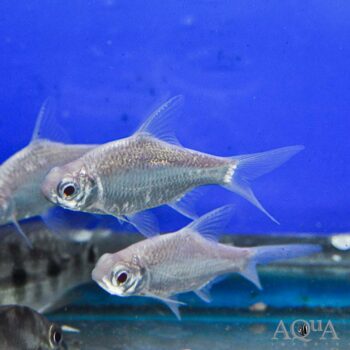
$39.99
A large growing but peaceful cyprinid found throughout much of Southeast Asia, the Tinfoil Barb has been a favorite in the aquarium hobby for years despite its very large adult size. A striking, active schooling fish which usually inhabits well-oxygenated waters with moderate to high flow, large specimens make for an impressive display in a sufficiently large aquarium. This species is a popular dither species with predatory fish keepers as they are big, hardy, and peaceful. The platinum variant is a rare line-bred color form sought after for their distinctive, uniform bright white coloration.
-
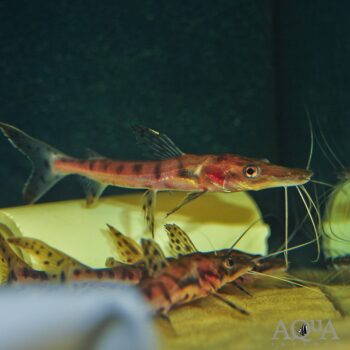
$34.99
A manmade hybrid of two of the largest growing catfish species of the Amazon Basin, the Redtail x Tiger Shovelnose is a somewhat recent addition to the aquarium hobby originally developed by breeders in Asia. Like both of their parent species, these fish will reach a truly massive size in a relatively short time. In the aquarium, they are fairly easy to care for but keep in mind they will attempt to eat anything they can fit in their surprisingly large mouths. Juvenile fish grow extremely quickly so to realistically keep these fish long term a massive aquarium or ideally an indoor pond is necessary.
-
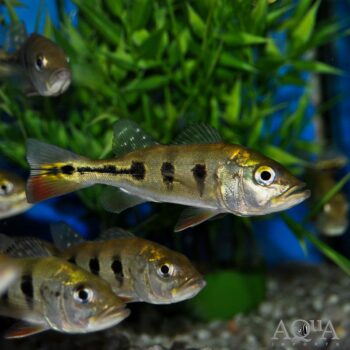
$19.99 – $149.99Price range: $19.99 through $149.99
The “original” Peacock Bass, Cichla ocellaris is found throughout much of the Amazon basin in Brazil, Guyana, and Peru, although wild specimens are rarely exported. Due to their popularity as a food and sport fish, they are farmed extensively throughout parts of South America and Asia and have been introduced intentionally or accidentally in many tropical and subtropical waters. Most of these aquacultured fish available in the hobby have been hybridized at some point in their lineage, typically between C. ocellaris and C. monoculus. Like all Cichla, they are large growing, powerful, predatory fish and should be kept by experienced aquarists with suitably large aquariums or ideally indoor ponds to house these fish as adults.
-
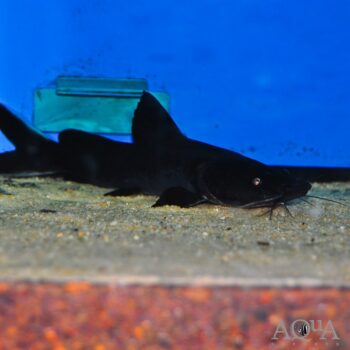
$249.99 – $299.99Price range: $249.99 through $299.99
A large and aggressive river-dwelling catfish found in parts of Thailand, Maylasia, and Indonesia the Crystal Eyed or Wyckii Catfish (Hemibagrus wyckii) is a powerful, aggressive species only suitable for very specialized hobbyists. In the wild, they are found in a wide variety of habitats but typically in areas of moderate to fast flow. In the aquarium, they are generally hardy but will do best with some current and plenty of oxygenation. With a maximum size of over 24″ in the wild, these fish require the largest of aquariums or indoor ponds as adults. They are also extremely aggressive towards nearly all other fish as well as with conspecifics, and rarely tolerate any tankmates for long. Their jet black body coloration paired with the striking white highlights on the tail and first dorsal fin ray make this an impressive show fish popular with monster fish keepers.
-
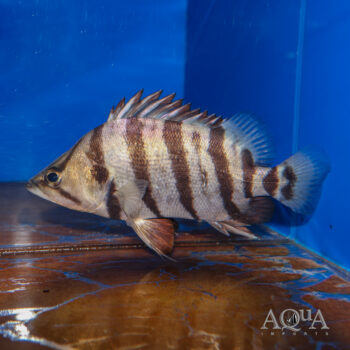
$39.99 – $69.99Price range: $39.99 through $69.99
The most widespread species in the genus Datnioides, the Silver Datnoid is found along the coastline of much of Southeast Asia and extending to the Eastern coast of India. It inhabits a wide variety of habitat including slightly brackish waters in some parts of its range. Like its relatives, it is a powerful predator adapted to feed almost entirely on smaller fish and invertebrates. The Silver Datnoid is the hardiest of the Datnoids in the aquarium and will typically thrive under a wide range of conditions. It is also slightly more aggressive than its relatives so choose tankmates with care.
End of content
End of content