Showing 1–25 of 64 resultsSorted by latest
-
$9.99
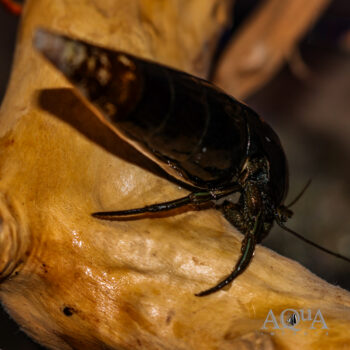
Brackish Hermit Crabs (Clibanarius cf. longitarsus), are found throughout the mudflats, mangrove and estuary systems of Indonesia. These crabs make great scavengers, algae eaters, and detritivores for brackish aquariums. We keep them at salinity of 5-10ppt using marine salt.
-
Sale!
$24.99 Original price was: $24.99.$14.99Current price is: $14.99.
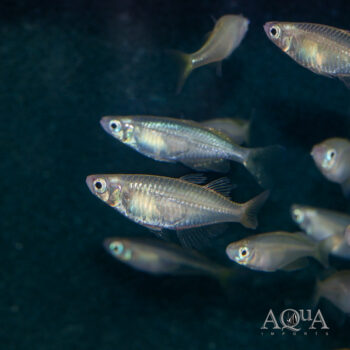
The Marine Sailfin Silverside (Kalyptatherina helodes) are the only member of the genus Kalyptatherina. These brackish fish can be found in mangrove swamps and the lakes and river systems of Sulawesi. They should be kept at pH range of 7.8-8.2 with a marine salt concentration of 10-15ppt.
-
$5.99 – $7.99Price range: $5.99 through $7.99
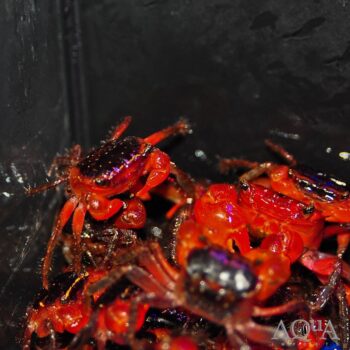
The Red Claw Crab (Perisesarma bidens) is a medium growing crab species requiring brackish water (10-15ppt) for long term success. These somewhat terrestrial crustaceans will appreciate lots of cover in the form of branches, rocks, and caves. The can be kept in groups, but males can be territorial with each other.
-
$89.99 – $109.99Price range: $89.99 through $109.99
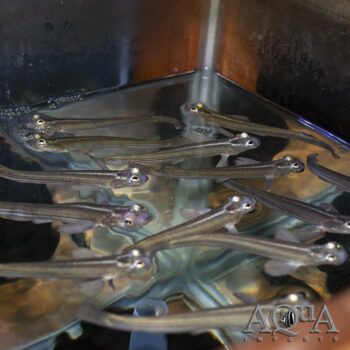
The Four Eyed Fish or Anableps is an extremely unusual brackish water fish found along the coastline of Northeastern South America. Their name comes from the fact that these fish have specially adapted eyes with a membrane that effectively splits each eye into two parts, allowing them to simultaneously see above and below the waters surface. Due to this unique feature, Four Eyed fish are typically found floating at the surface, seeking out insects and other food items which might fall toward the water. Like many brackish water fish they regularly move between pure fresh and pure marine waters but will do best in moderate-strength brackish water (15 to 20 ppt) in the aquarium. A social species, they are usually found in groups in the wild and will do well when kept together in the aquarium. This specialized fish was once a somewhat common import but has been absent in the hobby for years; only recently has this species become available again in the trade by way of Brazil.
-
$11.99
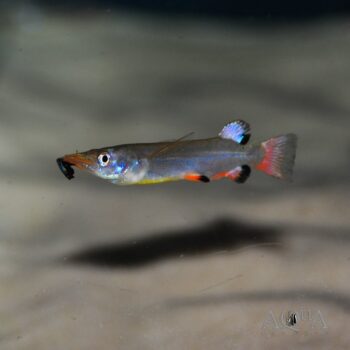
An uncommonly imported and colorful species of halfbeak originating in Sulawesi, the Black Fin Celebes Halfbeak inhabits small freshwater streams and creeks, typically in small aggregations. In the aquarium, this unique surface dwelling species makes for an interesting display fish, with mature adult fish developing intense red and black fins when kept in optimal conditions. This species does best in small groups and in neutral or slightly alkaline water, some current, and plenty of surface cover in the form of floating vegetation or branching driftwood close to the water’s surface.
-
Sale!
$44.99 – $69.99Price range: $44.99 through $69.99
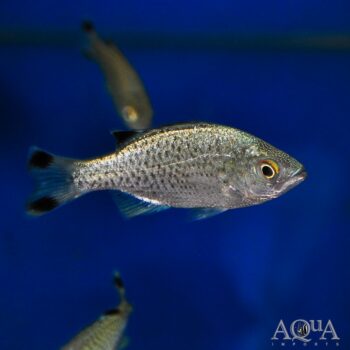
A rarity in the aquarium hobby, the Jungle Perch or Spotted Flagtail is widely distributed species throughout the Indo-Pacific and Northern Australia, where they are typically found in freshwater or lightly brackish water coastal streams. Although this species spawns in the ocean and larvae develop there, juvenile to adult fish tend to be found in freshwater streams or pools, often in areas of strong current where they are typically found in large groups. An omnivore, the Jungle Perch feeds on smaller fish, invertebrates, and fruit and plant matter in the wild and will accept most prepared and frozen foods in the aquarium. With their vivid spotted pattern and active nature, this fish makes a unique addition to a larger predatory fish community aquarium.
-
$16.99
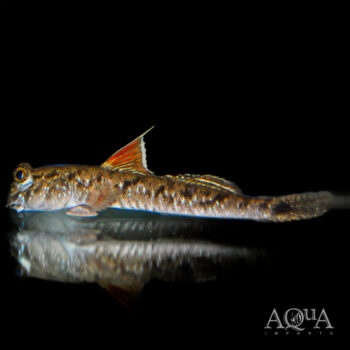
The Indian Dwarf Mudskipper is a fascinating member of the family Gobiidae which like all mudskippers are specially adapted for life outside of the water. Found throughout coastal India and Bangladesh, this species inhabits mangrove swamps and tidal mud flats, often in large groups with a defined social hierarchy. In the wild, they are adept predators that use their modified pectoral fins to hop across land and climb trees to catch insects and small crustaceans but in the aquarium will accept most frozen and freeze dried foods. An ideal aquarium setup for this species would include relatively shallow water with plenty of driftwood or other structure emerging above the waters surface giving them space to climb and form territories. The Indian Dwarf Mudskipper is a primarily coastal species which will do best in moderate to strong brackish water (salinity of 10-20ppt) and should be kept in groups.
-
$129.99
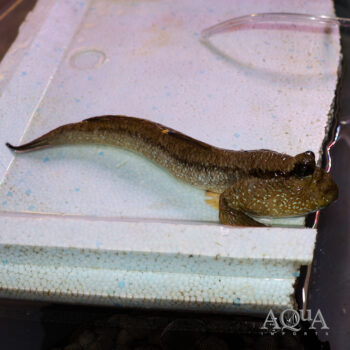
The Giant Mudskipper (Periophthalmodon schlosseri) is a fascinating member of the family Gobiidae which like all mudskippers are specially adapted for life outside of the water. This species which is the largest of the mudskippers is found throughout the coastal Indo-Pacific, this species inhabits tidal mud flats, often in large groups with a defined social hierarchy. In the wild, they are adept predators that use their modified pectoral fins to hop across land and climb trees to catch insects and small crustaceans but in the aquarium will accept most frozen and freeze dried foods. An ideal aquarium setup for this species would include relatively shallow water with plenty of driftwood or other structure emerging above the waters surface giving them space to climb and form territories. Being a primarily coastal species, they will do best in moderate to strong brackish water (salinity of 10-20ppt).
-
$39.99
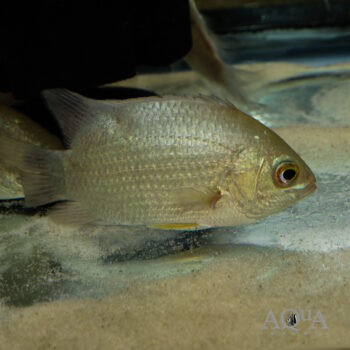
The Indonesian Leaf Fish (Pristolepis grootii) is a cryptic and rarely seen member of the Nandid family native to the soft water streams and rivers of Indonesia. Their body shape, coloration, and behavior allow them to mimic dead leaves and get close to unsuspecting prey items like small fish. In the aquarium, they are generally peaceful with tankmates too large to be eaten but due to their shy nature should not be kept with overly fast-moving or aggressive species.
-
$24.99
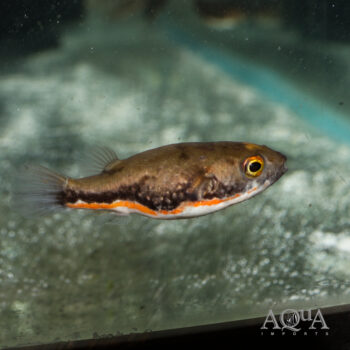
The Samurai Puffer (Dichotomyctere erythrotaenia) is a colorful brackish water species found in the streams and mangrove systems of Indonesia and Papua New Guinea. They are notable for their horizontal bright orange stripe. Fairly hardy, active, and outgoing, this medium-growing pufferfish species will do well with similarly sized fast moving tankmates like Scats, Monos, or Chromides. Like most pufferfish, they can be prone to nip at tankmates so they should be monitored carefully, especially when first introduced.
-
$99.99
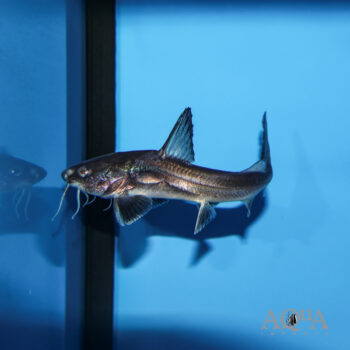
The Armored Sea Catfish (Hemiarius stormii) also known as the Stormii Cat is a gentle giant in the aquarium. They obtain a fully grown size around 19″ and can be kept in brackish to full fresh water. In the wild they can be found in large river systems and estuaries. These cats are relatively peaceful for their size however, they swim and look just like a true shark in the aquarium.
-
$39.99
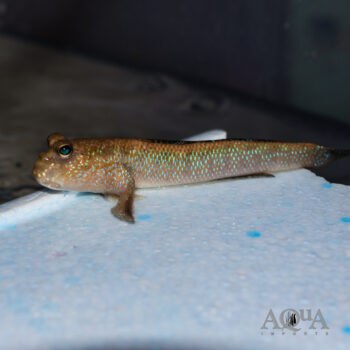
The Blue Mudskipper (Periophthalmodon septemradiatus) is a fascinating member of the family Gobiidae which like all mudskippers are specially adapted for life outside of the water. Found throughout the coastal Indo-Pacific, this species inhabits tidal mud flats, often in large groups with a defined social hierarchy. In the wild, they are adept predators that use their modified pectoral fins to hop across land and climb trees to catch insects and small crustaceans but in the aquarium will accept most frozen and freeze dried foods. An ideal aquarium setup for this species would include relatively shallow water with plenty of driftwood or other structure emerging above the waters surface giving them space to climb and form territories. Being a primarily coastal species, they will do best in moderate to strong brackish water (salinity of 10-20ppt) and should be kept in groups.
-
Sale!
$19.99 Original price was: $19.99.$15.99Current price is: $15.99.
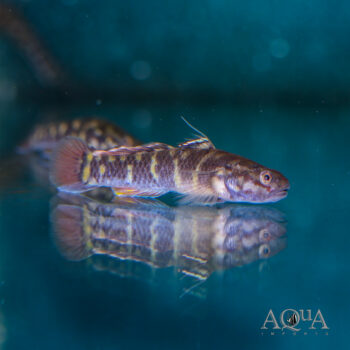
The Kanu Goby (Mugilogobius mertoni) or Chequered Mangrove Goby is a brackish goby found throughout much of the Indo-Pacific. They can be found in freshwater, but generally inhabit brackish to full marine environments. Colorful, hardy, and not picky feeders, they are a great addition to any brackish or marine aquarium with suitable tankmates. These gobies are are generally peaceful, but can become territorial with other gobies, especially other males.
-
$8.99
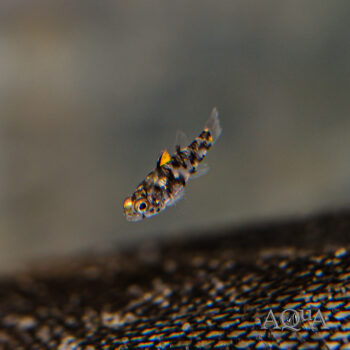
The Roux’s Pygmy Goby (Pandaka rouxi) is one of the smallest species of fish known, not obtaining a size larger than a half inch in length. These brackish nano fish can be challenging to keep, being such small micropredators, providing small enough food items is essential for their long-term care.
-
$34.99
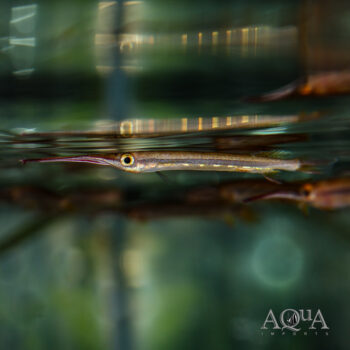
A rarely seen and beautifully marked species of halfbeak originating in Borneo, the Gold Spot Halfbeak (Hemirhamphodon chrysopunctatus) is unlike most of its relatives as it is found not in brackish water or estuarine areas but in soft, slow flowing streams inland. In the aquarium, this unique surface dwelling species makes an excellent tankmate for similar Southeast Asian blackwater fish like microrasboras, dwarf or chocolate gourami, and other species found in similar warm, acidic, shallow water habitat. This species does best in small groups and in an aquarium approximating their wild habitat with tannin-rich water, moderate current, and plenty of surface cover in the form of floating vegetation or branching driftwood close to the water’s surface.
-

$19.99
An uncommonly imported species of halfbeak endemic to Lake Poso and its tributaries of Sulawesi, the Poso Halfbeak (Nomorhamphus celebensis) is typically peaceful and socialize in small aggregations. In the aquarium, this unique surface dwelling species makes for an interesting display fish and will feed on most prepared floating foods. They do best in small groups and in neutral or slightly alkaline water, some current, and plenty of surface cover in the form of floating vegetation or branching driftwood close to the water’s surface.
-
$89.99 – $119.99Price range: $89.99 through $119.99
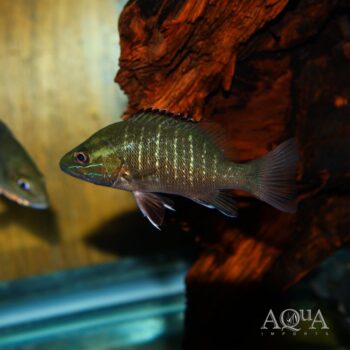
The African Red Snapper or Cubera (Lutjanus agennes) is found in mangroves, estuaries, coral reefs, and even the freshwater rivers and streams along the west African coast. Juveniles are found more in brackish waters where as adults move deeper into the marine environment. These fish should only be kept in extremely large systems since they grow to around 5ft in length. They are considerably aggressive and will attack and eat anything smaller in size.
-
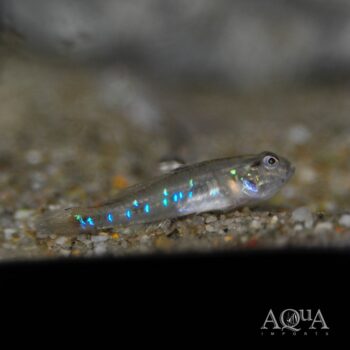
$12.99
Product description coming soon.
-
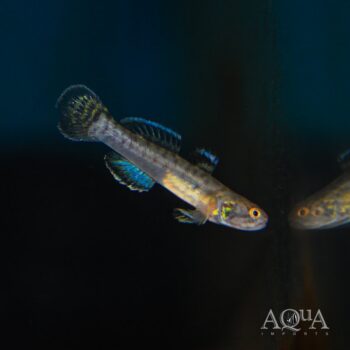
$14.99
Product description coming soon.
-
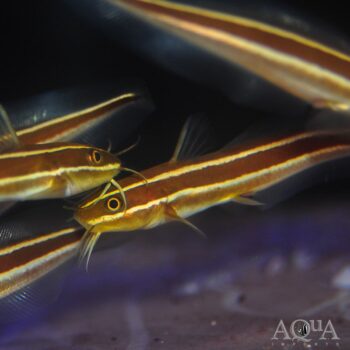
$24.99
The Coral Catfish (Plotosus lineatus) also known as the Striped Eel Catfish is the only coral reef catfish species. As juveniles they school in tight into tight balls and should be kept in groups in the aquarium. As adults they become more territorial and will need room to spread out. They are not picky eaters and will accept any protein based foods. Please note that these fish are venomous and extreme care should be taken not to come in contact with their spines.
-
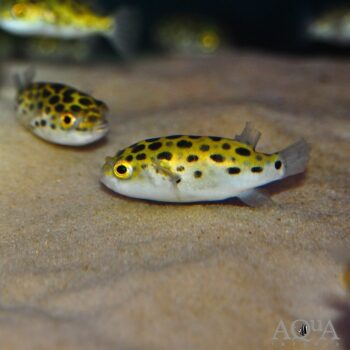
$9.99
Product description coming soon.
-
$3.99
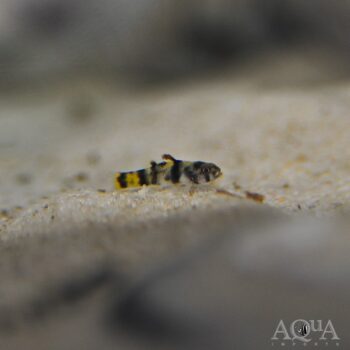
The Golden Banded Bumblebee Goby (Brachygobius nunus) is a small species that inhabits both fresh and brackish water. They are mostly found in the mud flats and slow streams of India’s coastal estuaries and mangrove systems. In the aquarium they are hardy fish that will prefer a fine sand bottom and some salt in the water (3-10ppt). These small gobies should be kept in a group of 5 or more. They can be a challenging species to keep for less experienced hobbyists due to their small food needs and maintenance of a stable pH above 7.5.
-
$69.99
Product description coming soon.
-
$24.99
Product description coming soon.
-
$24.99
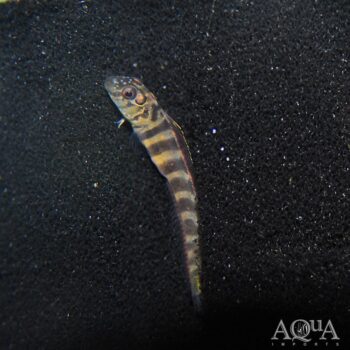
Originating from the coastal waters of Western India and Bangladesh, the Horned Blenny is one of a very few species of Blenny that inhabits fresh and brackish waters in the wild. A medium sized, active fish with an attractive, variable pattern of stripes and a notable ear shape marking, this fish inhabits a wide variety of estuarine and mangrove swamp habitat, but are more often found in fresh or slightly brackish water than full marine conditions. In the aquarium, they adapt to a variety of conditions but will do best in at least moderate strength brackish water (10-20ppt salinity). They can be hard on similar-sized tankmates and tend to spar with each other over territory, so be sure to provide plenty of cover and hiding places. They are best kept with larger fast swimming fish.
End of content
End of content