Gold Lyretail Killifish (Aphyosemion australe)
$16.99Gold Lyretail Killifish (Aphyosemion australe) product description coming soon.

Showing 1–25 of 61 resultsSorted by latest
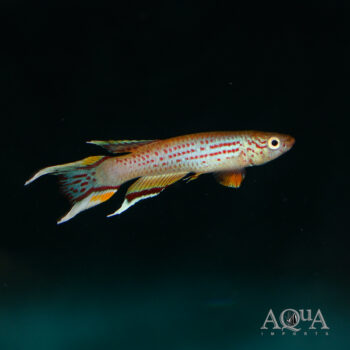
Gold Lyretail Killifish (Aphyosemion australe) product description coming soon.
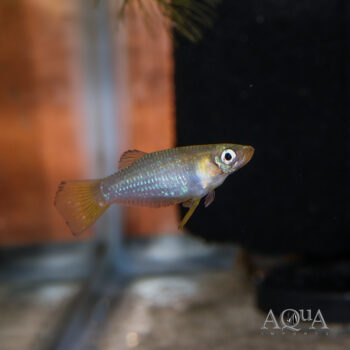
The Knife Livebearer (Alfaro cultratus) is native to Costa Rica, Nicaragua and Panama. These unique livebearers are hardy, easy to keep and breed in the aquarium. They will appreciate a planted tank with moderate flow.
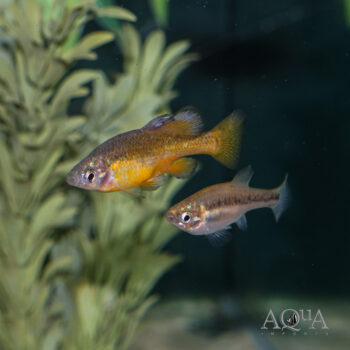
The Spotted Skiffia (Skiffia multipunctata) is endemic to Mexico where it is recognized as an endangered species due to significant population loss caused by pollution, habitat loss, and the introduction of invasive species. They will appreciate a heavily planted tank and being a member of the livebearing Goodeids will reproduce in the aquarium. They are hardy and will accept most prepared foods.
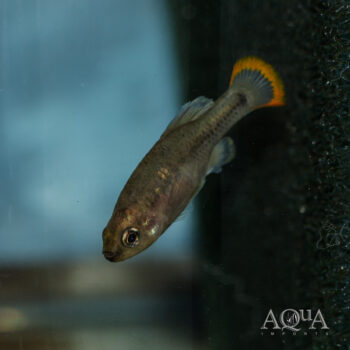
The Tequila Goodeid or Tequila Splitfin (Zoogoneticus tequila) inhabits clear freshwater springs and ponds. In the wild they feed on worms, crustaceans, and insects These fish are very easy to house in the aquarium, enjoying most dried and frozen foods that you might offer. These rare livebearing fish can be timid, but with the correct habitat and tankmates, they are known to reproduce readily in the aquarium. With their rarity, stunning dark bodies, and bright orange tails, these fish are highly sought after.
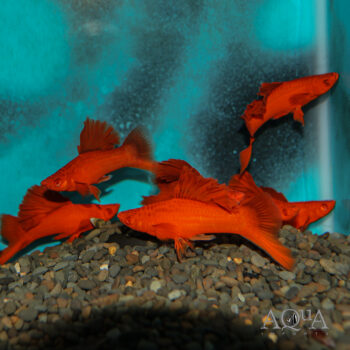
An aquarium hobby classic, the swordtail is a livebearing species found through parts of Central America but it has been bred worldwide for the aquarium hobby for decades. In that time, the wild form has been developed in to dozens of varieties and color forms, including the popular red brick, tuxedo, pineapple, and many more. The Firecracker Swordtail or Cauliflower Sabertail is distinguished by its vivid red coloration with a wider sabertail instead swordtail and massive dorsal fin . A peaceful, hardy, and active fish, they are often recommended for beginners due to their ease of care. Male swordtails display the prominent lower tail fin extension that the species is named for, and females tend to be larger and more heavy bodied.
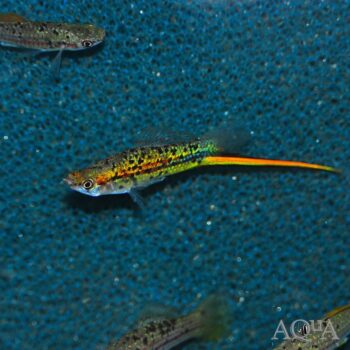
Among the most impressive of the wild-type Swordtail species, the Green Swordtail was once popular in the hobby but hybridization and line breeding have made finding pure specimens with wild genetics relatively rare. Growing to an impressive 5″+ body size with a sword that can approach a little more than their total length, male hellerii swords make for a spectacular display fish with their pattern of green, reddish striping and intermittent black spots throughout the body.
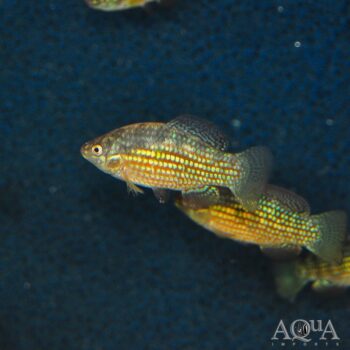
The North American Flagfish or Florida Flagfish (Jordanella floridae) inhabits slow-moving streams, lakes, and freshwater vegetation ponds. In the wild they feed on worms, crustaceans, insects and plant matter. These fish are very easy to house in the aquarium, enjoying most dried and frozen foods that you might offer. It is advised to keep a small group of females in each tank and one male fish only. With their stunning coloring, these fish may provide a lot of color to your aquarium and serve a useful purpose by cleaning away algae from plants and décor. They have even been known to consume the dreaded black beard algae.
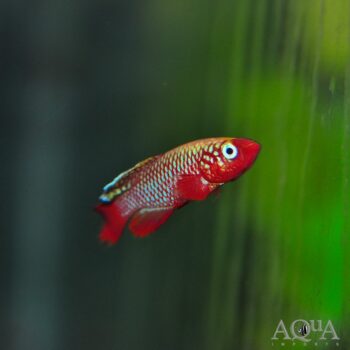
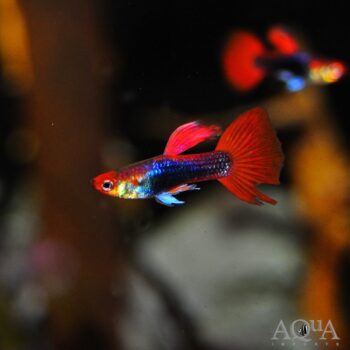
An aquarium hobby classic, the guppy is a livebearing species found through parts of Central and Northern South America but it has been bred worldwide for the aquarium hobby for over a century. In that time, the wild form has been developed in to dozens of varieties and color forms, including cobra patterns, delta tails, tuxedo, and many more. A peaceful, hardy, and active fish, they are often recommended for beginners due to their ease of care. Male guppies tend to be more colorful and have much larger, vividly colored tails whle females tend to be larger and more heavy bodied.
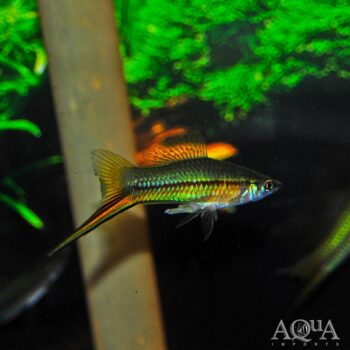
Among the most impressive of the wild-type Swordtail species, the Green Swordtail was once popular in the hobby but hybridization and line breeding have made finding pure specimens with wild genetics relatively rare. Growing to an impressive 5″+ body size with a sword that can approach a little more than their total length, male hellerii swords make for a spectacular display fish with their pattern of green, reddish striping and intermittent black spots throughout the body.
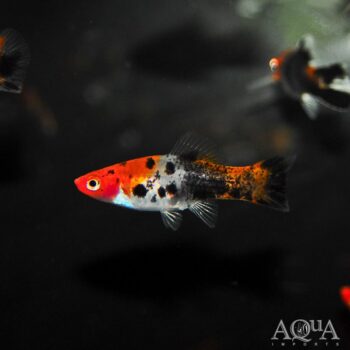
An aquarium hobby classic, the swordtail is a livebearing species found through parts of Central America but it has been bred worldwide for the aquarium hobby for decades. In that time, the wild form has been developed in to dozens of varieties and color forms, including the popular red brick, tuxedo, pineapple, and many more. The Sanke Koi Swordtail or Showa Koi Swordtail is distinguished by its vivid red and white coloration with black spots. A peaceful, hardy, and active fish, they are often recommended for beginners due to their ease of care. Male swordtails display the prominent lower tail fin extension that the species is named for, and females tend to be larger and more heavy bodied.
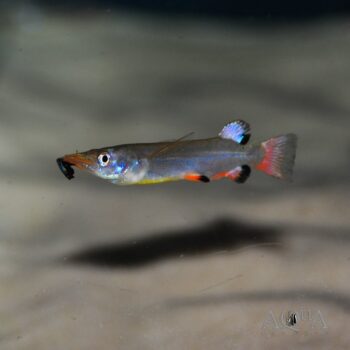
An uncommonly imported and colorful species of halfbeak originating in Sulawesi, the Black Fin Celebes Halfbeak inhabits small freshwater streams and creeks, typically in small aggregations. In the aquarium, this unique surface dwelling species makes for an interesting display fish, with mature adult fish developing intense red and black fins when kept in optimal conditions. This species does best in small groups and in neutral or slightly alkaline water, some current, and plenty of surface cover in the form of floating vegetation or branching driftwood close to the water’s surface.
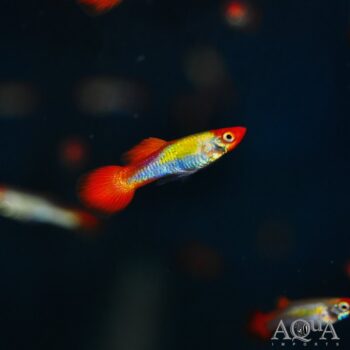
An aquarium hobby classic, the guppy is a livebearing species found through parts of Central and Northern South America but it has been bred worldwide for the aquarium hobby for over a century. In that time, the wild form has been developed in to dozens of varieties and color forms, including cobra patterns, delta tails, tuxedo, and many more. A peaceful, hardy, and active fish, they are often recommended for beginners due to their ease of care. Male guppies tend to be more colorful and have much larger, vividly colored tails whle females tend to be larger and more heavy bodied.
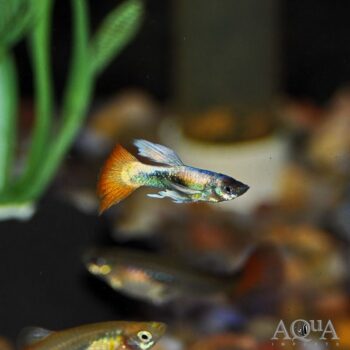
An aquarium hobby classic, the guppy is a livebearing species found through parts of Central and Northern South America but it has been bred worldwide for the aquarium hobby for over a century. In that time, the wild form has been developed in to dozens of varieties and color forms, including cobra patterns, delta tails, tuxedo, and many more. A peaceful, hardy, and active fish, they are often recommended for beginners due to their ease of care. Male guppies tend to be more colorful and have much larger, vividly colored tails whle females tend to be larger and more heavy bodied.
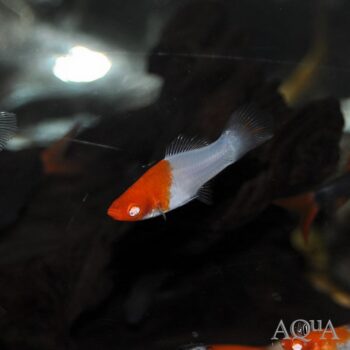
An aquarium hobby classic, the swordtail is a livebearing species found through parts of Central America but it has been bred worldwide for the aquarium hobby for decades. In that time, the wild form has been developed in to dozens of varieties and color forms, including the popular red brick, tuxedo, pineapple, and many more. The Kohaku Koi Swordtail is distinguished by its vivid red and white coloration and deep red eyes. A peaceful, hardy, and active fish, they are often recommended for beginners due to their ease of care. Male swordtails display the prominent lower tail fin extension that the species is named for, and females tend to be larger and more heavy bodied.
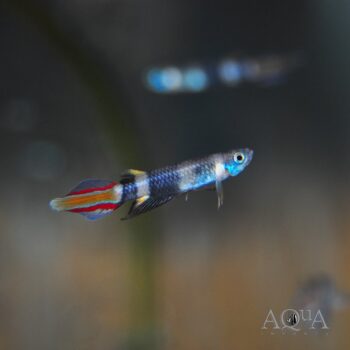
A tiny and beautifully patterned Killifish found throughout much of West Africa, the Clown Killi has been popular in the aquarium hobby for years despite being somewhat difficult to find. In the wild, these fish are found in aggregations in lowland tropical swamps and tiny streams, usually in acidic, tannin-stained waters. In the aquarium, they are relatively hardy but do best in warm, slightly soft water with ample cover in the form of plants or branching driftwood. Like most Killifish, they tend to swim close to the water’s surface and will jump if given the opportunity so a tight fitting cover is essential. A social fish, they will do best in groups of 8-10 or more, and if given ample space will form pairs and sometimes spawn.
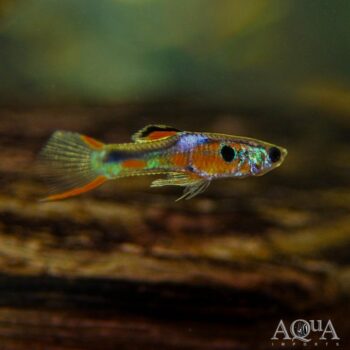
An aquarium hobby classic, the Endler’s Livebearer or Endler’s Guppy originated with strains of wild livebearers in Venezuela but over decades in the trade has been hybridized with similar species to create a wide array of color patterns, fins, and body shapes. Colorful, hardy, and with a smaller adult size than the more well-known fancy guppy, these tiny livebearers make excellent subjects for nano aquariums or planted tanks. They will do well in a wide variety of water conditions but prefer well-oxygenated, slightly alkaline water. Assortment may include a variety of different strains.
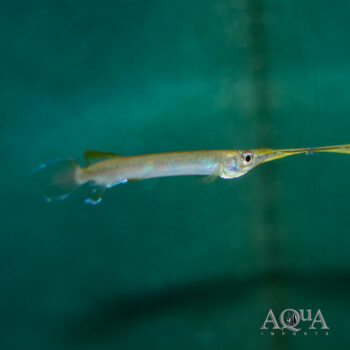
A rarely seen and beautifully marked species of halfbeak originating in Borneo, the Three Spot Forest Halfbeak (Hemirhamphodon kuekenthali) is unlike most of its relatives as it is found not in brackish water or estuarine areas but in soft, slow flowing streams inland. In the aquarium, this unique surface dwelling species makes an excellent tankmate for similar Southeast Asian blackwater fish like microrasboras, dwarf or chocolate gourami, and other species found in similar warm, acidic, shallow water habitat. This species does best in groups and in an aquarium approximating their wild habitat with tannin-rich water, moderate current, and plenty of surface cover in the form of floating vegetation or branching driftwood close to the water’s surface.
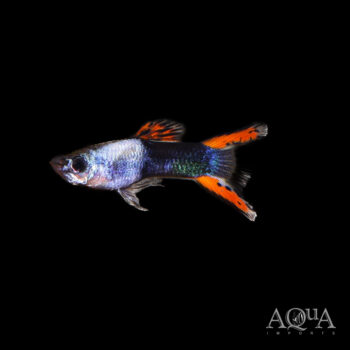
An aquarium hobby classic, the Endler’s Livebearer (Poecilia wingei) or Endler’s Guppy originated with strains of wild livebearers in Venezuela but over decades in the trade has been hybridized with similar species to create a wide array of color patterns, fins, and body shapes like the Metallic Tuxedo Endler’s Livebearer. Colorful, hardy, and with a smaller adult size than the more well-known fancy guppy, these tiny livebearers make excellent subjects for nano aquariums or planted tanks. They will do well in a wide variety of water conditions but prefer well-oxygenated, slightly alkaline water. Assortment may include a variety of different strains.
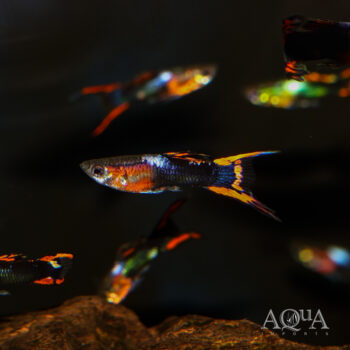
An aquarium hobby classic, the Endler’s Livebearer (Poecilia wingei) or Endler’s Guppy originated with strains of wild livebearers in Venezuela but over decades in the trade has been hybridized with similar species to create a wide array of color patterns, fins, and body shapes like the Black Flame Endler’s Livebearer. Colorful, hardy, and with a smaller adult size than the more well-known fancy guppy, these tiny livebearers make excellent subjects for nano aquariums or planted tanks. They will do well in a wide variety of water conditions but prefer well-oxygenated, slightly alkaline water. Assortment may include a variety of different strains.
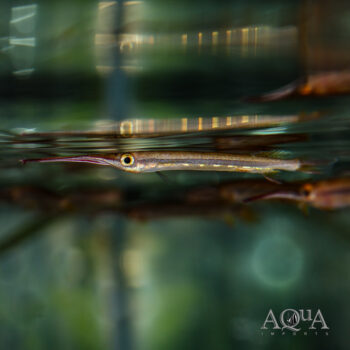
A rarely seen and beautifully marked species of halfbeak originating in Borneo, the Gold Spot Halfbeak (Hemirhamphodon chrysopunctatus) is unlike most of its relatives as it is found not in brackish water or estuarine areas but in soft, slow flowing streams inland. In the aquarium, this unique surface dwelling species makes an excellent tankmate for similar Southeast Asian blackwater fish like microrasboras, dwarf or chocolate gourami, and other species found in similar warm, acidic, shallow water habitat. This species does best in small groups and in an aquarium approximating their wild habitat with tannin-rich water, moderate current, and plenty of surface cover in the form of floating vegetation or branching driftwood close to the water’s surface.
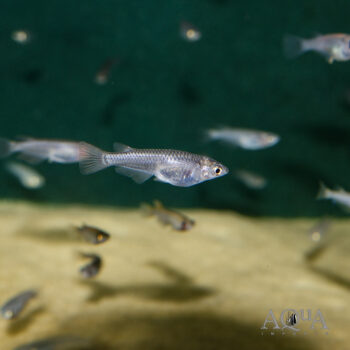
A recently developed form of the common ricefish or medaka, the Wazumi Medaka Ricefish displays silver to dark grey coloring across its body. Like most ricefish, they are a very hardy fish and will do well in most aquariums. The species is an egg layer but will readily breed in the aquarium under good conditions.
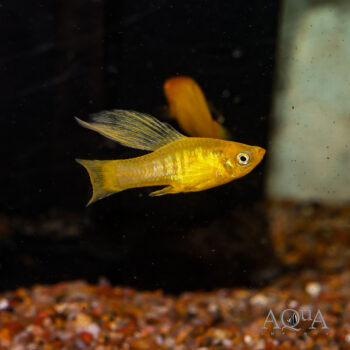
An aquarium hobby classic, the Platy is a livebearing species found through parts of Central America but it has been bred worldwide for the aquarium hobby for decades. In that time, the wild form has been developed in to dozens of varieties and color forms, including the popular Mickey Mouse, Blue, Tuxedo, and more. A peaceful, hardy, and active fish, they are often recommended for beginners due to their ease of care.
**Shipping note: only females available currently
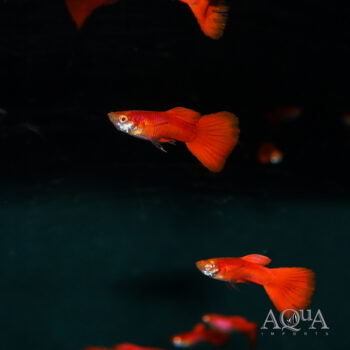
An aquarium hobby classic, the guppy is a livebearing species found through parts of Central and Northern South America but it has been bred worldwide for the aquarium hobby for over a century. In that time, the wild form has been developed in to dozens of varieties and color forms, including cobra patterns, delta tails, tuxedo, and many more. A peaceful, hardy, and active fish, they are often recommended for beginners due to their ease of care. Male guppies tend to be more colorful and have much larger, vividly colored tails whle females tend to be larger and more heavy bodied.
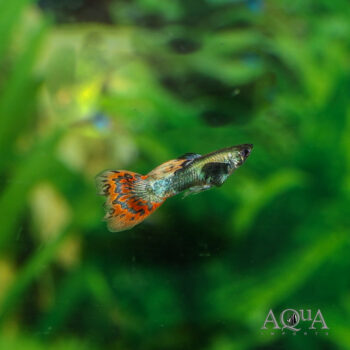
An aquarium hobby classic, the guppy is a livebearing species found through parts of Central and Northern South America but it has been bred worldwide for the aquarium hobby for over a century. In that time, the wild form has been developed in to dozens of varieties and color forms, including cobra patterns, mosaic, delta tails, tuxedo, and many more. A peaceful, hardy, and active fish, they are often recommended for beginners due to their ease of care. Male guppies tend to be more colorful and have much larger, vividly colored tails whle females tend to be larger and more heavy bodied.
End of content
End of content
No products in the cart.