Showing 2326–2350 of 2362 resultsSorted by latest
-

$69.99
A remarkably patterned, large-growing predatory catfish, the Juruense or False Tigrinus is widely distributed throughout the Amazon Basin, where it is a prized food fish. Although juvenile fish tend to be a drab dark gray with some striping, as they grow this fish will develop a striking pattern of black stripes on an off white or occasionally even cream-colored background, extending to the intricately striped tail. There is an enormous amount of variability in this species so it is extremely difficult to predict how young fish will develop as they get older. Juruense Catfish tend to be found in fast-moving stretches of murky water, and they rely on their sensitive barbels much more than their limited eyesight to find prey. In the aquarium, they prefer dim lighting, ample hiding places, and pristine water quality (maintaining high levels of dissolved oxygen is especially important).
-
$254.99 – $299.99Price range: $254.99 through $299.99
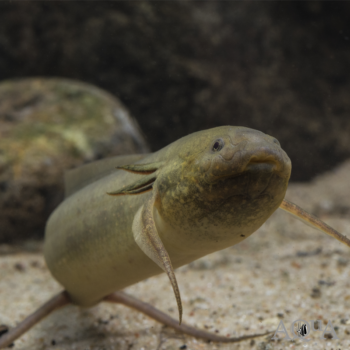
One of the rarest species of lungfish in the aquarium hobby, the African Gilled Lungfish originates in the freshwater streams and wetlands of East Africa. This species is the smallest of all the lungfish, growing to only 18-20″ in length, and is distinguished by the three external gills which it keeps into adulthood. These lungfish are extremely active and tolerant of a wide variety of water parameters. Like most of the African species in the genus Protopterus, they have powerful jaws and have a tendency to take bites out of tankmates – so they are best kept singly or with smaller, fast moving species like Congo Tetras or peaceful species of barbs. Although juvenile fish are primarily gray in color, rare photographs of adult specimens indicate they will develop a marbled pattern with heavy black spotting.These lungfish are enthusiastic feeders, and quickly learn to “beg” for food at the front of the tank – most will even hand feed.
The specimens we offer have been carefully quarantined for several weeks and are actively feeding on a variety of frozen and prepared foods, including pellets.
-
$39.99 – $69.99Price range: $39.99 through $69.99
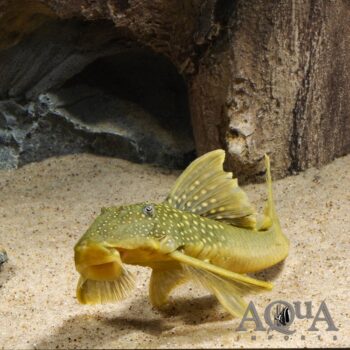
The Hifin Green Phantom Pleco, like the very similar and more commonly imported L200 Green Phantom Pleco (H. subviridis) originates in fast-moving, rocky areas of the Orinoco and Ventuari Rivers in Colombia and Venezuela. With their light green body coloration and distinctive yellow spots, this pleco makes a colorful and unique addition to most medium aquariums. As the name suggests, this species can be distinguished by an even more prominent dorsal fin than the common Green Phantom, as well as the fact that this species’ dorsal fin and adipose fin are fused. An omnivore, they will graze on algae and biofilm but should be offered a variety of sinking prepared foods with a moderate to high protein content. This species is particularly sensitive to poor water quality and will do best when kept in clean, well-oxygenated warm water with moderate current and plenty of hiding places.
-
Sale!
$319.99 – $499.99Price range: $319.99 through $499.99
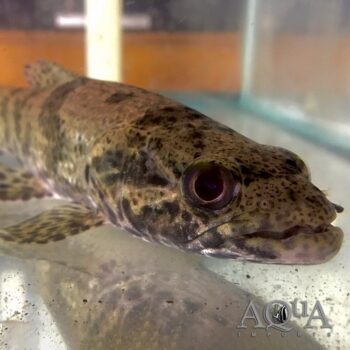
The largest species of wolf fish and one of the most impressive predatory fish available in the aquarium hobby, the Aimara or Giant Wolf Fish is a fierce predator suitable only for the largest aquariums – or perhaps more appropriately indoor ponds. Found throughout much of the Amazon and Orinoco Basins, these fish are powerful fish eaters which use their prominent sharp teeth to grab hold of prey. Despite their bulky appearance, Aimara Wolf Fish are fast swimmers and should be given ample swimming room (and a strong, tight-fitting cover). They are adaptable and generally hardy in the aquarium so long as good water quality is maintained. Due to their enormous adult size and predatory nature, these fish are only recommended for experienced hobbyists with the means to adequately house this species long term.
-
$84.99 – $399.99Price range: $84.99 through $399.99
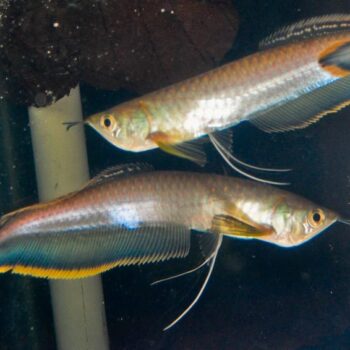
Found in blackwater stretches of the Rio Negro, upper Orinoco and Vaupes in South America, the Black Arowana (sometimes also known as Blue Arowana) is a sought after species due to its vibrant iridescent coloration and orange-trimmed black fins. Like their close cousin the Silver Arowana, they are large, powerful, surface-dwelling predators which require ample tankspace and a tight fitting cover as they are powerful jumpers. Black Arowana are generally peaceful towards any tankmates too large to be eaten, but territorial towards each other unless kept in larger groups. Although they reach a slightly smaller adult size than their close relative the Silver Arowana, they can still easily reach 20”+ as adults and require an appropriately large aquarium.
-
$39.99 – $119.99Price range: $39.99 through $119.99
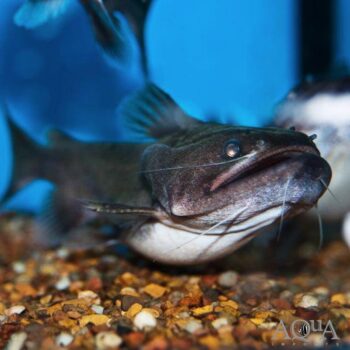
With its prehistoric appearance and exaggerated, oversized mouth, the Gulper Catfish (Asterophysus batrachus) is hard to mistake for any other species. A voracious predator, they are amazingly able to consume fish even larger than they are. In the wild, they tend to inhabit deeper stretches of blackwater rivers, and their eyesight is relatively poor – relying instead on their sensitive barbels and sense of smell to find prey. Gulpers are relatively adaptable in the aquarium, but as a scaleless fish can be somewhat sensitive to water quality. Although they can be finicky eaters at first, they will quickly learn to accept frozen, protein rich feeds and even pellets.
-
$54.99 – $259.99Price range: $54.99 through $259.99
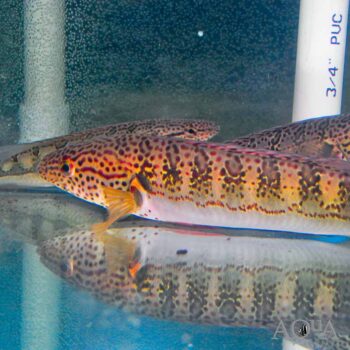
One of the most striking of all the Pike Cichlids, the Lenticulata or Spotted Pike is a large growing species found in Brazil, Colombia and Venezuela. Like many large Pike Cichlids, they are territorial and can be extremely aggressive towards tankmates so any other fish in the aquarium should be chosen with care. The Red Spotted Lenticulata is a rare regional variant which exhibits intense coloration including red (as opposed to black) spots along the face and extensive spotting and marbling along the lateral line.
-
$39.99 – $79.99Price range: $39.99 through $79.99
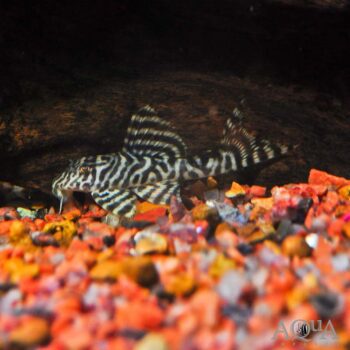
One of several strikingly marked black and white species of Hypancistrus from the Rio Xingu in Brazil, the L066 King Tiger Pleco inhabits rocky areas of warm, fast-moving water. In the aquarium, they need excellent water quality and do best when provided lots of cover in the form of caves or driftwood. A carnivore, they should be fed protein rich foods like frozen bloodworms, carnivore pellets, or gel diets. The L066 can be distinguished from the similar L333 by its white (as opposed to off-white) base coloration. Like most plecos from the region, they will do best at warmer temperatures (80-85F) and plenty of current.
-

$19.99 – $99.99Price range: $19.99 through $99.99
The Electric Blue Jack Dempsey, Electric Blue Dempsey or “EBJD“ as they are sometimes abbreviated as in the hobby is a selectively bred color form of the popular Jack Dempsey (Rocio otofasciata), a large-growing cichlid which originates from lakes and streams along the Atlantic coast of Mexico and Central America. Unlike the wild form of Jack Dempsey, which are a base grey or black, this color variation exhibits a beautiful, uniform powder blue base coloration interspersed with some black spots, a pattern which typically gets more vibrant as they grow. Although they share the same general care requirements as the standard Jack Dempsey, Electric Blues tend to be slower growing and much less aggressive. They should be kept with relatively peaceful fish, especially when young, and will benefit from frequent water changes to maintain excellent water quality.
-
$119.99 – $399.99Price range: $119.99 through $399.99
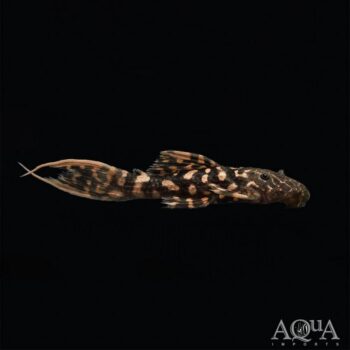
The Red Titanic Pleco or L273 is one of the most colorful species of Pseudacanthicus (commonly known as cactus plecos), originating in the rocky, clear waters of the Rio Tapajos in Brazil. Territorial and largely carnivorous by nature, this species grows to over a foot in length and requires a fairly large aquarium with lots of cover.
-
$99.99 – $399.99Price range: $99.99 through $399.99
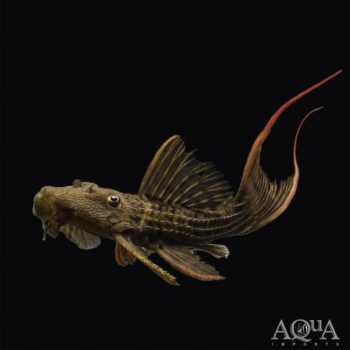
The L024 or Redfin Cactus Pleco is a colorful and sought after species of heavily armored pleco originating in the Rio Tocantins in Brazil. Like most members of its genus, it is largely a carnivore and prefers protein rich foods. In the aquarium, the Redfin Cactus Pleco should be offered ample cover and care should be taken with other bottom dwelling species as they can be territorial. With their large adult size and space requirements, Redfin Cactus Plecos are recommended for experienced hobbyists with large aquariums and heavy filtration.
-
$44.99 – $274.99Price range: $44.99 through $274.99
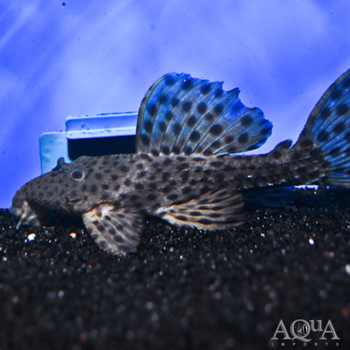
Like their name suggests, the Spiny Monster Pleco is a larger growing species of Pseudacanthicus which develops heavy armor and distinctive spines along the body and fins. Found in rocky, fast-flowing water of the Rio Tocantins in Eastern Brazil, this species requires clean, clear and well-oxygenated water to thrive in the aquarium. Like most of its close relatives, the Spiny Monster Pleco is mainly carnivorous and will do best on a diet of protein rich foods such as Fluval Bug Bites and Repashy Gel Diet premix. In the aquarium, they can be territorial (especially towards other plecos) so be sure to provide plenty of hiding places such as caves or driftwood.
-
$39.99 – $69.99Price range: $39.99 through $69.99
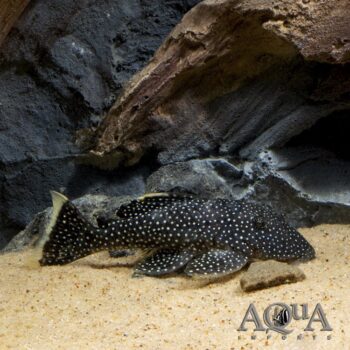
The L081 Fine Spot Gold Nugget Pleco is one of several naturally occurring color variations of B. xanthellus distinguished by having many fine yellow spots along the body (compared to L018 and L177, both of which have large spots). Like its close relatives, it is found in rocky shallow areas in warm, well-oxygenated water. In the aquarium, it should be provided with plenty of cover and regular feedings of protein rich feeds such as Repashy gel diet or other prepared feeds. They will do best at high temperatures (82 – 86F), plenty of water movement and a variety of rocks and caves in which to establish territories. This species can be a challenge to maintain long term and is best suited for experienced hobbyists who can ensure optimal water quality similar to what they would find in nature and a varied diet.
-
$129.99 – $269.99Price range: $129.99 through $269.99
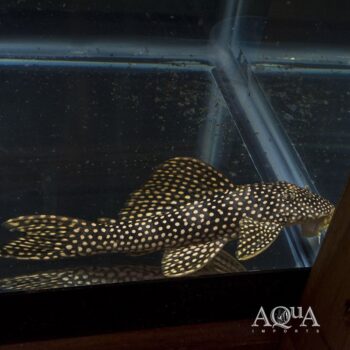
An uncommon and stunningly marked variant of the more well known L014 Goldie Pleco, the L253 Black Royal Goldie is found in the Rio Iriri, a tributary of the Xingu in Brazil. Like its cousin the L014 Goldie Pleco, this species is peaceful and will thrive in most community aquariums as long as they are given sufficient space. In nature, they are a scavenger, but will typically do best when provided protein rich foods like frozen bloodworms, shrimp, or sinking carnivore diets. They require excellent water quality and will do best with regular large water changes and warm, well-oxygenated water in the aquarium.
-
$89.99 – $599.99Price range: $89.99 through $599.99
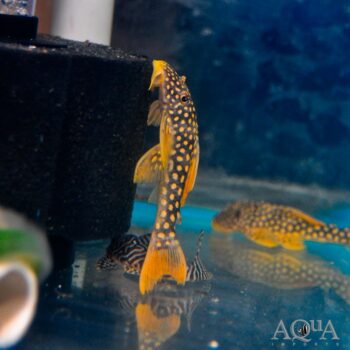
Easily one of the most vibrantly colored of all large growing plecos, the L014 Goldie or Sunshine Pleco originates in the clear, warm waters of Brazil’s Rio Xingu. A stunning showpiece of a fish, especially as an adult, the Goldie Pleco is peaceful and will thrive in most community aquariums as long as they are given sufficient space. In nature, they are a scavenger, but will typically do best when provided protein rich foods like frozen bloodworms, shrimp, or sinking carnivore diets. Goldie Plecos require excellent water quality and will do best with regular large water changes and warm, well-oxygenated water in the aquarium.
-
$23.99 – $29.99Price range: $23.99 through $29.99
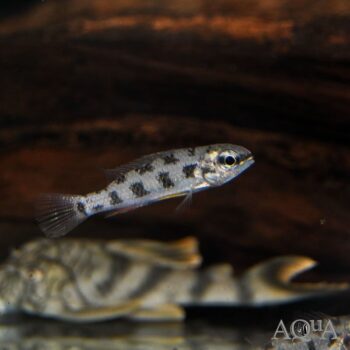
A stunningly marked and rarely seen dwarf cichlid, the Spadetail Checkerboard Cichlid grows slightly larger and displays more intense adult coloration than its more well known relative the common Checkerboard Cichlid (Dicrossus filamentosus). Found in the clearwater Tapajos as well as some surrounding Amazon tributaries, this dwarf cichlid will do best in an aquarium with ample cover in the form of driftwood, live or artificial plants, or other decor.
-
$99.99 – $599.99Price range: $99.99 through $599.99
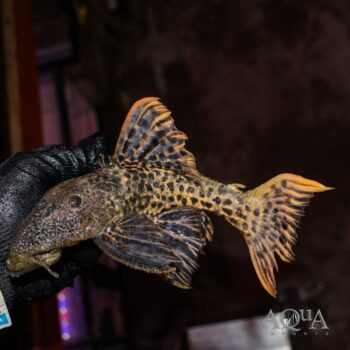
With their high contrast pattern of jet black spotting on a dark brown body and deep red-orange fins, he Scarlet Cactus or L025 pleco is one of the most sought after species in its genus. This heavily armored pleco is found in the fast-flowing rocky waters of Brazil’s Rio Xingu where they inhabit warm, clear, soft waters typically close to rapids. Like most species in the genus Pseudacanthicus, they are almost prehistoric in appearance with prominent spines along the pectoral, dorsal, and caudal fins. With an adult size of up to 18″, this species requires a large aquarium with excellent water quality and moderate to strong current.
-
$29.99 – $34.99Price range: $29.99 through $34.99
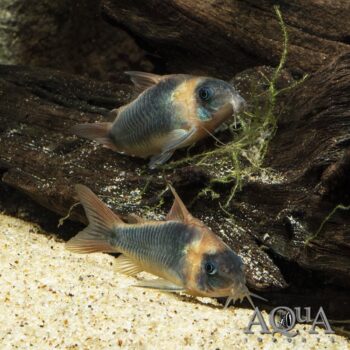
With its combination of deep green body coloration and a distinctive orange stripe, the Eques Cory is a sought after species in the aquarium hobby. Although similar species have occasionally been sold (incorrectly) as O. eques, the True Eques Cory is found only in Amazonas State, Brazil, and is uncommonly imported. Similar to most species of Cory Catfish, the Eques Cory should be kept in groups (ideally 5 or more) and prefers a substrate of fine sand. Due to their larger adult size they make an attractive showpiece fish for a medium to large community aquarium and will do well with nearly any peaceful tankmates.
-
Sale!
$27.99 – $39.99Price range: $27.99 through $39.99
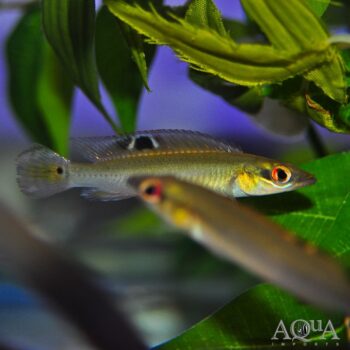
One of the smallest and most peaceful species of Pike Cichlids, the Regani Dwarf Pike is found in clear and black water rivers in the Brazilian Amazon, often in extreme shallows. Unlike most other members of its genus, these Pike Cichlids will do well in groups so long as adequate cover and hiding places are available in the aquarium. They are also generally safe with live plants and tend not to bother tankmates – although shrimp or very small fish may be viewed as prey.
-
$13.99
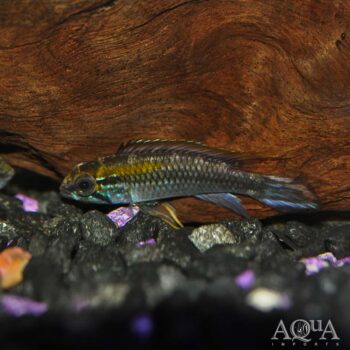
A colorful and rarely seen dwarf cichlid, the Xingu Apistogramma is found in shallow areas of the fast-moving clear water Rio Xingu in Eastern Brazil. Like most Apistogramma species, they will do best in a tank with peaceful tankmates like small tetras or dwarf rainbows – or in a species tank if breeding is to be attempted. The Xingu Apistogramma requires excellent water quality and regular partial water changes will ensure they thrive in the aquarium.
A note on wild Apistogramma: Unless otherwise specified, wild Apistogramma are sold as unsexed individuals. We will make our best efforts to send pairs or a requested ratio of male to female but we do not guarantee sex on these fish. We recommend buying in groups to ensure adequate males and females for breeding.
-
$59.99
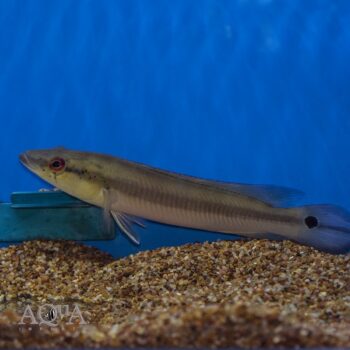
The Inirida Spotted Pike Cichlid is a large growing species originating in the middle Rio Atabapo along the Colombia/Venezuela border. One of several “Lugubris-type” Pike Cichlids collected from the region, its distinctive spotted pattern and large size make it an excellent display species for a large aquarium. Like nearly all Pike Cichlids, they are aggressive and fiercely territorial, and should only be kept with other aggressive and appropriately sized fish.
-
$49.99
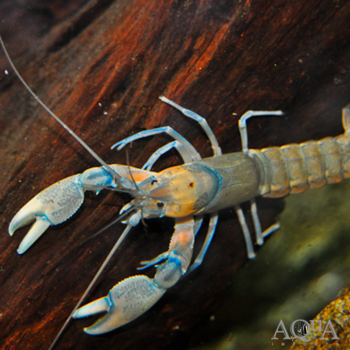
One of several rare species of Cherax crayfish found in the lakes and streams of Papua, the Papuan Orange Crayfish is a strikingly marked crustacean with a uniform pale orange coloration with blue highlights and distinctive black eyes. Found in warm, alkaline waters, these crayfish are fairly adaptable to aquarium conditions. As a scavenger, they will feed readily on most frozen or prepared sinking diets. Like most crayfish, the Papuan Orange prefer a dimly lit aquarium with multiple hiding places although once acclimated to the aquarium are not shy.
Prohibited in California, Florida, Texas, and Wisconsin
-
$199.99 – $359.99Price range: $199.99 through $359.99
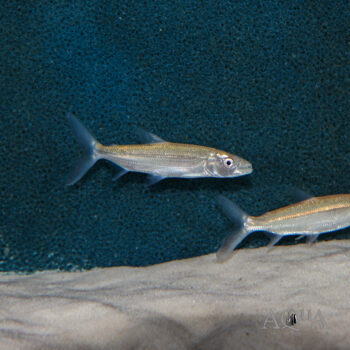
Living up to its name, the Goliath Tigerfish is a monstrous and fierce predator originating in the fast flowing waters of the Congo River basin in Central Africa. A strict carnivore, the Goliath Tigerfish sports a mouthful of prominent, large teeth which it uses to grab hold of prey. They are aggressive towards tankmates and with an adult size of well over 48″ should only be kept by experienced hobbyists with an enormous aquarium or ideally an indoor pond. African Tigerfish are sensitive to water quality and require clean, well-oxygenated water with a moderate to strong current.
-
$199.99 – $749.99Price range: $199.99 through $749.99
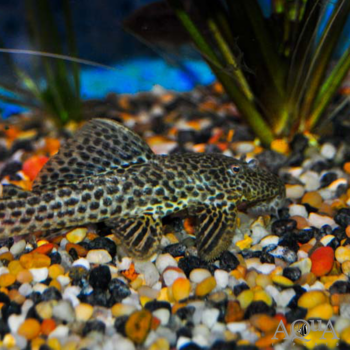
One of the largest and most massive species of South American plecos, the Hifin Dragon Pleco originates from the fast moving rivers of Southern Brazil and grows to a massive 24″ or larger in size. A grazer and scavenger, this pleco should be fed a varied diet of vegetable matter, protein, and sinking pellets or gel diets. Relatively hardy, the Hifin Dragon Pleco is a true monster fish suitable only for very large aquariums with plentiful hiding places and excellent water quality.
-
$16.99 – $49.99Price range: $16.99 through $49.99
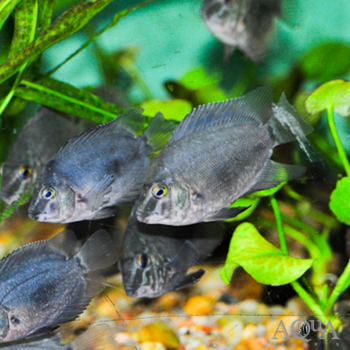
The Uaru or Triangle Cichlid is an attractive and unique large-growing cichlid found throughout the Amazon basin in South America. Often found in shallow water streams or flooded forest, Uarus tend to form loose schools with other peaceful cichlids and much of their diet is composed of fruit, nuts, and plant matter which falls from overhanging trees. Juvenile fish have a distinctive spotted pattern while adults transition into a tan base color with a triangle-shaped black splotch.
End of content
End of content