Showing 751–775 of 1981 resultsSorted by latest
-
$49.99
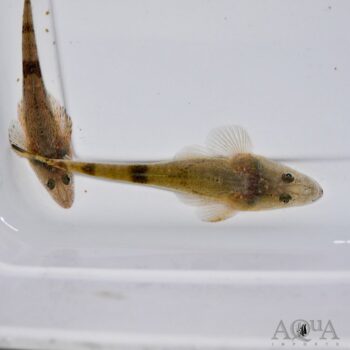
An extremely rare find in the saltwater trade, the Bartail Flathead (Platycephalus indicus), also known as the Indian Flathead, is a marine and brackish fish native to the Indo-West Pacific. These fish are closely related to the scorpionfish and have venomous spines. Growing up to 24 inches long, Bartail Flatheads spend most of their time on or camouflaged in the substrate and will feed on benthic algae as well as any fish and crustaceans that can fit in their mouth!
-
$24.99
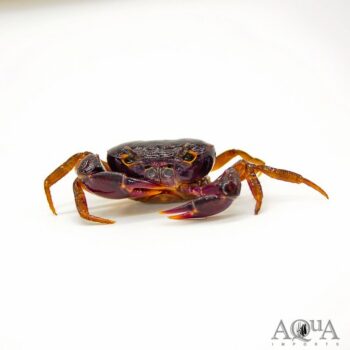
One of the rarer species of crab to find in the freshwater trade, the Indian Lilac Crab (Globithelphusa cf. kaufen) is also known as the purple freshwater crab or the Indian swimming crab. They are native to the freshwaters of Western India and will spend most of their time underwater. A proper setup needs a space for them to escape the water, as well as many hiding spaces both above and under the water to escape other crabs, as males can become territorial towards each other. These crabs have highly variable colors, ranging from dark purple to dark red.
-
$19.99
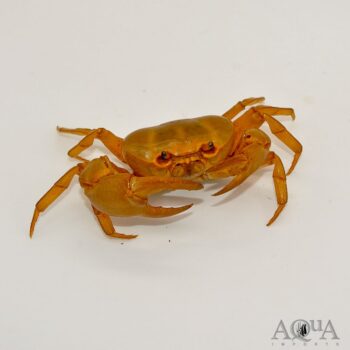
The Gold Crab (Terrathelphusa cf. chilensis) is native to the freshwaters of Java, Indonesia and is a rare crab in the freshwater trade. They are also known as the banana crab or the mangrove crab. As with similar crabs, the Gold Crab requires both underwater and land habitat in their tank with plenty of hiding spaces. They can be territorial, so having spaces for them to explore and hide is crucial. Growing up to 3 inches long with a monochrome gold hue, these formidable crabs are a unique species to add to your freshwater ecosystem.
-
$19.99
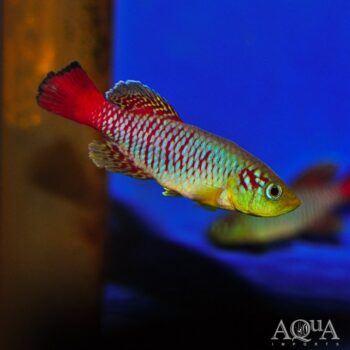
The Gunther’s Killifish (Nothobranchius guentheri), also known as the redtail notho, Guenther’s killifish, or Gunther’s blue Zanzibar killifish, is native to the freshwaters of the island of Zanzibar. Like other killifish, the Gunther’s Killifish is a hardy, tropical fish and are some of the most colorful fish found in the trade. With shimmery red and blue intermixed scales down their sides and red fins, these fish are hard to miss! Gunther’s Killifish are generally peaceful towards other fish of similar size and temperament.
-
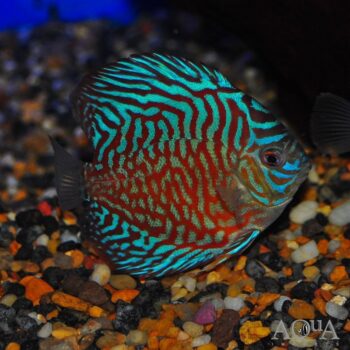
$99.99
Long considered the most beautiful of all freshwater aquarium fish, the discus remains a popular fish for serious hobbyists. Discus originate from the warm, acidic waters of Amazon tributaries in Brazil and Peru and are typically found in large groups. The many wild forms of discus have been selectively bred to create dozens of colorful strains, including the Tiger Turquoise, which is known for its vertical red reticulated pattern on a blue body. In the aquarium, regular large water changes, a protein-rich varied diet, and warm water temperatures (78-84) will create ideal conditions for these fish to thrive. Like all discus, they will do best in soft, slightly acidic water but will reward patient aquarists with spectacular coloration.
-
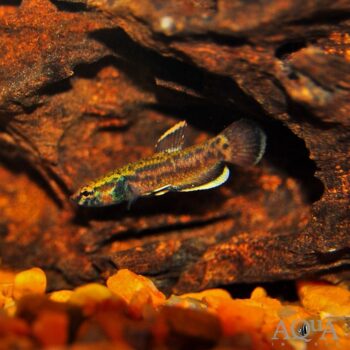
$39.99 – $89.99Price range: $39.99 through $89.99
Betta albimarginata is a unique species of betta fish native only to the Sebuku river drainage in Kalimantan Timur, Indonesia. These fish are easily distinguished from other, more common betta fish by their patterned, often red bodies with elegant white borders along the margins of their fins. Like other betta species, these fish will do best in dim, low-current waters with access to air at the surface and plenty of shelter to hide and explore.
-
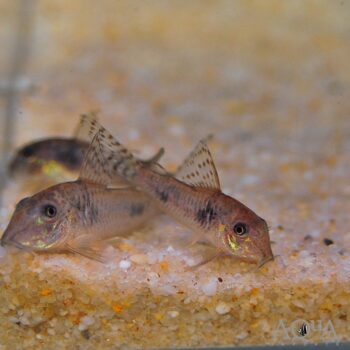
$7.99
The Ellis Cory (Corydoras ellisae), a member of the cory catfish group, is a relatively small fish in comparison to many of its closest cousins. Growing up to only 2 inches with a peaceful temperament, Ellis Cories are fantastic addition to many community tanks. These fish will spend most of their time near the bottom of your tank, congregating into groups as they scavenge for food. They are uncommon in the freshwater trade, making them a unique and sought-after choice! Like all Corydoras the are best kept in groups of 5 or more.
-
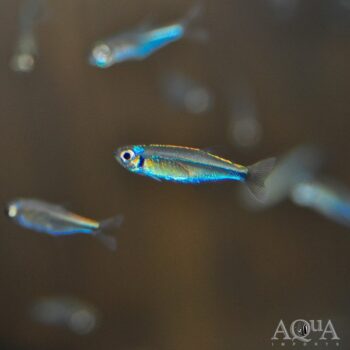
$12.99
Dwarf Blue Tetras (Tyttocharax cochui) are a true nano fish only obtaining a fully grown size around 1 inch. Their blue and silvery iridescence makes them a great candidate for brightly lit smaller planted aquariums. They do best in groups of 5-10 or more and accept most small prepared foods.
-
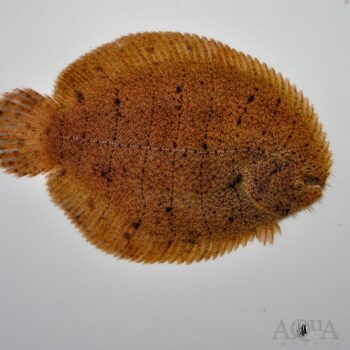
$39.99 – $49.99Price range: $39.99 through $49.99
A rare and oddball species to find, the Peruvian Freshwater Sole (Hypoclinemus mentalis) is native to the Amazon, Orinoco, and Essequibo river basins of South America. This locale is specifically from the Rio Blanco of Peru. The Peruvian Freshwater Sole is also the only member of its genus, adding to its uniqueness. They will spend most of their time burrowed or otherwise camouflaged against the substrate, waiting for prey. Peruvian Freshwater Sole prefer live food and can be finicky while weaning onto frozen food such as bloodworms and mysis shrimp. They can be kept with tankmates, but they should be peaceful and too large to be considered food.
-
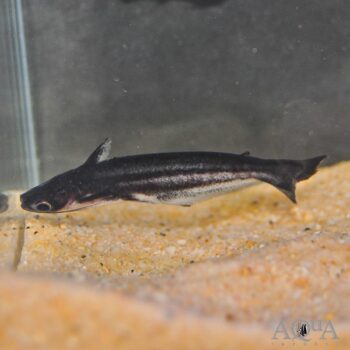
$39.99
Product description coming soon.
-
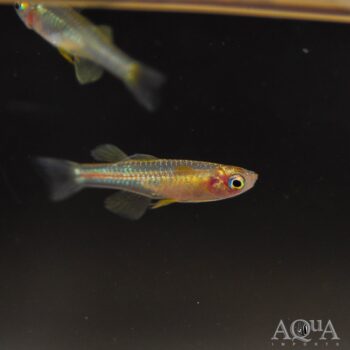
$5.99
Gertrude’s Blue Eye Rainbow (Pseudomugil gertrudae), also known as the spotted rainbow or the blue eye spotted rainbow, one of the rarer forms of Blue Eye Rainbows. These fish are native to Papua New Guinea and Australia. Gertrude’s Blue Eye Rainbows are a sexually dimorphic species, with the females displaying beautiful iridescence and mature males displaying fan-like fins of blue and yellow. They are peaceful with fish of similar size and temperament, making them an ideal candidate for a variety of freshwater community setups. They are best kept in groups of five or more.
-
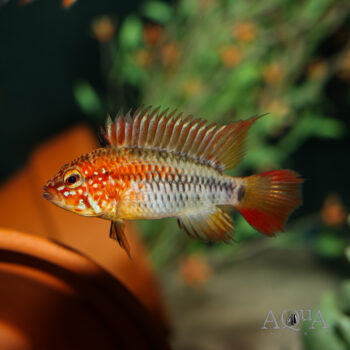
$19.99 – $34.99Price range: $19.99 through $34.99
The Red Neck Apisto (Apistogramma viejita “Red”) is a variant of the popular dwarf South American cichlid group. These fish are relatively small compared to many Apistos, growing up to only 2 inches! Red Neck Apistos are active, inquisitive fish who will spend lots of time exploring any nooks and crannies present in your tank. They are sexually dimorphic, with males and females differing in their equally bright colors at maturity, especially during mating. As with many apisto species, these fish will do best in groups and with fish of similar size and temperament.
-
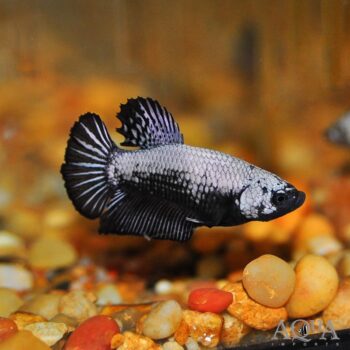
$29.99
Probably the single most popular fish kept around the world, the Betta or Siamese Fighting fish has been popular in its native Thailand for centuries, and has been bred into dozens of color forms and strains. The Red Galaxy Gold Plakat variant is a unique strain named for its red base with gold koi spotting . Incredibly hardy, and with the ability to breathe air from the surface, these fish are popular “bowl fish” but really will do best in a small aquarium with a heater and some form of filtration. As their name implies, males of this species will fight and must be kept singly but females can be kept in groups.
-
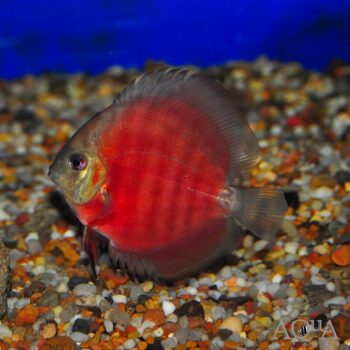
$79.99 – $89.99Price range: $79.99 through $89.99
Long considered the most beautiful of all freshwater aquarium fish, the discus remains a popular fish for serious hobbyists. Discus originate from the warm, acidic waters of Amazon tributaries in Brazil and Peru and are typically found in large groups. The many wild forms of discus have been selectively bred to create dozens of colorful strains, including the Red Alenquer, which is known for its vivid, red coloration with vertical black barring. In the aquarium, regular large water changes, a protein-rich varied diet, and warm water temperatures (78-84) will create ideal conditions for these fish to thrive. Like all discus, they will do best in soft, slightly acidic water but will reward patient aquarists with spectacular coloration.
-
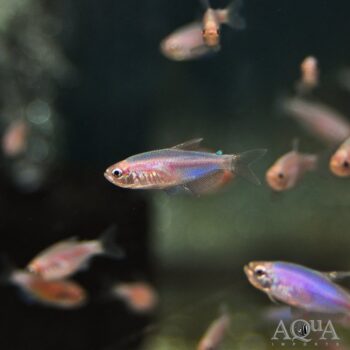
$4.99
A “man made” color morph of the Blue Kerri Tetra, the Golden Emperor or Gold Kerri Tetra is deservedly popular in the aquarium hobby. In the wild, these Tetras inhabit slow moving, warm, acidic streams but will adapt to a wide range of conditions in the aquarium. Like most of their close relatives, they are a loosely schooling species that will do best in groups of 5 or more and will get along well with most similarly sized, peaceful tankmates. Subdued lighting, plenty of cover in the form of driftwood or plants, and slightly soft water will help promote vibrant coloration.
-
Sale!
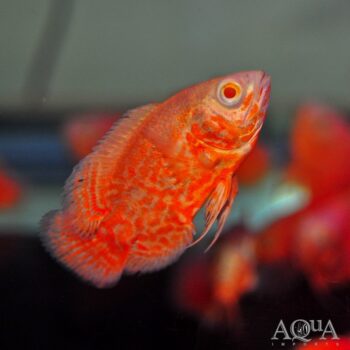
$59.99 – $99.99Price range: $59.99 through $99.99
A selectively bred form of the popular Oscar, the Nemo Tiger Oscar displays a reticulated dark orange/red pattern against a white base. One of the most popular and well-known South American Cichlids in the aquarium hobby, the Oscar is a large growing, relatively aggressive fish (especially towards other cichlids) and a popular food fish in its native habitat in the Amazon Basin. They are intelligent and highly interactive fish that will quickly learn to “beg” for food and make impressive display fish. Due to their large adult size, Oscars require large aquariums and should be kept with similarly sized tankmates.
-
Sale!
$99.99 Original price was: $99.99.$74.99Current price is: $74.99.
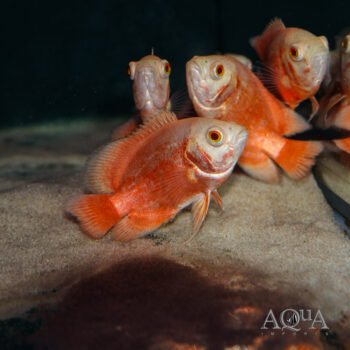
A selectively bred form of the popular Oscar, the Red Chili or Fire Red Oscar displays an almost solid dark orange or red body. One of the most popular and well-known South American Cichlids in the aquarium hobby, the Oscar is a large growing, relatively aggressive fish (especially towards other cichlids) and a popular food fish in its native habitat in the Amazon Basin. They are intelligent and highly interactive fish that will quickly learn to “beg” for food and make impressive display fish. Due to their large adult size, Oscars require large aquariums and should be kept with similarly sized tankmates.
-
$24.99
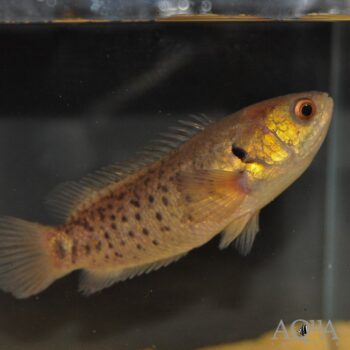
The Climbing Perch (Anabas tesudineus) is a rarity in the aquarium hobby. This obligatory breather, native to much of Asia, can be found in a range of water types, such as rivers, drainage systems, and flooded fields. The climbing perch’s pectoral fins and opercles allow it to move around on land. It uses this ability to look for nearby bodies of water throughout the dry season; if it is unable to find any, it can bury itself in mud and live for several weeks. Despite having an omnivorous diet that includes shrimp, fish fry, and macrophytic flora, they will happily devour pellets in captivity.
-

$59.99
The Dusky Ghost Knifefish (Adontosternarchus cf. clarkae) is an attractive, outgoing species that is relatively rare in the hobby. A medium growing fish with a maximum size of only about 8 inches, this knifefish is generally peaceful towards conspecifics and nearly all tankmates. They can be distinguished from other similar species by their unique gray mottled pattern. In the aquarium, they will do best in somewhat soft water and require plenty of hiding places in the form of driftwood, plants or caves. The Dusky Ghost Knife will readily accept small frozen foods.
-
$399.99
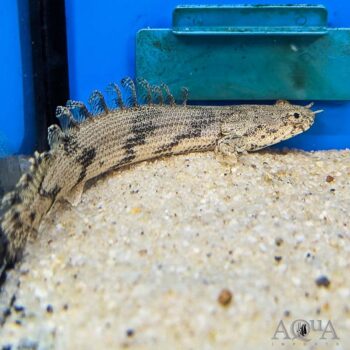
The Endlicheri Bichir or Saddled Bichir is a widespread species of Polypterus which inhabits various slow-moving shallow water habitats throughout much of West and Central Africa. It is a large growing and very heavy bodied Bichir, reaching sizes of over 30″ in the wild, and requires an appropriately large aquarium to house long term. Polypterus endlicheri is one of several so-called “lower jaw” group of Polypterus, so named for their distinctive heavy lower jaw that protrude over the upper lip. In the aquarium, they are hardy and undemanding like most bichir species, but should be kept with a tight-fitting and possibly weighted lid as they will attempt to jump if spooked or at night.
-
$8.99
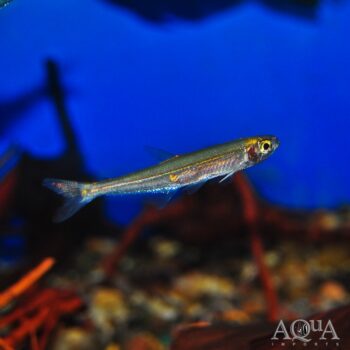
A unique and rarely seen characin found throughout the Orinoco and Amazon River basins in South America, the Green Line Lizard or Slender Tetra (Iguanodectes spilurus) is a medium sized schooling fish that inhabits clear waters with sandy bottoms and heavy vegetation growth. Like most tetras, they prefer to be kept in a small group or school of at least 5 individuals.
-
$69.99 – $79.99Price range: $69.99 through $79.99
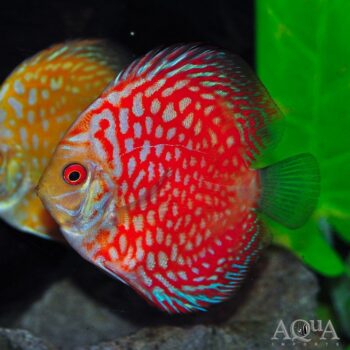
Long considered the most beautiful of all freshwater aquarium fish, the discus remains a popular fish for serious hobbyists. Discus originate from the warm, acidic waters of Amazon tributaries in Brazil and Peru and are typically found in large groups. The many wild forms of discus have been selectively bred to create dozens of colorful strains, including the Red Checkerboard, which is known for its ornate pattern of red reticulation on a white body. In the aquarium, regular large water changes, a protein-rich varied diet, and warm water temperatures (78-84) will create ideal conditions for these fish to thrive. Like all discus, they will do best in soft, slightly acidic water but will reward patient aquarists with spectacular coloration.
-
$999.99
Product description coming soon.
Illegal in: AZ, AR, CA, FL, GA, HI, MS, NV, OK, TX and UT
-
$89.99
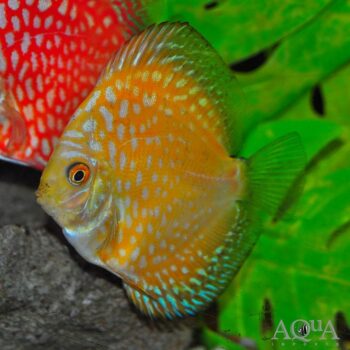
Long considered the most beautiful of all freshwater aquarium fish, the discus remains a popular fish for serious hobbyists. Discus originate from the warm, acidic waters of Amazon tributaries in Brazil and Peru and are typically found in large groups. The many wild forms of discus have been selectively bred to create dozens of colorful strains, including the Yellow Pigeonblood, which is known for its ornate pattern of yellow reticulation on a white body. In the aquarium, regular large water changes, a protein-rich varied diet, and warm water temperatures (78-84) will create ideal conditions for these fish to thrive. Like all discus, they will do best in soft, slightly acidic water but will reward patient aquarists with spectacular coloration.
-
Sale!
$39.99 Original price was: $39.99.$34.99Current price is: $34.99.
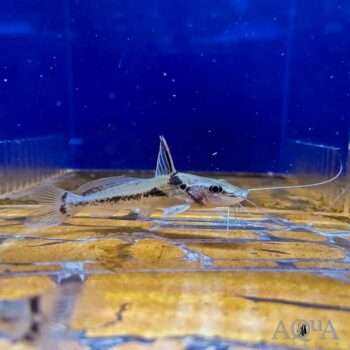
The Fox Face Catfish (Goeldiella eques), also known as the Fox Face or Horsehead Pimelodella Catfish, is a unique species of three-barbeled catfish native to assorted basins of the Amazon. They are a relatively large and peaceful freshwater giant, growing up to 10 inches long. Beware however, they will eat smaller fish given the opportunity! These fish will do best in tanks with sandy or gravel substrate, mellow lighting, and plenty of hiding spaces like driftwood.
End of content
End of content