CW127 Super Parallelus Cory (Hoplisoma sp. CW127)
Price range: $49.99 through $59.99Product description coming soon.
Select options
This product has multiple variants. The options may be chosen on the product page

Showing 701–725 of 1981 resultsSorted by latest

Product description coming soon.
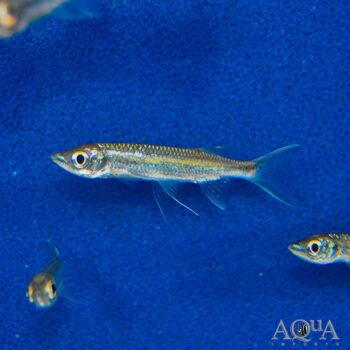
Indonesia is home to the Apollo Shark (Luciosoma setigerum). This fish lives in swift-moving headwater streams in the wild. Typically, their habitats contain a mixture of wood, leaves, and rocks. Since they will eat any item small enough, community tanks with small fish are not advised.
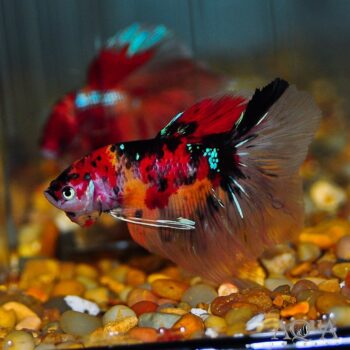
Probably the single most popular fish kept around the world, the Betta or Siamese Fighting fish has been popular in its native Thailand for centuries, and has been bred into dozens of color forms and strains. The Giant Halfmoon Koi or King Halfmoon Koi Betta variant will grow to a larger size while exhibiting the full fins of a halfmoon betta and koi patterning. Incredibly hardy, and with the ability to breathe air from the surface, these fish are popular “bowl fish” but really will do best in a small aquarium with a heater and some form of filtration. As their name implies, males of this species will fight and must be kept singly but females can be kept in groups.
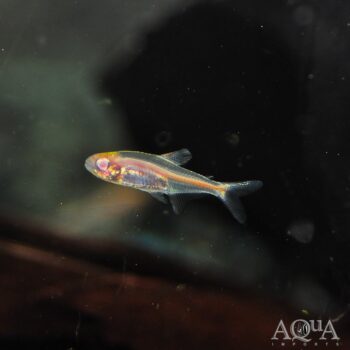
The Glowlight Tetra is a small, colorful tetra originally found in the Essequibo river drainage in Guyana but which is now commercially raised on a large scale in the US and overseas. In the wild, this species is found in a variety of habitat types, usually in large schools. In the aquarium, they are hardy and adaptable, making a great and vividly colored community fish. Like most small schooling tetras, Glowlight Tetras are best kept in groups of 10 or more, and will usually school with other similarly sized tetras.
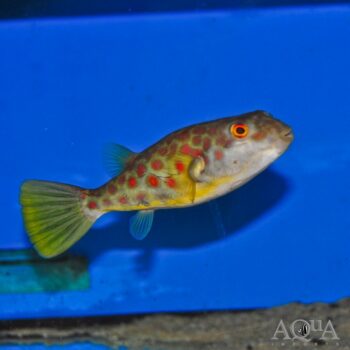
One of the rarest freshwater pufferfish seen in the aquarium hobby, the Cross River Puffer or Pustulatus Puffer is known only from the lower Cross River basin in Nigeria and Cameroon. In the wild, they are found mostly in the moderate flows of river channels with soft sand bottoms. In the aquarium, they will do best as a solitary fish with lots of plants and wood to break up sight lines, providing plenty of interactive spaces to explore. This species requires excellent water quality and grows to a large size demanding a large and well filtered setup.
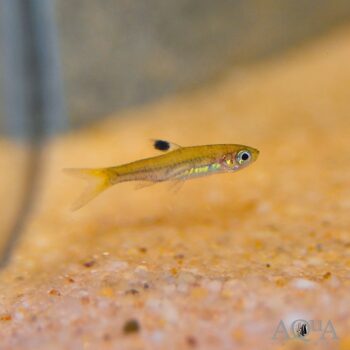
A unique and actively schooling “micro” Rasbora found throughout Southern Thailand, Malaysia, and the Sunda Islands, the Eyespot or Emerald Eyespot Rasbora makes an ideal addition to a nano aquarium or planted tank. In the wild, they inhabit slow moving streams and creeks with sandy substrate and soft, acidic and often tannin-stained waters, usually among aquatic plants or fallen branches. A hardy and adaptable fish in the aquarium, they are popular with aquascapers due to their small adult size, active nature, and distinctive markings. Like most schooling rasboras, they are best kept in groups of 10 or more and will thrive with most similarly-sized peaceful tankmates.
Product description coming soon.
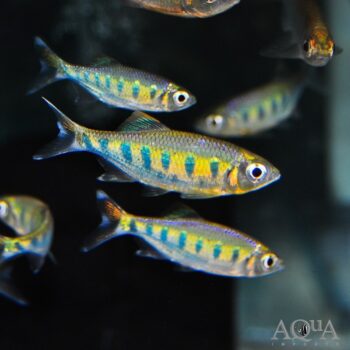
A stream-dwelling cyprinid from India’s Western Ghats, Barilius ardens is beautifully marked, with blue spots running fully along an iridescent body. They make an attractive dither fish for aquariums with medium to large sized fish that can compete with their fast feeding behavior. They prefer well-oxygenated water and enjoy moderate to strong current in the aquarium, so the addition of one or more powerheads or circulation pumps is recommended.
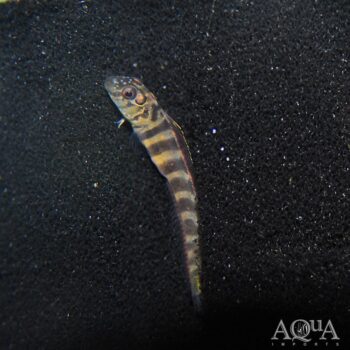
Originating from the coastal waters of Western India and Bangladesh, the Horned Blenny is one of a very few species of Blenny that inhabits fresh and brackish waters in the wild. A medium sized, active fish with an attractive, variable pattern of stripes and a notable ear shape marking, this fish inhabits a wide variety of estuarine and mangrove swamp habitat, but are more often found in fresh or slightly brackish water than full marine conditions. In the aquarium, they adapt to a variety of conditions but will do best in at least moderate strength brackish water (10-20ppt salinity). They can be hard on similar-sized tankmates and tend to spar with each other over territory, so be sure to provide plenty of cover and hiding places. They are best kept with larger fast swimming fish.
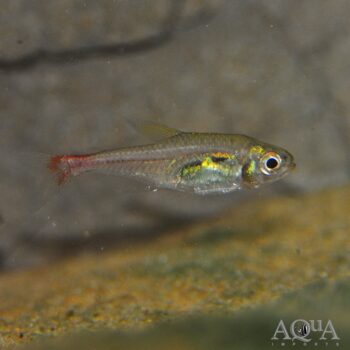
Product description coming soon.
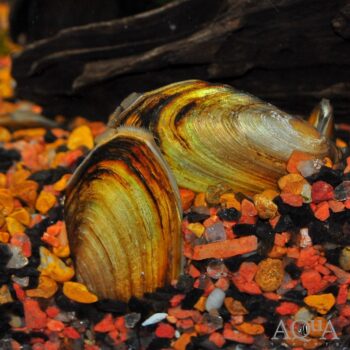
A large and distinctive freshwater mussel found throughout parts of Southeast Asia, the Shark Tooth or Shark Fin Mussel is typically found in sandy, shallow streams and lakes, often in large aggregations. A filter feeder like most freshwater bivalves, it feeds on suspended algae, microbes, and other suspended plankton. In the aquarium, it can be a useful filter feeder but will rapidly deplete its own food supply if not supplemented with liquid or powdered fine foods for freshwater filter feeders. They should be provided with a relatively deep substrate of sand or fine gravel to burrow in and should not be kept with tankmates that might nip their delicate mantles like loaches, carnivorous plecos, leporinus, or similar species.
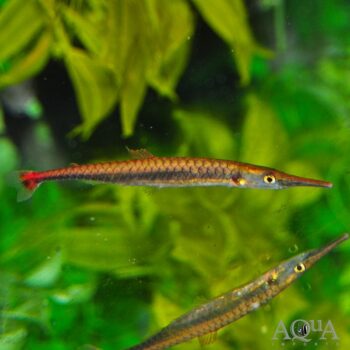
Product description coming soon.
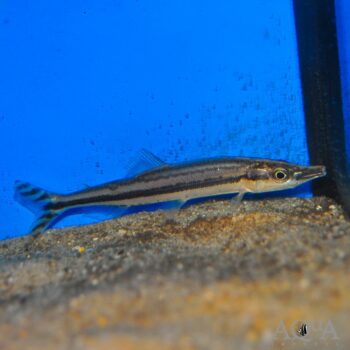
Product description coming soon.
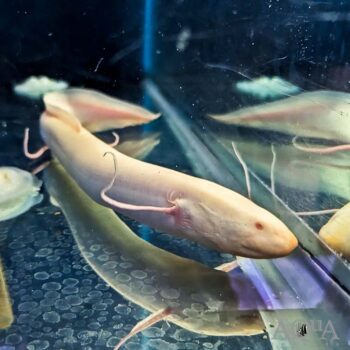
The Albino Spotted African Lungfish (Protopterus dolloi) is native to Middle African river basins, including the Congo and Ogowe. It is an obligatory air breather. In the wild, these fish live in transient floodplains, and during the dry seasons, the lungfish expel mucus, which dries and forms a cocoon around the fish, which can remain in this state for years. Since this fish will likely consume smaller community fish, it is recommended to keep it alone in captivity. These fish live for more than 20 years in captivity.
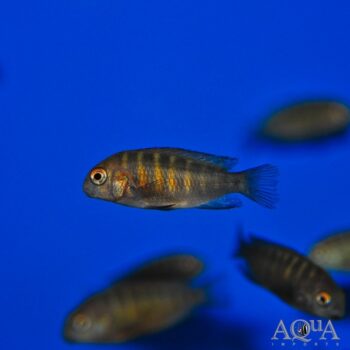
Product description coming soon.
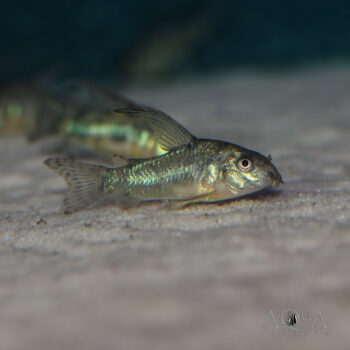
One of the most commonly kept species of Corydoras in the hobby, the Peppered or Paleatus Cory originates from watersheds in Southern South America but has been captive bred on a huge scale for decades and wild specimens are almost never imported. Like most Corys, they are peaceful, hardy, and best kept in groups of 5 or more due to their schooling nature. This species is an excellent community aquarium fish and will do well with nearly any non-aggressive tankmates.
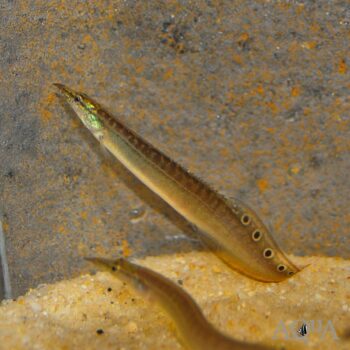
Product description coming soon.
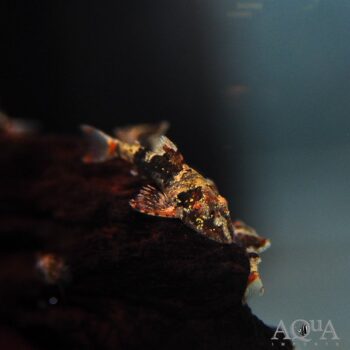
The Bumble Bee Oto (Rhinotocinclus isabelae) is found in the Rio Nanay near Iquitos, Peru. These fish prefer mild flow and cover in the form of plants and driftwood. As a herbivore, this fish will consume biofilms and filamentous algae in your tank, benefiting the overall ecosystem. When there is a scarcity of algae in your tank, you can supplement the oto’s diet with algae wafers. This small peaceful species that will mingle well in a community or planted tank. They are best kept in groups of 5 or more.
Product description coming soon
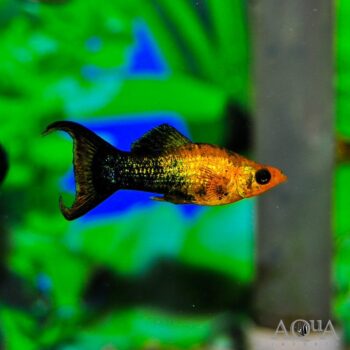
An aquarium hobby classic, the Molly is a livebearing species found through parts of Central America but it has been bred worldwide for the aquarium hobby for decades. In that time, the wild form has been developed in to dozens of varieties and color forms, including ‘Dalmatian’, Black, Gold, and others. Relatively peaceful, Mollies are hardy, and active fish but may bully smaller or more slow moving tankmates. They are often recommended for beginners due to their ease of care. A livebearing species, they will readily breed in the aquarium. Lyretail Mollies are found in pure fresh to nearly full marine environments in the wild and will adapt to a wide range of conditions but prefer slightly alkaline water with some salt or mineral content.
Product description coming soon.
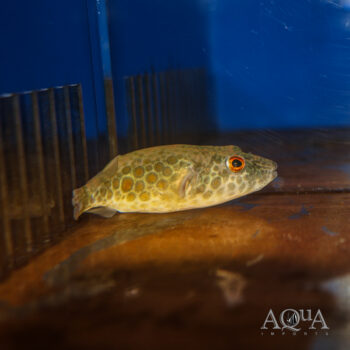
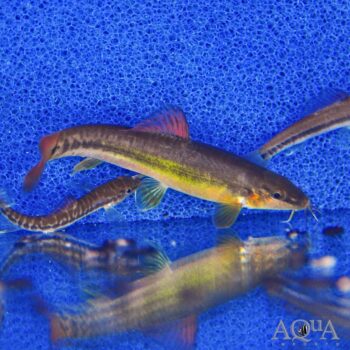
Product description coming soon.
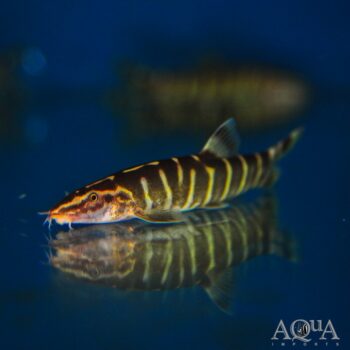
The Gold Banded Chinese Loach (Sinibotia pulchra) is native to China. These loaches inhabit clear moderately flowing streams and river systems feeding on micro-invertebrates. They mix well with fish like Danios and Rasboras and can be a terrific addition to a community tank. Since it is a gregarious species, it is best to buy it in groups of three to four individuals, and the more the better. The ideal aquarium should include plenty of cover and plants for the loaches to explore and hide within. These fish are intolerant of the buildup of organic waste and impeccable water quality must be maintained.
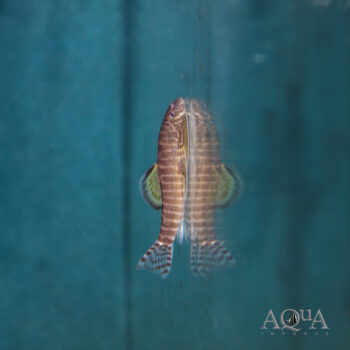
Labigastromyzon changtingensis is a hillstream loach native to China. It was revised from Pseudogastromyzon changtingensis to the genus Labigastromyzon in 2023. Like many of their close relatives, this species is perfectly adapted for life in fast moving waters, with their modified pectoral and anal fins forming something of a natural suction cup. This unique adaptation allows them to not only attach firmly to surfaces but also to move forward against strong current and climb up sheer rock faces and waterfalls. They will do best in an aquarium with slightly cooler, well-oxygenated water with moderate to strong current. They will readily feed on biofilms, algae, and certain prepared foods like Repashy Gel Diet. A social and outgoing species, they will thrive in groups of 5 or more and have been successfully bred in the aquarium.
End of content
End of content
No products in the cart.