Showing 126–150 of 220 resultsSorted by latest
-
$7.49
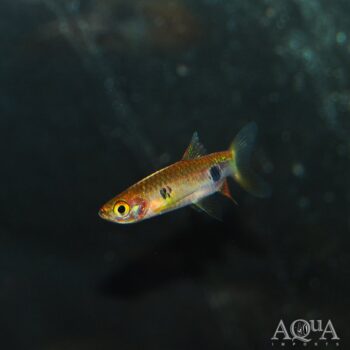
The Clown Rasbora is an active, medium-growing schooling fish endemic to Southeast Asia, known from peninsular Malaysia, Borneo and Sumatra. With deep red body coloration and distinctive black spots, this species is a popular aquarium fish that makes for a striking addition to planted or blackwater tanks. In the wild, they inhabit shallow streams and creeks with sandy substrate and soft, acidic, tannin-stained waters, usually among aquatic plants or fallen branches. A hardy and adaptable fish in the aquarium, they will do well in a variety of water conditions but will display the best coloration when kept in relatively soft water at temperatures above 78F. Like most schooling rasboras, they are best kept in groups of 10 or more and will thrive with most similarly-sized peaceful tankmates.
-
$44.99 – $69.99Price range: $44.99 through $69.99
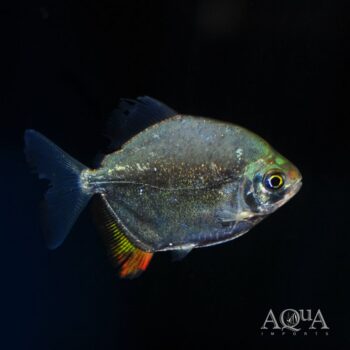
A rarely seen and beautifully colored species of Silver Dollar, the Yellowfin Red Hook Silver Dollar originates in the clear, fast moving waters of the Rio Xingu in Brazil. This species can be distinguished from its relatives by the brilliant yellow and red fins and extremely elongated ”hook” like anal fin. In the aquarium, it is a hardy and active species that will do best in a large aquarium with plenty of open swimming space, warm, well-oxygenated water and moderate to strong current. Like most of their relatives, this fish is a large growing loosely schooling fish which will do well with larger South American Cichlids or predatory species.
-
$29.99 – $34.99Price range: $29.99 through $34.99
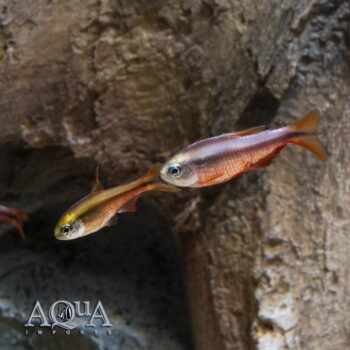
The Super Red Devil Tetra is a rare, recently described species known only from tributaries of the upper Rio Tapajos in Mato Grosso State, Brazil. It is one of the most sought after species currently in the hobby due to both its incredible deep red coloration and its rarity, which is due largely to the extremely remote stretches of river it inhabits in the wild. Both males and females of the species display spectacular red body and fin coloration, although males develop more vivid red and longer fins. In the aquarium, the Super Red Devil Tetra is a hardy and robust species that will do well with a variety of tankmates. For optimal display they should be kept in groups of at least 5, but larger groups tend to bring out the best coloration and behavior in both males and females.
-
Sale!
$3.99 Original price was: $3.99.$3.49Current price is: $3.49.
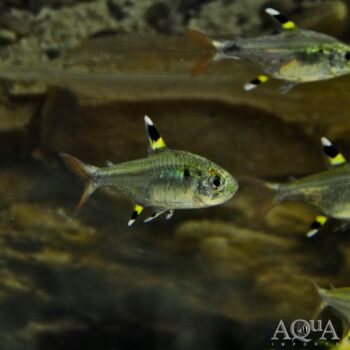
Easily recognizable for their silvery bodies and brightly colored fins, the Pristella Tetra (Pristella maxillaris) is the only member of the Pristella genus and is native to South American coastal rivers. Growing up to 2 inches, these fish are hardy, beautiful, and generally peaceful. The Pristella Tetra will thrive in a schooling group (ideally 10 or more) and can easily integrate into a freshwater community tank, growing up to 2 inches.
-
$3.99
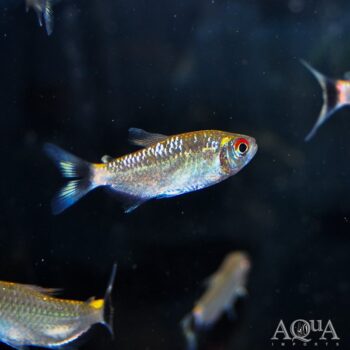
Growing up to 7 cm/2.8 inches, the Red Eye Tetra (Moenkhausia sanctaefilomenae) is a hardy and peaceful aquarium choice. This South American fish does best in a school of five or more. Given ample hiding places, these tetras are great community tankmates!
-
$6.99
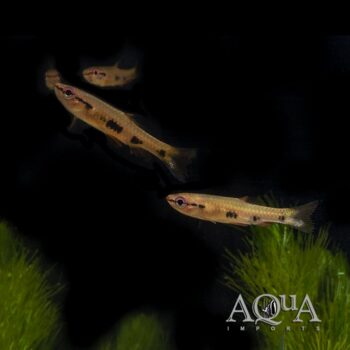
The most colorful of the unusual tetra relatives collectively known as Copeinas and Pyrrhulinas (family Lebiasinidae), the Cherry Red Pyrrhulina is a medium sized characin that can be distinguished from its relatives by its base reddish orange coloration and 3-4 large black ventral blotches. Like most of its close relatives, this is a loosely schooling species that will do best in groups of 5 or more and will get along well with most similarly sized, peaceful tankmates. Subdued lighting, plenty of cover in the form of driftwood or floating plants, and slightly soft water will help promote optimal coloration.
-
$4.99
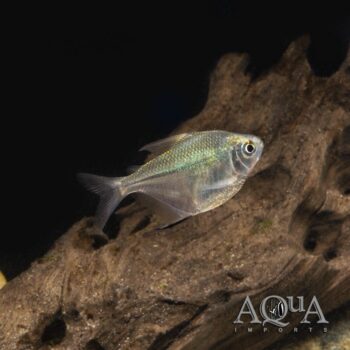
An uncommonly imported, medium-growing characin, the Discus Tetra is named for its distinctive round body shape. This species is known from the Guyanas but an extremely similar fish from the Orinoco in Colombia and Venezuela represents either a close undescribed relative or an extension of its range. In the wild, they inhabit slow moving, warm, acidic streams but will adapt to a wide range of conditions in the aquarium. Like most of its close relatives, this is a loosely schooling species that will do best in groups of 5 or more and will get along well with most similarly sized, peaceful tankmates. With their larger adult size and hardiness, this species makes an excellent tankmate for many more peaceful South American Cichlids.
-
$34.99 – $44.99Price range: $34.99 through $44.99
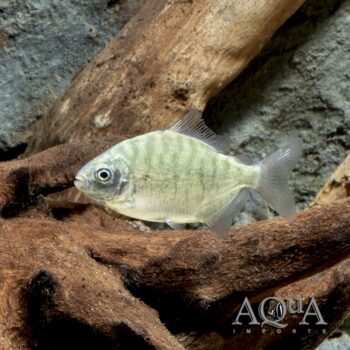
A recently described species from the Tocantins-Araguaia drainage in Eastern Brazil, the Red and Black Sailfin Pacu (Tometes siderocarajensis) inhabits rapids and fast-moving waters in the wild. A recent offering in the aquarium hobby, this large growing relative of the more well-known silver dollars and pacu develops incredible coloration, with adults exhibiting deep black throughout most of the body and fins interspersed with vivid red splotches along the body that intensify when the fish are in breeding condition. Like most of their relatives, this species is an omnivore which feeds on a substantial amount of fruits, nuts, and plant/vegetable matter in the wild and should be offered a varied diet for optimal growth and coloration. While the Red and Black Sailfin Pacu does not grow to the enormous size reached by other Pacu species, it is still a large and powerful swimmer as an adult and should be kept in an appropriately large aquarium with lots of open space and moderate to strong current.
-
$4.49 – $4.99Price range: $4.49 through $4.99
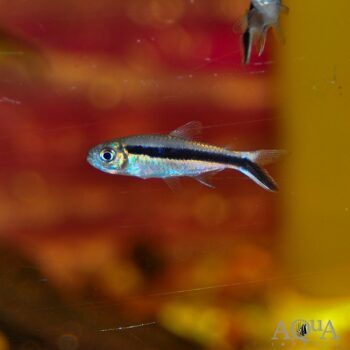
The Penguin Tetra or Hockeystick Tetra is one of several similarly marked species found throughout parts of the Amazon and its tributaries that display a distinctive horizontal black stripe which extends down into the lower caudal fin. With their distinctive pattern and peaceful, schooling nature, the Penguin Tetra is deservedly popular in the aquarium hobby and has been commercially bred for years to the point where wild collected specimens are almost never exported. In the wild, they inhabit slow moving, warm, acidic streams but will adapt to a wide range of conditions in the aquarium. Like most of their close relatives, they are a loosely schooling species that will do best in groups of 5 or more and will get along well with most similarly sized, peaceful tankmates. Subdued lighting, plenty of cover in the form of driftwood or plants, and slightly soft water will help promote vibrant coloration.
-
$3.99
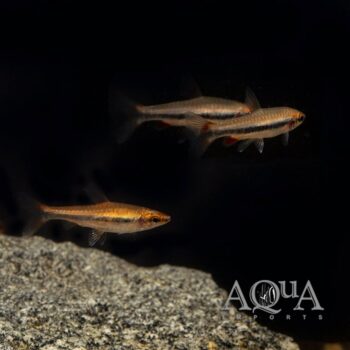
The Beckford’s or Golden Pencilfish is a colorful, peaceful schooling fish found throughout much of the Amazon basin and which is also bred on a large scale for the aquarium hobby. One of the hardiest pencilfish, they are well-suited for a peaceful community aquarium and are popular with aquascapers and planted tank hobbyists due to their color and interesting behavior. With their small adult size, they also make a great fish for nano aquariums as well. In the aquarium, they are relatively easy to care for, but care should be taken to ensure larger or faster moving tankmates don’t outcompete them for food.
-
$3.99
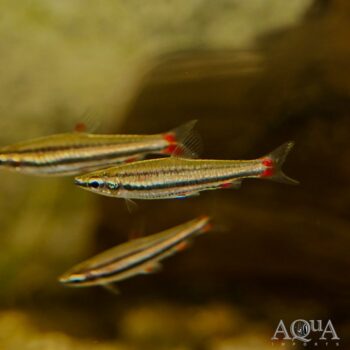
The Trifasciatus or Three Lined Pencilfish is a colorful, small-growing characin found throughout much of the Amazon basin and Guyana shield. In the wild, these fish inhabit areas of warm, acidic, slow-moving water, typically in large groups alongside tetras or other small schooling fish. They are well-suited for a peaceful community aquarium and are popular with aquascapers and planted tank hobbyists due to their color and interesting behavior. With their small adult size, they also make a great fish for nano aquariums as well. This species is hardy and will thrive in a variety of setups, but care should be taken to ensure larger or faster moving tankmates don’t outcompete them for food.
-

$24.99
One of the more unusual so-called “darter tetras” known to the hobby, the Neon Green Darter Characin inhabits the middle and lower Rio Negro in Brazil where it is typically found in shallow, fast-flowing streams and minor tributaries, often in clear water. Their unusual body shape is uniquely adapted for life among submerged root systems and tangles of aquatic or terrestrial vegetation in moderate to strong current. This species, the only member of its genus, is named for the brilliant iridescent green coloration it typically displays when comfortable but it is capable of a remarkable range of color change in response to both its surroundings and mood, and keeping these Characins in a planted aquarium may help them display their best colors. An agile micropredator, the Neon Green Darter Characin feeds on tiny invertebrates in the wild and will appreciate small live foods like baby brine shrimp or white worms in the aquarium. They will typically learn to feed on small frozen foods but a varied diet is best, and tankmates should be chosen with care so they don’t outcompete the darters for food. A fascinating and colorful centerpiece fish for a species or biotope themed aquarium, they are a social species and should be kept in groups.
-
$12.99
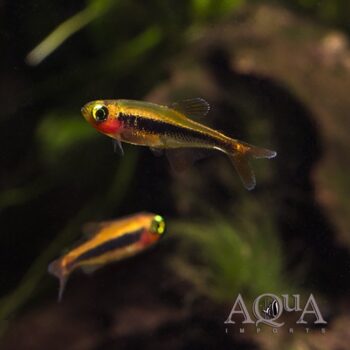
A remarkably beautiful small tetra known only from the upper Rio Negro and Uapes in Brazil and Colombia, the Tucano or Toucan Tetra was only described as recently as 1997 and remains an uncommon import in the aquarium hobby. In the wild, this fish inhabits shallow, quiet areas of flooded forest in deeply tannin stained, highly acidic waters usually in areas of dense leaf litter substrate and overhanging driftwood or branches. With their high contrast black, gold and reddish coloration, peaceful demeanor, and schooling behavior they make a unique and striking centerpiece for a blackwater, botanical-style or aquascaped aquarium. Best kept in groups of 10 or more fish, they will get along with most other peaceful tankmates but are somewhat shy and may be bullied by larger or more boisterous fish. Aquariums which closely replicate their unique wild habitat and water chemistry will help ensure the Tucano Tetra display their best coloration and behavior.
Wild Tucano Tetras and other fish collected from the upper Rio Negro in Brazil by artisanal fish collectors help support the sustainable aquarium fishery in the region which has been the focus of Project Piaba for over 25 years. For more information on this fishery and how it supports habitat preservation, visit www.ProjectPiaba.org
-
$3.99 – $4.99Price range: $3.99 through $4.99
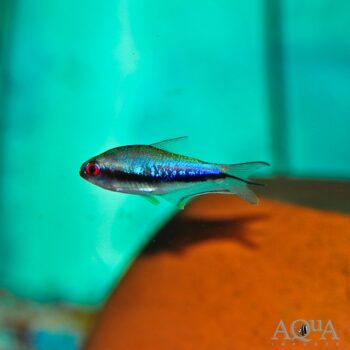
The Rainbow Emperor Tetra or Lacortei Tetra is a mid-size, beautifully colored schooling characin found in the Choco region of Colombia, in the waters of the Rio San Juan and its tributaries. In the wild it generally inhabits shallow, slow moving stretches of river or flooded forest area, usually close to submerged vegetation. This species is superficially similar to the more well known Emperor Tetra (N. palmeri) when young, but adults develop an unmistakable iridescent pattern above the lateral stripe with shades of red, pink, and green. Adult fish are easy to sex, with males displaying a distinct deep red eye and typically more intense coloration and elongated streamers on the caudal fin. In the aquarium, they are hardy and adaptable, perfect for most medium community aquariums or planted/aquascaped tanks. Like most tetras they should be kept in groups of at least 5.
-
$10.99
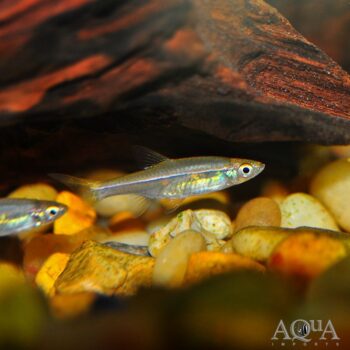
The Orange Line or Glowlight Rasbora is an active, medium-growing schooling fish endemic to Southeast Asia, known from peninsular Malaysia, Borneo and Sumatra. With their namesake vivid orange horizontal stripe, this species is an uncommon but beautifully marked aquarium fish that makes for a striking addition to planted or blackwater tanks. In the wild, they inhabit shallow streams and creeks with sandy substrate and soft, acidic, tannin-stained waters, usually among aquatic plants or fallen branches. A hardy and adaptable fish in the aquarium, they will do well in a variety of water conditions but will display the best coloration when kept in relatively soft water at temperatures above 78F. Like most schooling rasboras, they are best kept in groups of 10 or more and will thrive with most similarly-sized peaceful tankmates.
-
$5.99
With its vivid yellow coloration and red eyes, the Lemon Tetra has been deservedly popular in the aquarium hobby for decades. A peaceful, medium-growing schooling fish, this species has been bred on a commercial scale for many years but wild collected fish are rarely available. In the wild, this species inhabits the soft, clear waters of the middle and lower Rio Tapajos in Brazil, where they are found in a range of habitat types. Wild fish often display more vivid coloration than their aquacultured counterparts.
-
$6.99
An attractive, uncommonly imported small tetra found throughout the lower Amazon and its tributaries in Eastern Brazil, the Flag Tetra or Tricolor Flag Tetra typically inhabits shallow, slow-moving creeks or flooded forest area in stretches of acidic, tannin stained waters. Like most tetras its size, it is a schooling fish and is usually found in large groups in the wild. In the aquarium, the Flag Tetra is hardy and adaptable, but will display its best coloration in warm, softer water and should be kept in groups of at least 5.
-
$69.99 – $169.99Price range: $69.99 through $169.99
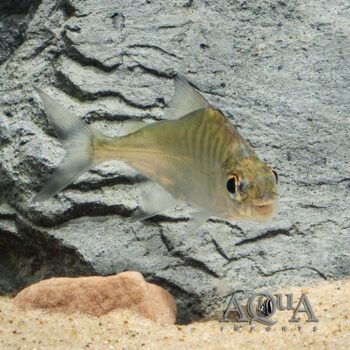
A smaller relative of the more well known Silver Dollars and Pacus, the Sheep Head or Sheep Pacu is known only from the Xingu and possibly Tocantins rivers in Eastern Brazil, where it inhabits clear, fast-moving waters. This unique characin has a mouth specially adapted for grazing on submerged vegetation, fallen fruits, and biofilm and is also known to occasionally nip scales off larger fish, which may constitute part of their diet in the wild. In the aquarium, they are largely peaceful and will leave smaller fish alone but they may pick scales or nip fins off larger, slow moving tankmates. Conditions in the aquarium should replicate their wild habitat as closely as possible, with warm (80F+), clear, soft water and plenty of water movement.
-
$6.99
Product description coming soon.
-
Sale!
$9.99
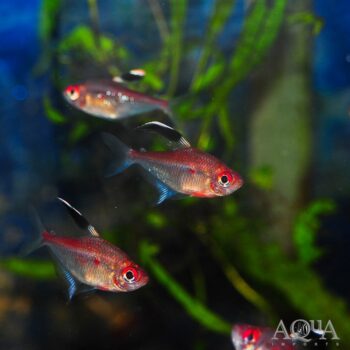
The Flameback Bleeding Heart Tetra is a beautifully colored close relative to the more well-known common Bleeding Heart found in the middle Rio Negro in Brazil, where it inhabits soft, acidic blackwater creeks and shallows and is typically found in large shoals. As their name implies, this species can be distinguished by the deep red iridescent streak extending across their dorsal surface, which is particularly prominent on mature fish. A medium to large species of tetra, they are best kept in groups of 5 or more and make an impressive centerpiece for a medium to large planted aquarium.
-
$3.99 – $4.49Price range: $3.99 through $4.49
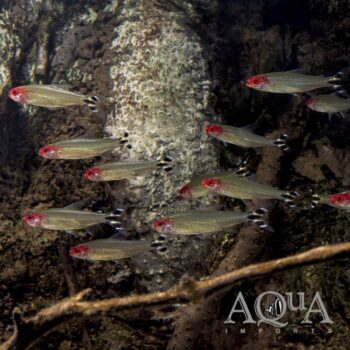
The Rio Negro Rummynose Tetra is a species of the aquarium hobby classic and the most colorful of three species regularly traded as “Rummynose Tetra” in the hobby and trade. Found only in Brazil’s Rio Negro and its tributaries, this species displays deep vivid red coloration extending as far back as the pectoral fins in most specimens. Like the other more commonly imported species it has been popular with generations of aquarium keepers due to its high contrast coloration, peaceful nature, and active schooling behavior. Their characteristic red “nose” is a good indicator of water quality as it will be most vibrant when the fish are healthy and in warm, slightly acidic water. Best kept in groups of 10 or more fish, they make ideal inhabitants for medium to large planted tanks.
Wild Rummynose Tetras and other fish collected from the middle Rio Negro in Brazil help support the sustainable aquarium fishery in the region which has been the focus of Project Piaba for over 25 years. For more information on this fishery and how it supports habitat preservation, visit www.ProjectPiaba.org
-
$14.99
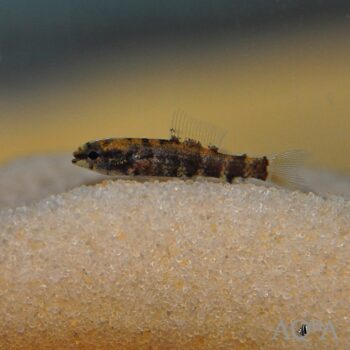
A tiny, bottom dwelling species of characin found throughout the middle Amazon and its tributaries, the Black Pygmy Darter Characin makes a fascinating resident for nano or biotope themed aquariums. As their name suggests, these fish have a reduced swim bladder and spend most of their time perched on or just above the substrate, “darting” instead of actively swimming in most cases similar to a goby or blenny. In the wild they inhabit a variety of habitats but are usually found in areas with low to moderate current and prefer well oxygenated water. As a shy and relatively slow moving fish, tankmates should be chosen with caution as they can easily be outcompeted for food
-
$9.99
A medium growing relative of the more well known Silver Dollars and Pacus, the Silver Mylossoma or Hard Belly Pacu is widespread in the Amazon and Orinoco basins where they are important food fish due to their abundance and ease of capture. They inhabit a wide range of habitat types but generally prefer relatively shallow river’s edge habitat in areas of slow to moderate flow, where they are found in large aggregations. An omnivore, their diet is similar to the much larger pacu which subside on fruits, nuts and other vegetable matter in the wild and will accept almost any food in the aquarium (although protein rich foods should be fed sparingly). Due to its hardiness, active schooling nature, and manageable adult size, the Silver Mylossoma makes an excellent tankmate for South American cichlids or predatory fish.
-
$6.99
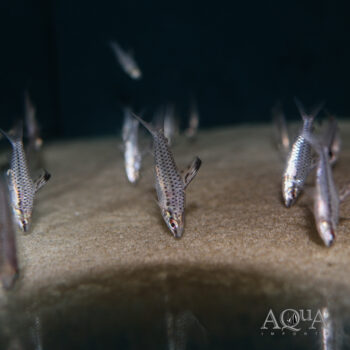
A small, unique schooling characin, the Spotted or Graceful Headstander Tetra is named for the distinctive “head down” posture they typically swim in. In the wild, they are usually found in large aggregations in shallow water areas and graze on insect larvae, crustaceans, and biofilm. In the aquarium, they are relatively hardy but will do best in warm, slightly acidic water with plenty of cover and minimal current. A tightly schooling fish, they should be kept in groups of at least 5, with larger groups making for a very distinctive display in a medium to large aquarium.
-
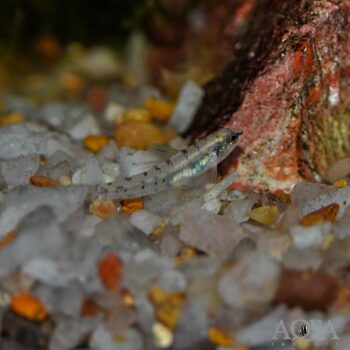
$9.99
One of many species of similar looking, tiny characins found throughout much of South America, the Green Darter Characin (Characidium sp. ‘green’) makes a fascinating resident for nano or biotope themed aquariums. As their name suggests, these fish have a reduced swim bladder and spend most of their time perched on or just above the substrate, “darting” instead of actively swimming in most cases similar to a goby or blenny. In the wild they inhabit a variety of habitats but are usually found in areas with moderate to fast current and prefer well oxygenated water. A hardy and interesting fish, they are social and should be kept in groups.
End of content
End of content