Showing 151–175 of 220 resultsSorted by latest
-
$4.99
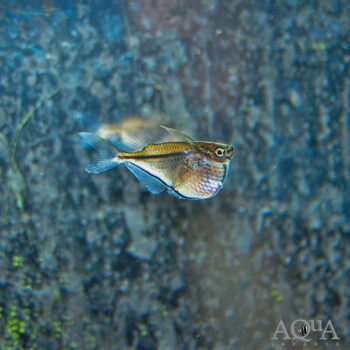
An attractively marked small growing species, the Blackwing or Marthae Hatchet is primarily found in slow moving shallow waters in the Peruvian Amazon. In the wild, they tend to inhabit clear, warm, slightly acidic water and unlike other hatchet species spend much of their time below the surface mid water column. A social, schooling fish, they will do best in groups of 5 (ideally 8-10) or more in the aquarium and require excellent water quality and peaceful tankmates.
-
$2.49
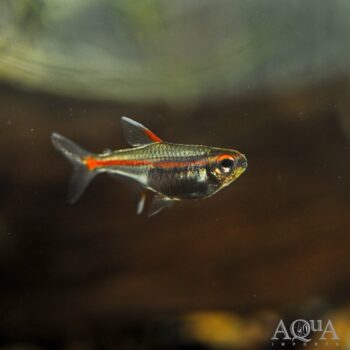
The Glowlight Tetra is a small, colorful tetra originally found in the Essequibo river drainage in Guyana but which is now commercially raised on a large scale in the US and overseas. In the wild, this species is found in a variety of habitat types, usually in large schools. In the aquarium, they are hardy and adaptable, making a great and vividly colored community fish. Like most small schooling tetras, Glowlight Tetras are best kept in groups of 10 or more, and will usually school with other similarly sized tetras.
-
$4.99
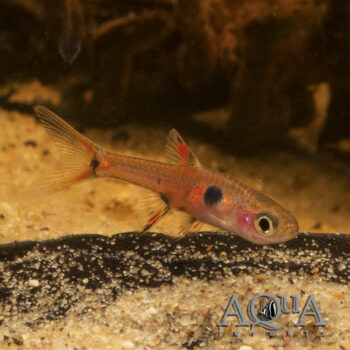
A unique and actively schooling “micro” Rasbora found throughout Southern Thailand, Malaysia, and the Sunda Islands, the Dwarf or Maculatus Rasbora makes an ideal addition to a nano aquarium or planted tank. In the wild, they inhabit slow moving streams and creeks with sandy substrate and soft, acidic and often tannin-stained waters, usually among aquatic plants or fallen branches. A hardy and adaptable fish in the aquarium, they are popular with aquascapers due to their small adult size, active nature, and distinctive markings. Like most schooling rasboras, they are best kept in groups of 10 or more and will thrive with most similarly-sized peaceful tankmates.
-
$39.99 – $49.99Price range: $39.99 through $49.99
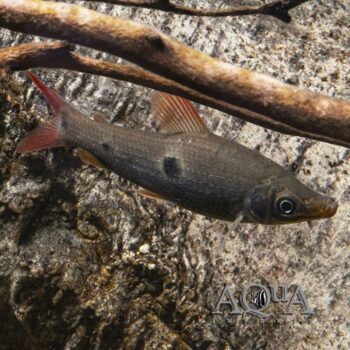
An uncommon Anostomid found throughout several major river systems in South America, the Redfin Leporinus is a loosely schooling species similar to the more well-known banded Leporinus (L. fasciatus). In the wild, they tend to inhabit fast moving acidic waters, usually in rocky areas close to large boulders or caves and use their specialize mouths to graze on algae, biofilms, and small insects and crustaceans. In the aquarium, they do best in fast-moving, well-oxygenated water and is best kept in groups of 3 or more. Like their close relatives, they may nip fins of slower moving fish so tankmates should be fast swimmers as well.
-

$16.99
One of the larger fish in the Amazon Basin, and an important food fish throughout most of the its range, the Red Belly Pacu is a beautifully marked “gentle giant” suitable for only the largest private aquariums, indoor ponds, or public displays. In the wild, this fish is an opportunistic grazer, which feeds primarily on fallen fruit and nuts from trees overhanging the rivers edge habitat where they are usually found. They are a hardy species, tolerant of a wide range of water conditions – but given their huge size and equally large appetite they will require significant filtration and regular water changes. The Red Pacu will accept almost any frozen or prepared food in the aquarium but should be offered a varied diet heavy in vegetable matter.
-
$49.99 – $59.99Price range: $49.99 through $59.99
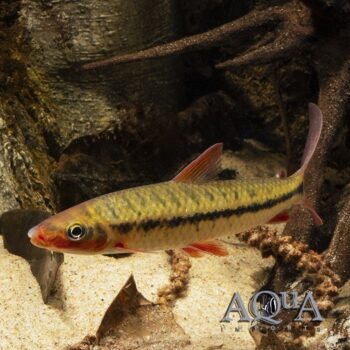
An uncommon and vividly marked Anostomid found throughout several major river systems in South America, the Red Cheek Leporinus is a loosely schooling species similar to the more well-known banded Leporinus (L. fasciatus). In the wild, they tend to inhabit moderate to fast moving acidic waters, usually in open water where they feed on insects and crustaceans. In the aquarium, they require plenty of open swimming space and will do best in fast-moving, well-oxygenated water with a tight fitting lid as they are impressive jumpers. This species makes an excellent dither for larger South or Central American Cichlids.
-
$2.99 – $3.99Price range: $2.99 through $3.99
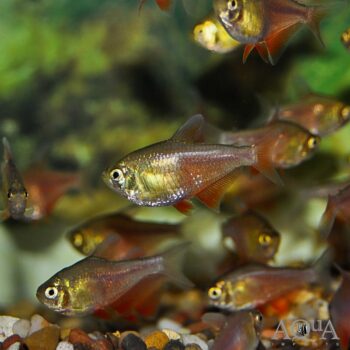
A vividly colored, medium growing tetra species found in Southeastern Brazil, the Orange Von Rio or Flame Tetra is deservedly popular in the aquarium hobby and has been commercially bred for decades to the point where wild collected specimens are almost never exported. In the wild, they inhabit slow moving, warm, acidic streams but will adapt to a wide range of conditions in the aquarium. Like most of their close relatives, they are a loosely schooling species that will do best in groups of 5 or more and will get along well with most similarly sized, peaceful tankmates. Subdued lighting, plenty of cover in the form of driftwood or plants, and slightly soft water will help promote vibrant coloration.
-
Sale!
$3.49 – $3.99Price range: $3.49 through $3.99
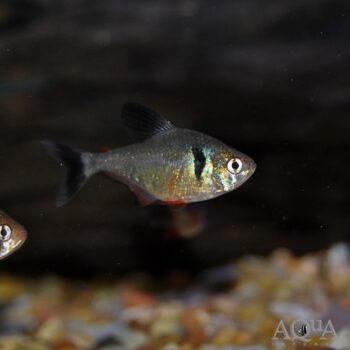
A colorful, medium growing tetra species found in rivers throughout Southern Brazil and Paraguay, the Black Phantom Tetra is deservedly popular in the aquarium hobby and has been commercially bred for decades to the point where wild collected specimens are almost never exported. In the wild, they inhabit slow moving, warm, acidic streams but will adapt to a wide range of conditions in the aquarium. Like most of their close relatives, they are a loosely schooling species that will do best in groups of 5 or more and will get along well with most similarly sized, peaceful tankmates. Subdued lighting, plenty of cover in the form of driftwood or plants, and slightly soft water will help promote vibrant coloration.
-
$4.49
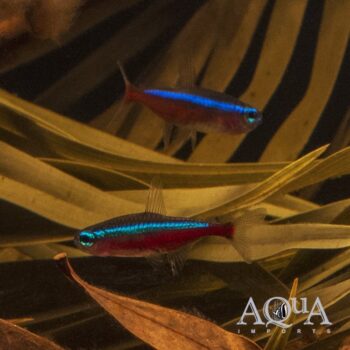
One of the most popular and instantly recognizable freshwater aquarium fish, the Cardinal Tetra originates from the dark, acidic waters of the Negro and Orinoco River basins in Brazil, Colombia, and Venezuela. With their vivid red and blue coloration, peaceful demeanor, and schooling behavior they are one of the best aquarium fish species in the hobby for beginners and experienced hobbyists alike. Best kept in groups of 10 or more fish, they will get along with most other peaceful tankmates and will thrive in most setups. Wild cardinals collected from the middle Rio Negro in Brazil help support the sustainable aquarium fishery in the region which has been the focus of Project Piaba for over 25 years. For more information on this fishery and how it supports habitat preservation, visit www.ProjectPiaba.org
-
$7.99
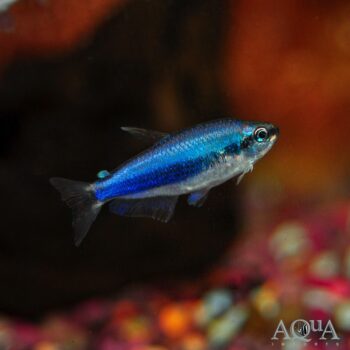
A colorful, smaller growing characin known from the upper Rio Madeira in Brazil, the Super Blue Emperor or Super Blue Kerri Tetra is deservedly popular in the aquarium hobby and has been commercially bred for years to the point where wild collected specimens are almost never exported. In the wild, they inhabit slow moving, warm, acidic streams but will adapt to a wide range of conditions in the aquarium. Like most of their close relatives, they are a loosely schooling species that will do best in groups of 5 or more and will get along well with most similarly sized, peaceful tankmates. Subdued lighting, plenty of cover in the form of driftwood or plants, and slightly soft water will help promote vibrant coloration.
-
$17.99
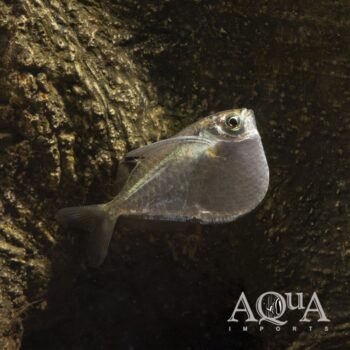
A rarely seen relative of the common silver hatchet (T. stellatus), the Giant Silver Hatchet is found throughout Central and Western Amazon tributaries. In the aquarium, they are hardy and peaceful schooling fish like most hatchets. This species is shy by nature and fast moving, large, or aggressive tankmates should be avoided. Their tank should be kept tightly covered as they are easily spooked and likely to jump out if given the opportunity. As a surface feeder, they primarily eat insects in the wild but will accept flake and other floating foods like freeze dried bloodworms in the aquarium.
-
$5.99
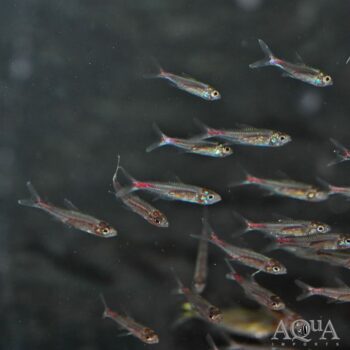
Product description coming soon
-
$5.99 – $6.99Price range: $5.99 through $6.99
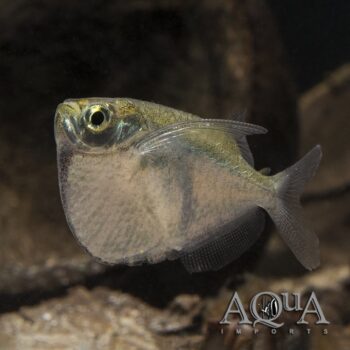
An iconic aquarium fish popular in the hobby for decades, the Spotfin Silver Hatchet is the most widespread of all its relatives in the wild, found through all of Northern South America and some of the southern Amazon tributaries as well. In the aquarium, they are hardy and peaceful schooling fish that will do best in groups of 8 or more. This species is shy by nature and fast moving, large, or aggressive tankmates should be avoided. Their tank should be kept tightly covered as they are easily spooked and likely to jump out if given the opportunity. As a surface feeder, they primarily eat tiny insects in the wild but will accept flake and other small floating foods like freeze dried bloodworms in the aquarium. The Spotfin Silver Hatchet can be distinguished from the common silver hatchet and other similar species by their large, light silver scales and lack of any black pigment except for the spot on the dorsal fin.
-
$5.99 – $9.99Price range: $5.99 through $9.99
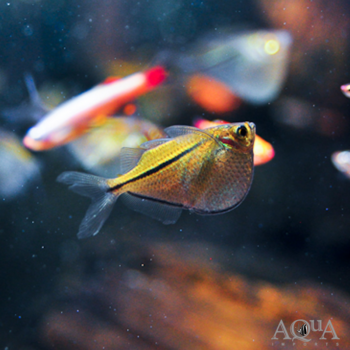
Probably the most commonly kept species of the popular surface dwelling Hatchetfish, the Silver Hatchet has a wide distribution in South America, ranging from the middle Amazon and Orinoco in Colombia and Peru, as well as the coastal waters of Brazil, Suriname and the Guyanas. In the aquarium, they are hardy and peaceful schooling fish that will do best in groups of 8 or more. This species is shy by nature and fast moving, large, or aggressive tankmates should be avoided. Their tank should be kept tightly covered as they are easily spooked and likely to jump out if given the opportunity. As a surface feeder, they primarily eat tiny insects in the wild but will accept flake and other small floating foods like freeze dried bloodworms in the aquarium.
-
$4.99 – $5.99Price range: $4.99 through $5.99
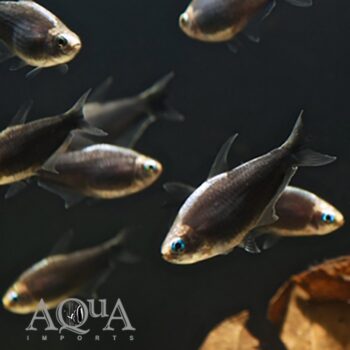
The Black Emperor Tetra is a line bred color variant of the popular Emperor Tetra selected over generations for its unique, deep blue-black body coloration and striking blue eyes. In the aquarium, they are hardy and adaptable, perfect for most medium community aquariums or planted/aquascaped tanks. Like most tetras they should be kept in groups of at least 5.
-
$7.99 – $9.99Price range: $7.99 through $9.99
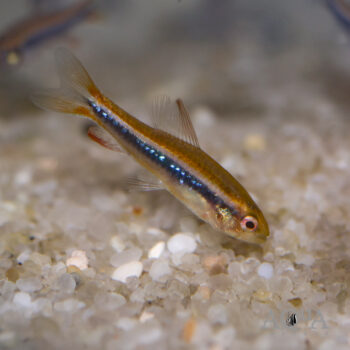
A spectacularly colored and uncommon Tetra found throughout the black waters of the Rio Orinoco and Rio Negro basins in South America, the Black Morpho or Black Darter Tetra typically inhabits warm, shallow water habitat with lots of cover in the form of fallen branches and leaf litter. They are often found alongside more well known tetras such as Cardinals and Rummynose, especially as juvenile fish. Adult males in particular display an impressive sail-like dorsal fin and iridescent black and purple scales. Similar to the more commonly seen Sailfin Tetras, they can be a bit aggressive with one another for a tetra and are best kept in larger groups in aquariums with ample space for them to stake out territories.
-
$6.99
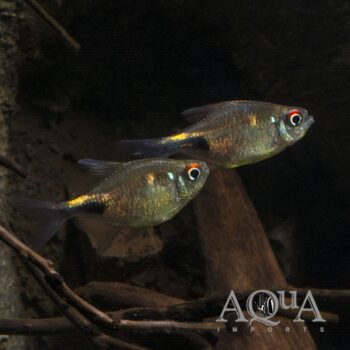
An uncommon but nicely marked tetra, the Garnet, Pretty, or Black Wedge Tetra is an ideal community fish for a medium to large aquarium and makes an excellent schooling fish when kept in an appropriate sized group. Extremely hardy, colorful, and always active, they tend to inhabit the upper levels of the water column in the aquarium and make an impressive addition to an aquascaped or planted tank. Garnet Tetras are a hardy and undemanding species and will generally do well under a range of water conditions.
-
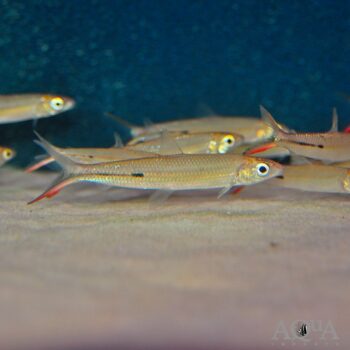
$9.99 – $14.99Price range: $9.99 through $14.99
A medium-sized schooling tetra relative, the Red Tail, Red Line, or Slender Hemiodus (Hemiodus gracilis) is widespread throughout the Amazon and Orinoco basins, where it is usually found in large mixed species shoals alongside other schooling tetras. A fast and somewhat skittish fish at first, they make for an impressive display in a larger mixed species aquarium and make excellent tankmates for most other peaceful fish. This species prefers warm, slightly acidic water and will do best when given plenty of cover in the form of driftwood or tall plants.
-
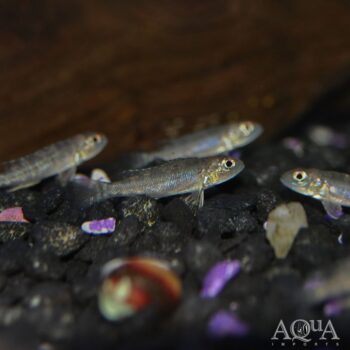
$14.99
A medium sized and robust shell-dwelling species of cichlids found in Africa’s Lake Tanganyika, N. hecqui or Hecq’s Lamprologus makes for a unique display fish due to their vivid pattern and bold, fascinating behavior. In the wild, these cichlids inhabit dense fields of empty snail shells at the bottom of the lake, where each fish will stake a territory in an individual shell and defend it from others. In the aquarium, they are hardy and adaptable but prefer alkaline water and should be provided with shells or similar structure for them to establish territories in. One of the more territorial species of shell dwelling cichlids, they should be given ample space and may bully smaller tankmates.
-
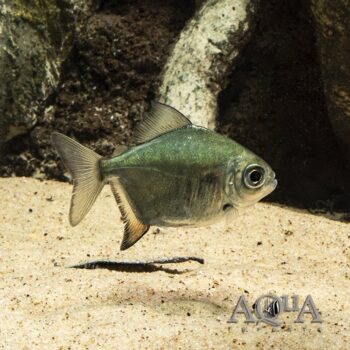
$79.99 – $89.99Price range: $79.99 through $89.99
A rarely seen species of Myleus (commonly referred to as Silver Dollars in the trade), the Zebra Silver Dollar or Myleus sp. ”zebra” originates in the rivers and streams of Guyana and Suriname but are now bred in captivity on a small scale. Juveniles display irregular barring with black trim along their fins, and adult fish develop a greenish color with mottled horizontal stripes which gives them their common name. Like most of their relatives, this fish is a large growing loosely schooling fish which will do well with larger South American Cichlids or predatory species.
-
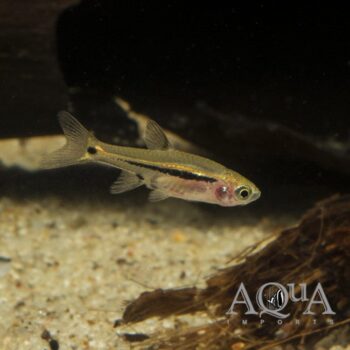
$3.99
A unique and actively schooling “micro” Rasbora found throughout Southern Thailand, the Exclamation Point or Least Rasbora makes an ideal addition to a nano aquarium or planted tank. In the wild, they inhabit slow moving streams and creeks with sandy substrate and soft, acidic and often tannin-stained waters, usually among aquatic plants or fallen branches. A hardy and adaptable fish in the aquarium, they are popular with aquascapers due to their small adult size, active nature, and distinctive markings. Like most schooling rasboras, they are best kept in groups of 10 or more and will thrive with most similarly-sized peaceful tankmates.
-
$7.49
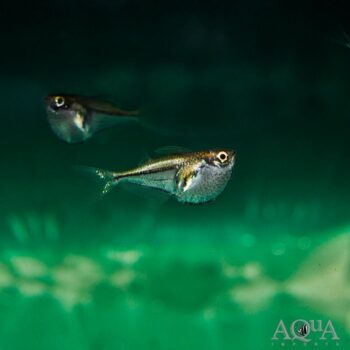
The smallest species of Hatchet and a unique addition to a specialty community or aquascaped tank, the Myersi Pygmy Hatchet is primarily found in slow moving shallow waters in the Peruvian Amazon. In the wild, they tend to inhabit clear, warm, slightly acidic water and unlike other hatchet species spend much of their time below the surface mid water column. A social, schooling fish, they will do best in groups of 5 (ideally 8-10) or more in the aquarium and require excellent water quality and peaceful tankmates.
-
$9.99 – $59.99Price range: $9.99 through $59.99
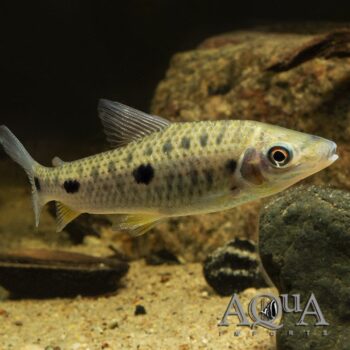
An uncommon and attractively marked species of Leporinus, the Dot Dash Leporinus is found throughout the Orinoco Basin in Colombia and Venezuela. It is found in a variety of habitat types, from fast flowing waters to shallow blackwater swamps. Like most of their close relatives, they are best kept in groups of 3-5 or more as they are a social fish. While they can be prone to nipping fins on slow moving tankmates, they make excellent dither fish for medium to large South American Cichlids or other fast moving larger fish.
-
$4.99
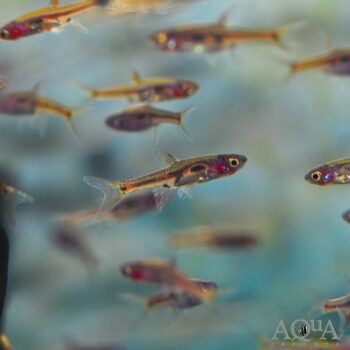
An ideal fish for nano aquariums, the Phoenix Rasbora or Red Micro Rasbora inhabits warm, acidic, shallow waters throughout the island of Borneo. With their vibrant coloration and peaceful, active nature, they are extremely popular in the hobby and a favorite with planted tank hobbyists. Typically found in true blackwater swamps and creeks, this dwarf rasbora will do best and display optimal color and behavior when provided with an environment similar to their wild habitat, and will benefit from the addition of some tannins from Catappa Leaves or similar botanicals. This species is very similar to its close relative the Chili or Mosquito Rasbora but can be distinguished by less uniform red coloration and a broken (vs. continuous) horizontal black stripe extending across the body. In the aquarium, they are hardy and will generally thrive under a wide range of conditions but will exhibit their best color if kept in warm, slightly soft water and in groups of at least 10. With their small adult size, larger or fast moving tankmates should be avoided but they will thrive with most small peaceful fish and invertebrates.
-
$7.99
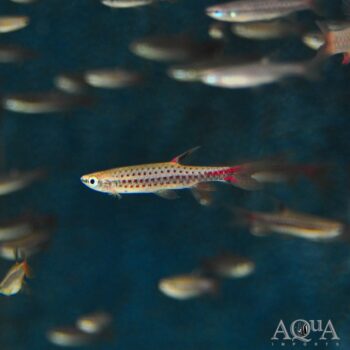
A small, shallow water species found throughout much of the middle and lower Amazon, the Red Spotted Splashing Tetra gets its name from its unique breeding strategy, which has female fish laying their eggs above the waterline in overhanging vegetation. They are typically found in blackwater streams, and do best in soft or slightly acidic water in the aquarium, but are otherwise hardy fish. They will readily accept most floating foods and are a loosely schooling species, so should be kept in groups of 5 or more.
End of content
End of content