Lake Kurumoi Rainbow (Melanotaenia parva)
$14.99Product description coming soon
Select options
This product has multiple variants. The options may be chosen on the product page

Showing 1576–1600 of 1981 resultsSorted by latest
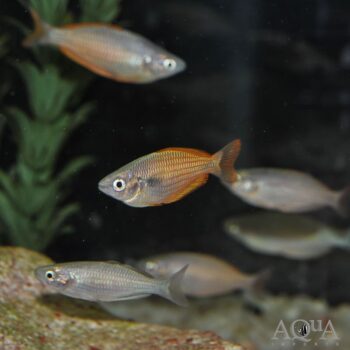
Product description coming soon
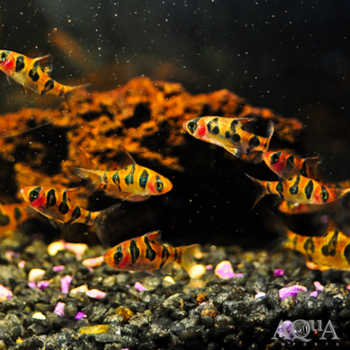
One of the most beautifully marked of all Southeast Asian Barbs, the Snakeskin, Round Banded, or Rhombo Barb is a medium growing species found in the blackwater streams and peat swamps of Borneo. In the wild, this species inhabits warm, acidic waters and will display their best coloration when kept in similar conditions. Unlike some of their more common relatives, the Rhombo Barb is peaceful and will do well with most peaceful tankmates in the aquarium. This species will do best when kept in groups of 5 or more. Warm, acidic water and the additions of some tannins in the form of botanicals like Indian Almond Leaves will help ensure the Rhombo Barb displays their most vivid coloration in the aquarium.
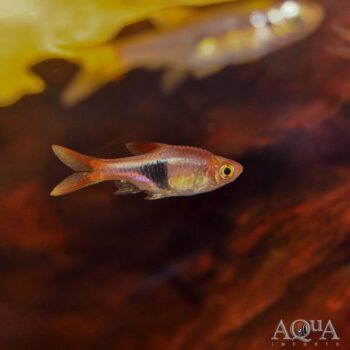
A colorful and actively schooling Rasbora found throughout parts of Southeast Asia, the Harlequin or Heteromorpha Rasbora makes an ideal addition to a small to medium sized community aquarium or planted tank. In the wild, they inhabit slow moving streams and creeks with sandy substrate and soft, acidic and often tannin-stained waters, usually among aquatic plants or fallen branches. A hardy and adaptable fish in the aquarium, they have been an aquarium hobby classic for many years and are commercially bred all over the world to supply the aquarium trade. Like most schooling rasboras, they are best kept in groups of 10 or more and will thrive with most similarly-sized peaceful tankmates.
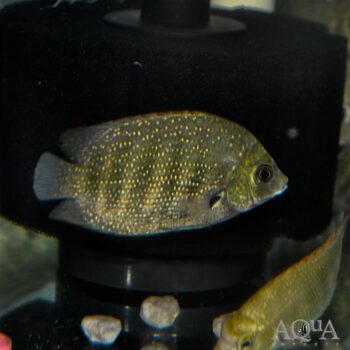
An unusual cichlid which inhabits fresh, brackish, and even occasionally pure marine habitat, the Green Chromide originates in coastal regions of Sri Lanka and Southeastern India. In the wild, it tends to be found in groups and is a social fish in the aquarium, best kept in groups of 4-6. Although they are typically found in brackish waters, they are highly adaptable and will do fine in full freshwater long term as well (slightly hard water is best). The Green Chromide is fairly peaceful for a cichlid and will usually get along with most similarly sized tankmates.

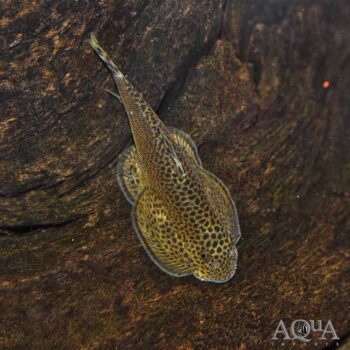
The Ceylon Algae Eater or Stone Sucker is a medium growing species found in clearwater rocky streams throughout much of Sri Lanka, where it is found in loose aggregations feeding on algae growths and vegetation among the substrate. In the aquarium, they are an active fish and useful grazer that will readily eat diatom and other forms of nuisance algae. Hardy and adaptable, they are best kept in a group of 3-5 specimens.
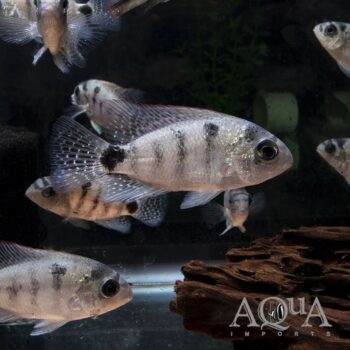
A large growing, spectacularly colored Central American Cichlid, the Argentea or Silver Cichlid is native to the Atlantic coastal drainage of Mexico, where it is typically found in riverine habitat. Like many of its close relatives in Central America, this species is threatened by habitat degradation and competition from nonnative species but has been bred commercially for the aquarium hobby for many years. In the aquarium, they are an aggressive, boisterous fish that requires plenty of open swimming space as well as lots of cover. They are sensitive to water quality so frequent large water changes should be considered essential to long term success with this species.

A large and impressive neotropical cichlid originating from lakes and rivers in Haiti and the Dominican Republic, the Haitian Cichlid or “Black Nasty” has been a favorite among cichlid hobbyists for years. With their high contrast pattern, aggressive behavior, and large adult size, they make an impressive display fish for a suitably large aquarium. Hardy and undemanding in the aquarium, they will thrive in a variety of water conditions as long as regular water changes are performed.
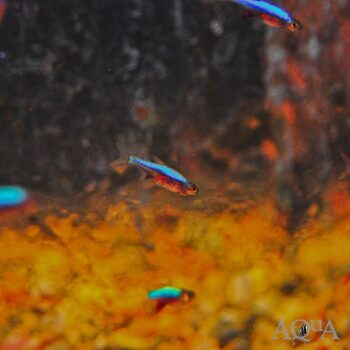
The Blue Axelrodi Rasbora or Blue Neon Rasbora (Sundadanio axelrodi ‘blue’) is a relatively recent addition to the hobby, coming from warm, acidic, peat swamps and shallow creeks throughout the island of Borneo. With their iridescent blue color and peaceful, active nature, they are extremely popular in the hobby and a favorite with planted tank hobbyists. The Blue Axelrodi Rasbora is one of three distinctive color morphs of this species encountered in the wild, with the Green and Red forms being either locality-based color variants or perhaps very closely related undescribed species. In the aquarium, they will do best when kept in warm, slightly soft water and require excellent water quality to thrive. Like most rasboras, they will do best in a group of 10 or more fish.
Product description coming soon
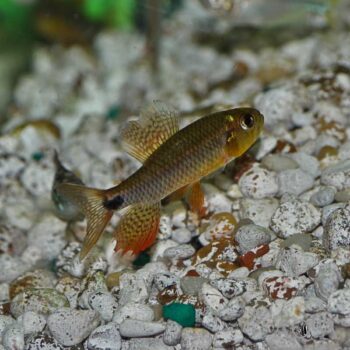
A beautiful tetra from the acidic blackwaters of the Rio Nanay in Peru, the Sailfin Tetra is a medium-sized species that makes for an impressive display fish as an adult. Both sexes have the namesake large dorsal fin, but mature males will have an extremely elongated, brightly colored fin. In the wild, they tend to be found in small groups in shallow waters, usually in areas with substantial cover in the form of leaf litter, fallen branches, or other vegetation. In the aquarium, they can be shy at first but will quickly become more bold if given plenty of cover. A great and showy fish for densely planted or hardscape tanks.
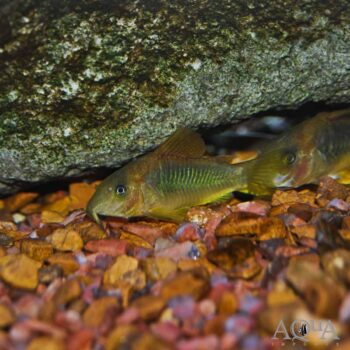
A popular and brilliantly colored species of Cory found throughout much the Meta and Orinoco basins in Colombia and Venezuela, the Green Gold Cory has been popular in the aquarium hobby for many years . Like most Corys, they are peaceful, hardy, and best kept in groups of at least 5 due to their schooling nature. This species is a medium-growing Corydoras and will do well with nearly any non-aggressive tankmates. They should be offered plenty of open swimming space and a fine sand substrate in the aquarium.
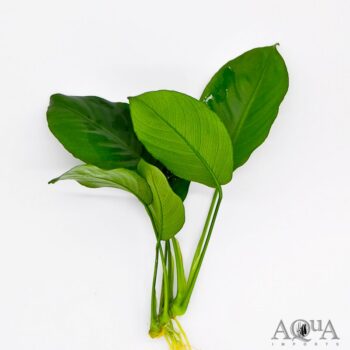
One of the many variants of Anubias in the aquarium trade, Anubias barteri is hardy and can thrive in low or high tech systems. Anubias barteri is an excellent choice to add dimension to your aquarium, often being planted in the midground or background either in the substrate or on your hardscape.
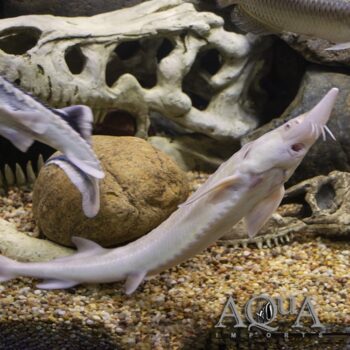
The rare and impressive albino form of the Sterlet Sturgeon (A. ruthenus) is new to the aquarium and pond hobby, having been line bred by specialized farms in Europe. Originally native to freshwater bodies of Central Asia and Eastern Europe, the Sterlet is one of the smallest growing species of sturgeon but still attains a significant adult size of up to 30″, making them more suitable for indoor or outdoor ponds than most aquariums. A hardy fish, like most sturgeon they prefer clean, well-oxygenated water and cooler temperatures and are quite comfortable with temperatures as low as the low 50’s.
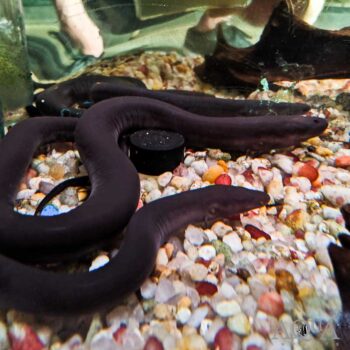
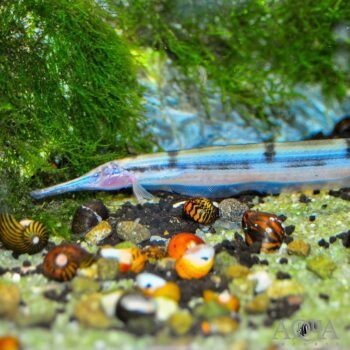
A strange elongated knifefish found through much of the middle Amazon, the Thermometer Knife is a sand dweller, spending much of its time buried in fine sand with just its head visible above the surface. They use their long, sensitive snouts and sensitivity to electrical impulses to find small prey items like worms, insect larvae, and crustaceans buried in the substrate. In the aquarium, they are hardy fish but can easily be outcompeted for food by faster or more aggressive tankmates so are best kept in a species tank or with other peaceful, slow moving species. Like all knifefish, they are primarily active at night but will occasionally emerge during the day to forage and explore. Although two species in the genus Gymnorhamphichthys are often referred to as “thermometer knife”, G. hypostomus is the more commonly seen species in the trade.
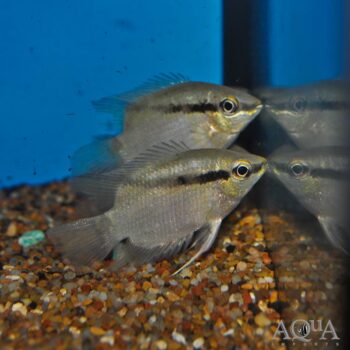
An attractive, relatively peaceful medium-growing cichlid, the Peru Festivum or Flag Cichlid is found throughout the Nanay and Itaya rivers in the Peruvian Amazon. Like most of its relatives in the genus Mesonauta, they tend to be found close to the water’s surface in slower-moving areas with lots of overhanging vegetation and often live alongside Angels. In the wild, a large amount of their diet is made up of fruit and nuts that fall into the water from overhanging trees but will accept almost any prepared or frozen foods in the aquarium.
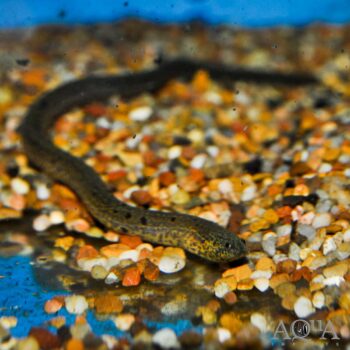
A unique South American eel species, the Spotted Swamp Eel is found in shallow waters throughout much of the Amazon basin. A slow moving and peaceful fish despite their large size, they are adapted to stagnant, oxygen poor water and can use atmospheric air by taking breaths directly from the water’s surface. In the aquarium they are easy to keep, but should be kept tightly covered at all times as they are notorious escape artists. The heavily spotted form is uncommon and more sought after than the olive or mottled form more commonly known as the Marbled Swamp Eel.
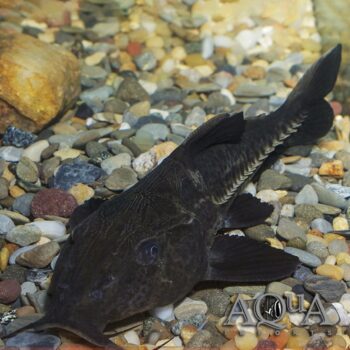
A gentle giant found throughout much of the Amazon basin, the Ripsaw or Niger Catfish is one of the larger species of South American catfish. With distinctive saw-like scales running down their sides and dark black coloration, they are an impressive show fish but due to their enormous adult size are best suited for large custom aquariums or indoor ponds. In the wild, they use their sensitive barbels to scour sandy or muddy river bottoms for food, which primarily consists of insect larvae, worms, and crustaceans. In the aquarium they will readily accept almost any sinking prepared or frozen foods.
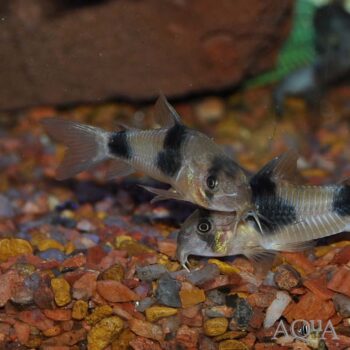
A rare and once nearly impossible to find species of Cory, the Two Saddle or Weitzmani Cory is a medium-growing species found in the Madre de Dios region of Southern Peru. Like all Corys, it is a schooling species and is best kept in groups. In the wild, they use their sensitive barbels to sift for food particles in the sand and should be kept on fine substrate in the aquarium. This species is hardy and undemanding but does prefer slightly cooler temperatures than some other tropical fish (71-76F).
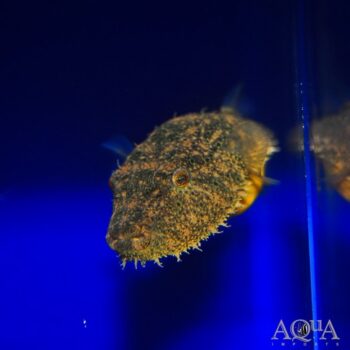
A unique ambush predator found in the Middle Mekong drainage in Thailand, Laos, and possibly Cambodia, the Hairy Puffer gets its name from the ring of small fleshy tassels that surrounds its head. In the wild, they tend to inhabit extremely fast-moving waters, including powerful rapids, but spend most of their time partially buried in substrate where they wait for prey to swim above them. In the aquarium, they are best kept in a species tank as they are likely to attack most tankmates. This species has been successfully kept in pairs and bred in an aquarium setting.
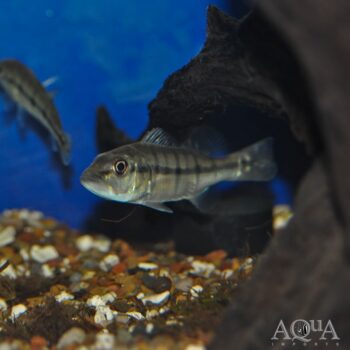
Once rare in the hobby, the Xingu Peacock Bass, as the name implies, originates from fast-flowing waters of the lower Rio Xingu in Brazil, where they are popular food and sport fish. They are now being bred commercially in both Asia and their native Brazil for the trade. Adult C. melaniae are a powerful, heavy-bodied fish which display a vivid, almost uniform yellow coloration with a small horizontal broken bar of black spotting. Like all peacock bass, Xingus require very large aquariums and should only be kept by experienced hobbyists. Xingu Peacock Bass are powerful predators, and will eat any fish that can fit in their large mouths. They are best kept in small groups with similarly sized cichlids although aggression and territoriality can become an issue as they reach maturity.
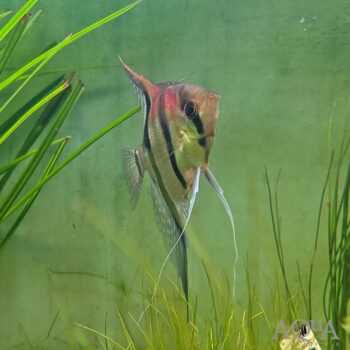
A beautiful and sought after wild type freshwater angel, the Manacapuru Red Head or Red Back Angel is found in the slow moving acidic waters close to where the Rio Negro meets the Amazon in Brazil. The Angels found in this specific locality display vivid red coloration in their face and extending up towards the dorsal fin. This coloration develops more intensely with age and will show best when kept under ideal water parameters, especially in terms of temperature (80F+) and soft, acidic water (pH 6 – 6.5). Like all other freshwater angels, they are best kept in groups when young but will form pairs as adults.
A distinctive line bred form of the common Angel (Pterophyllum scalare), the Panda Angel is a popular variant due to their striking black and white pattern. Like all angels, they do best in a large, tall, planted aquarium with plenty of cover. As a cichlid, they can be moderately aggressive towards one another (especially as adults) but generally do well in a large enough group, usually 5 or more. Most other non-cichlid tankmates will be left alone but they will hunt and eat very small fish or invertebrates. Angels are somewhat sensitive to water quality so care should be taken to avoid large fluctuations in water conditions and partial water changes should be performed regularly.
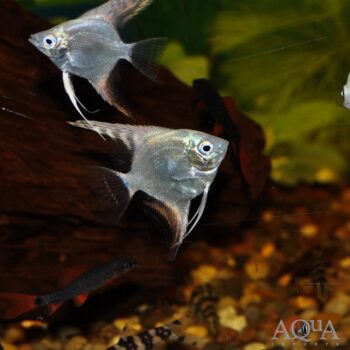
A distinctive line bred form of the common Angel (Pterophyllum scalare), the Platinum Angel is a popular variant due to their uniform bright white coloration. Like all angels, they do best in a large, tall, planted aquarium with plenty of cover. As a cichlid, they can be moderately aggressive towards one another (especially as adults) but generally do well in a large enough group, usually 5 or more. Most other non-cichlid tankmates will be left alone but they will hunt and eat very small fish or invertebrates. Angels are somewhat sensitive to water quality so care should be taken to avoid large fluctuations in water conditions and partial water changes should be performed regularly.
End of content
End of content
No products in the cart.