Showing 901–925 of 1981 resultsSorted by latest
-
$22.99
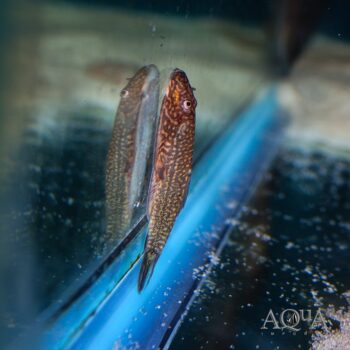
A beautifully marked hillstream loach found in fast-moving streams in Western Borneo, the Reticulated Borneo Sucker is typically found among rocks in well-oxygenated waters. In the aquarium, they are hardy fish as long as their wild habitat is replicated as closely as possible, with clean, well-aerated water and moderate to fast flow being essential to keep this species thriving long term. This species prefers slightly cooler water temperatures and soft, slightly acidic water. A grazer and opportunistic feeder, they should be given a varied diet high in algae or vegetable content. They should be kept in groups of at least 3 and will typically get along well with other hillstream loach species.
-

$6.99
Ludwigia senegalensis Care Level: Moderate Preferred Light Level: Moderate to high Placement/Size: A medium to large plant usually used for mid- or background planting Shipping Note: All our foods and aquatic plants ship FREE with any live fish order; OR food/plant only orders ship for a flat rate of $10.99
-
$74.99
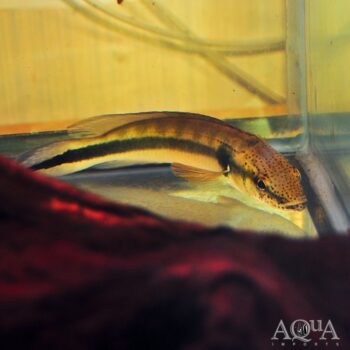
One of most widely distributed members of the genus Crenicichla, the Lugubris Pike is a large-growing, hardy and aggressive species of cichlid found in almost every major river system across the Amazon region. They are found in a wide variety of habitat types and are extremely adaptable aquarium fish provided their large adult size is taken into account. As a territorial fish by nature, they require a sufficiently large aquarium with plenty of cover. Tankmates should be large and fast-moving fish that will not be intimidated by a large, aggressive Pike Cichlid.
-
$89.99
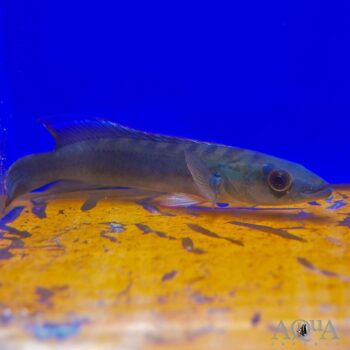
The Red Fin or Johanna Pike is a large growing species found throughout much of the Amazon basin, where it tends to inhabit soft, acidic waters. Like many large Pike Cichlids, they are territorial and can be aggressive towards tankmates so any other fish in the aquarium should be chosen with care. With their large adult size and outgoing nature, they make excellent subjects for a species tank or in a suitably large display with other South American cichlids. The uniquely colored regional variant from Colombia’s Rio Yari tend to display a vivid almost purple body coloration especially when in breeding condition.
-
$49.99 – $69.99Price range: $49.99 through $69.99
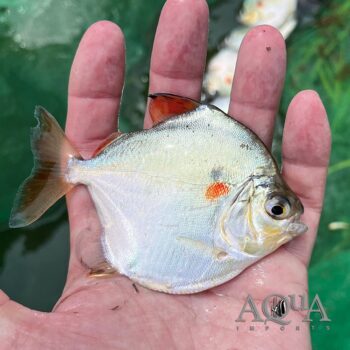
A beautifully marked species of Silver Dollar found in the Rio Nanay and surrounding tributaries in Peru, the Bleeding Heart Silver Dollar inhabits shallow, acidic water, typically near submerged driftwood or vegetation. Named for the unique red spot found in the center of their body, they also exhibit deep red fins. Care and behavior is the same as with the more well-known Red Hook Silver Dollars, and it will readily school with other similar species.
-

$59.99
An unusual and larger growing relative of the more well-known Banjo Catfish, the Eel Tail Banjo Catfish is a unique, elongated species found throughout parts of the lower Amazon, coastal Brazil and the Guyana Shield. The Eel Tail Banjo Catfish inhabits shallow, warm stretches of slow-moving waters and areas of flooded forest in the wild. Their unique body shape and variable coloration acts as highly effective camouflage in the submerged leaf litter where they are typically found. This species has a unique reproductive strategy, with females using specialized pores on the underside of their tail to carry their eggs until hatching. In the aquarium, this species is relatively hardy and undemanding, although they can be slow to find food and may be outcompeted by fast-moving or aggressive feeding tankmates.
-
$39.99
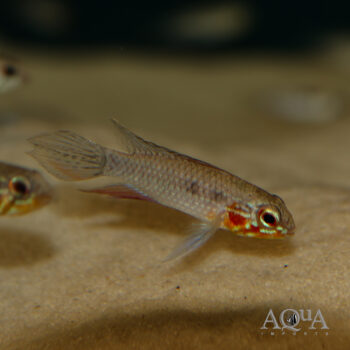
Apistogramma elizabethae or Elizabeth’s Apisto is one of the more attractively colored Dwarf Cichlids in the hobby, with mature males displaying vivid red and blue coloration and elaborate extended fins. A hardy and relatively peaceful species, they are ideal for smaller aquariums and do best with ample cover in the form of plants, driftwood, and small caves. In the wild, they inhabit warm, acidic, tannin-stained waters and an aquarium that replicates these conditions as closely as possible will result in optimal coloration and natural behavior.
Note on wild-collected Apistogramma sp.:
While we will make our best efforts to select male/female pairs for customer orders, sexing small- and medium-sized wild Apistogramma is not always exact and we do not guarantee a particular sex ratio. We recommend buying these fish in larger groups if a particular ratio of males to females is desired.
-

$89.99 – $249.99Price range: $89.99 through $249.99
A rarely seen relative of the more common L240 Galaxy or Vampire Pleco, the L294 Sucunduri Galaxy Pleco originates in the fast-flowing waters of Brazil’s Rio Sucunduri, a tributary of the Canumã which flows into the Rio Madeira. They have an irregular pattern of large, pale yellow spots against a black base color and with age they often develop into unique larger blotches. Like most plecos in the genus Leporacanthicus, the L294 are primarily carnivores, and prefer protein rich foods.
-
$24.99
A rarely seen Corydoras relative originating from several river systems across Eastern Brazil, the Peppered Aspidoras Catfish is a small growing, peaceful fish which like its close relatives is typically found in large groups. Hardy and adaptable, they are an excellent community fish that will do well with nearly any peaceful tankmates.
-
$6.99
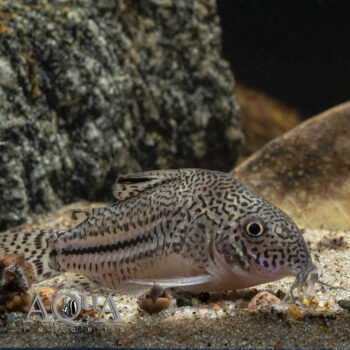
An attractively marked and longtime hobby favorite, the False or Colombian Julii Cory is a peaceful shoaling fish often found in large groups in the wild. Often misidentified in the trade as C. julii (which is only known from Brazil), this very similar species is found throughout much of the middle Amazon in Colombia and Peru. In the aquarium they are hardy and undemanding, an excellent and active bottom-dweller for most community tanks. Like most Corydoras they should be kept in groups of at least five fish.
-
$5.99
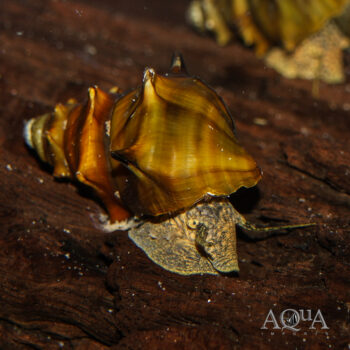
The Pagoda Snail (Brotia pagodula), is a large growing freshwater snail from the Thoungyin River in Thailand. The distinct spiny protrusions on its shell makes it a popular addition to aquariums as an algae eater and detrivore. They are not considered to be plant-safe. Maintenance of higher KH and GH levels will aid in keeping the shell in top shape.
-
$39.99
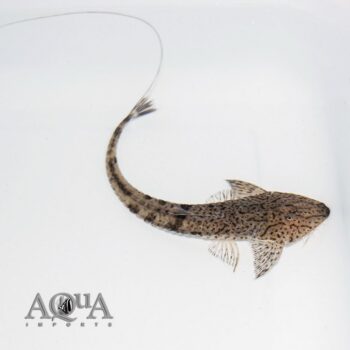
The Tiger Face Loricaria is a smaller growing member of its genus known from the middle Amazon and its tributaries around Iquitos, Peru. This still undescribed species has a unique pattern of intricate black markings on its face and extending into the body. Like most Pseudohemiodon, the Tiger Face Loricaria is typically found in shallow, sandy stretches of river with moderate to strong current, often in groups. In the aquarium, they prefer moderate to high water movement and large open areas of sand substrate. In the wild, they graze on biofilm, algae, small crustaceans and insect larvae and should be fed a varied diet with plenty of proteins such as Repashy Bottom Scratcher or Igapo Explorer gel diet or Fluval Bug Bites pleco formula. They can be territorial with each other so provide plenty of space for each individual fish.
-
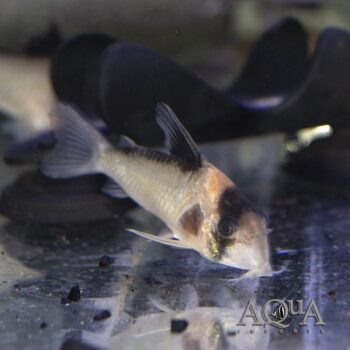
$26.99
One of several species of similarly patterned, medium-growing Corydoras from the Rio Negro basin in Brazil, the Adolfoi or Adolfo’s Cory is a peaceful shoaling fish often found in large groups in the wild. This species typically inhabits soft, acidic, tannin-stained waters in the wild and will display their best coloration under similar conditions in the aquarium. Hardy and undemanding, this species an excellent and active bottom-dweller for most community tanks. Like most Corydoras they should be kept in groups of at least five fish.
-
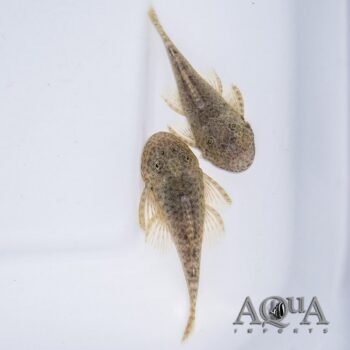
$27.99
A uniquely patterned relative of the more well known “rubber lip plecos”, the Leopard Rubber Pleco or Leopard Chaetostoma is an undescribed species known from the Rio San Alejandro in Peru. This river is an upper Amazon tributary of the Ucayali, and is characterized by moderately hard, cooler water. Like most members of the genus Chaetostoma, they prefer moderate to strong water movement and are most at home with plenty of caves and rocks to hide among. In the aquarium, they will accept most sinking herbivore foods, gel diets, and fresh veggies.
-
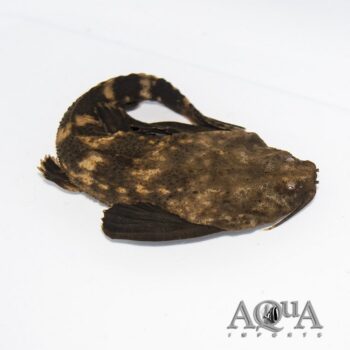
$129.99
An rare and unusual relative of the more well-known Banjo Catfish, the Tiger Tail Banjo Catfish is a unique, elongated species found throughout parts of the middle Amazon and its tributaries. The Tiger Tail Banjo Catfish inhabits shallow, warm stretches of slow-moving waters and areas of flooded forest in the wild. Their unique body shape and variable coloration acts as highly effective camouflage in the submerged leaf litter where they are typically found. They are able to change color dramatically and will play dead very convincingly when confronted or captured. In the aquarium, this species is relatively hardy and undemanding, although they can be slow to find food and may be outcompeted by fast-moving or aggressive feeding tankmates.
-
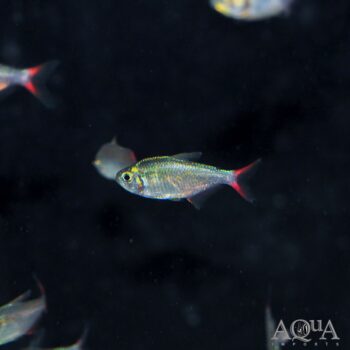
$3.99
The brilliant red tail and iridescent blue body of the Red and Blue Colombian Tetra (Hyphessobrycon columbianus) gives it its name. This larger tetra species indigenous to Colombia, inhabits natural environments characterized by dense foliage and abundant cover provided by tree roots. It is not advised to maintain these fish alongside smaller, slower-moving species in the aquarium because they are vigorous swimmers and can outcompete them.
-
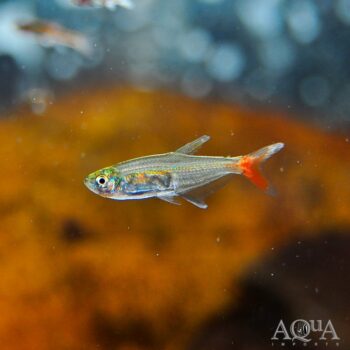
$3.99
One of the most popular and instantly recognizable freshwater aquarium fish, the Cardinal Tetra originates from the dark, acidic waters of the Negro and Orinoco River basins in Brazil, Colombia, and Venezuela. In the wild, they are often found in large aggregations of hundreds to thousands of individual fish alongside other tetra species in very shallow waters, but the species is now widely bred in captivity and will adapt to a range of conditions in the aquarium. With their vivid red and blue coloration, peaceful demeanor, and schooling behavior, the Cardinal Tetra is one of the best aquarium fish species in the hobby for beginners and experienced hobbyists alike and makes for an impressive display in a large group, Best kept in groups of at least 10 or more fish, they will get along with most other peaceful tankmates and will thrive in most setups. Darker substrate, plenty of cover, and a varied high quality diet will ensure the Cardinal Tetra displays their most vivid coloration in the aquarium.
-
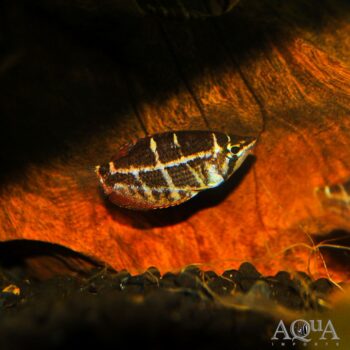
$9.99
A small, peaceful gourami species found in the blackwater peat swamps of Borneo, the Crossband Chocolate Gourami is relatively rare in the hobby due to its relatively restricted range and unique requirements. In the wild, these fish inhabit warm, highly acidic waters with pH as low as 4.0, and in the aquarium it will do best if kept in soft, slightly acidic water as well. The addition of tannins to the water by using Indian Almond Leaves or Bark is useful to help this species thrive.
-
Sale!
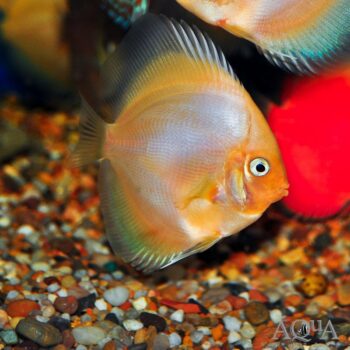
$59.99 – $79.99Price range: $59.99 through $79.99
Long considered the most beautiful of all freshwater aquarium fish, the discus remains a popular fish for serious hobbyists. Discus originate from the warm, acidic waters of Amazon tributaries in Brazil and Peru and are typically found in large groups. The many wild forms of discus have been selectively bred to create dozens of colorful strains, including the Yellow Panda, which is known for its vivid, powder blue coloration with minimal patterning. In the aquarium, regular large water changes, a protein-rich varied diet, and warm water temperatures (78-84) will create ideal conditions for these fish to thrive. Like all discus, they will do best in soft, slightly acidic water but will reward patient aquarists with spectacular coloration.
-
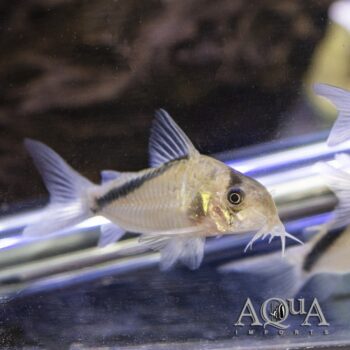
$39.99
An attractively marked, larger growing Cory Cat, the C084 Mega Metae Cory is a peaceful shoaling fish often found in in large groups in the wild. It inhabits black and clear water streams and pools throughout the Orinoco, Upper Negro, and other Amazon Tributaries across Colombia and Brazil and are relatively rare in the aquarium hobby due to the remote locales they inhabit. In the aquarium they are hardy and undemanding, an excellent and active bottom-dweller for most community tanks. Like most Corydoras they should be kept in groups of at least five fish.
-
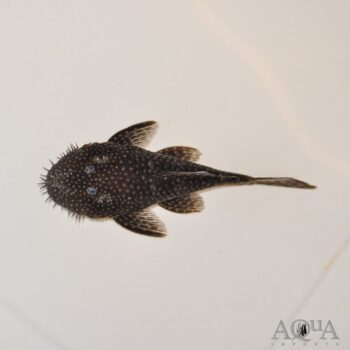
$59.99
An attractively marked Ancistrus species known from the Yari in Colombia, the Yari Super Gold Bristlenose Pleco has an intricate reticulated or honeycomb pattern that becomes more vibrant with age. Adults of this species are similar to the pleco known in the hobby as Ancistrus sp. ‘wabenmuster’. Like most bristlenose plecos in the genus Ancistrus, they are hardy and adaptable in the aquarium in addition to being excellent nuisance algae eaters. Adult males develop extensive ‘tentacles’ around the snout which gives this complex its common name. Species in this genus are generally easy to breed in the aquarium when provided with good quality food and maintained in good water quality.
-
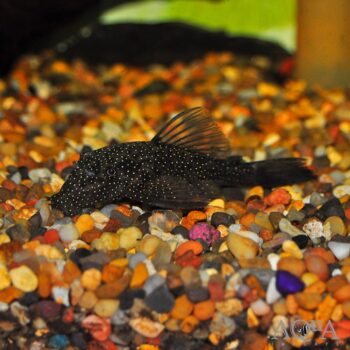
$39.99 – $69.99Price range: $39.99 through $69.99
An attractively marked Ancistrus species known from the Yari in Colombia, the Gold Dust Bristlenose Pleco has a unique flattened body shape and a dense pattern of fine vivid gold spots across its entire body. Like most bristlenose plecos in the genus Ancistrus, they are hardy and adaptable in the aquarium in addition to being excellent nuisance algae eaters. Adult males develop extensive ‘tentacles’ around the snout which gives this complex its common name. Species in this genus are generally easy to breed in the aquarium when provided with good quality food and maintained in good water quality.
-
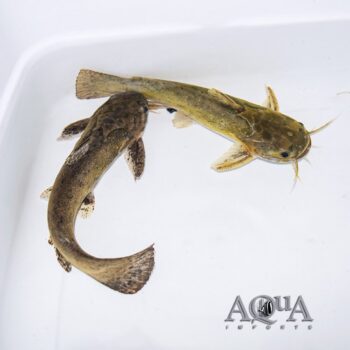
$54.99
A large growing wood catfish found throughout the middle Amazon and some Tributaries in Brazil, Colombia, and possibly Peru, the Camouflage Wood Catfish is a rarely seen import. In the wild, it spends most of its time hidden among submerged logs and tree roots, emerging at night to feed. In the aquarium they are hardy and undemanding, but seem to do best in small groups. A shy species at first, they will quickly learn to come out of hiding when fed. In the aquarium, they prefer warm, slightly acidic water and require plenty of cover in the form of driftwood or caves.
-
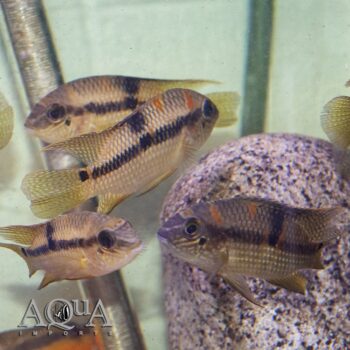
$36.99 – $48.99Price range: $36.99 through $48.99
The Super Orange Aequidens is a medium growing and vibrantly colored cichlid that was only described scientifically as recently as 2015. In the wild, it inhabits warm, blackwater shallows in the Rio Inirida and Casiquiare, the channel that connects the Rios Negro and Orinoco along the Colombia/Venezuela/Brazil border. A hardy and colorful fish, they are relatively peaceful cichlids that will do best with other similarly sized cichlids or dither species like silver dollars or other large characins. They make a great addition to a large cichlid community aquarium.
-
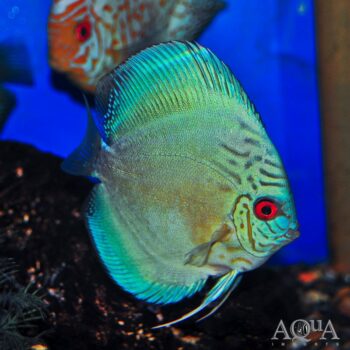
$299.99
Long considered the most beautiful of all freshwater aquarium fish, the discus remains a popular fish for serious hobbyists. Discus originate from the warm, acidic waters of Amazon tributaries in Brazil and Peru and are typically found in large groups. The many wild forms of discus have been selectively bred to create dozens of colorful strains, including the Yellow Panda, which is known for its vivid, powder blue coloration with minimal patterning. In the aquarium, regular large water changes, a protein-rich varied diet, and warm water temperatures (78-84) will create ideal conditions for these fish to thrive. Like all discus, they will do best in soft, slightly acidic water but will reward patient aquarists with spectacular coloration.
End of content
End of content