Showing 1326–1350 of 2362 resultsSorted by latest
-

$12.99 – $39.99Price range: $12.99 through $39.99
One of a number of so-called freshwater “sharks” in the Cyprinid family (no actual relation to marine sharks), the Black Shark or Black Shark Minnow is a large growing species found throughout much of Southeast Asia. A hardy and adaptable omnivore and grazer, they grow larger and more heavy bodied than most of their relatives and display an attractive uniform matte black coloration as adults. Although smaller fish typically do well in groups, they tend to become solitary as they grow and can become territorial and even extremely aggressive fish as adults, so tankmates should be chosen with caution.
-
$5.99
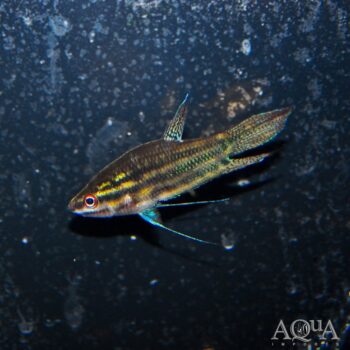
The Croaking Gourami is a colorful dwarf species of Gourami native to much of Southeast Asia, named for its ability to produce a unique croaking or purring sound, typically during spawning. The largest species in the genus Trichopsis, the Croaking Gourami is found in a wide range of shallow water habitats, from acidic blackwater swamps to quiet slow-moving clearwater creeks, usually found close to stands of aquatic plants or submerged vegetation. In the aquarium, they are an ideal resident of nano planted tanks, they are best kept in groups of 5 or more and make perfect tankmates for many of the popular species of microrasbora found throughout Southeast Asia in similar habitats.
-
$29.99 – $39.99Price range: $29.99 through $39.99
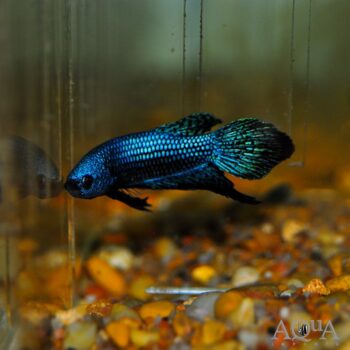
Probably the single most popular fish kept around the world, the Betta or Siamese Fighting fish has been popular in its native Thailand for centuries, and has been bred into dozens of color forms and strains. The Green Alien Plakat is a hybrid of line bred and wild Betta sp. which display beautiful vivid blue-green coloration with intricate patterns in their fins. Like most Bettas, they are incredibly hardy, with the ability to breathe air from the surface which has led to their reputation as a popular “bowl fish”. In reality, Bettas will do best in a small aquarium with a heater and some form of filtration. As their name implies, males of this species will fight and must be kept singly but females can typically be kept in groups.
-
$9.99 – $12.99Price range: $9.99 through $12.99
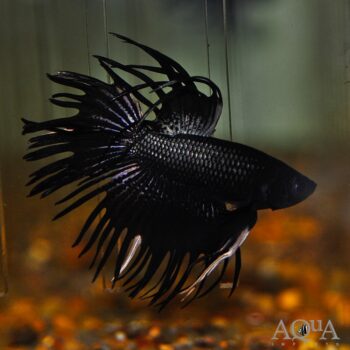
Probably the single most popular fish kept around the world, the Betta or Siamese Fighting fish has been popular in its native Thailand for centuries, and has been bred into dozens of color forms and strains. The crowntail variant is one of the more popular strains and is named for its impressive split finnage . Incredibly hardy, and with the ability to breathe air from the surface, these fish are popular “bowl fish” but really will do best in a small aquarium with a heater and some form of filtration. As their name implies, males of this species will fight and must be kept singly but females can be kept in groups.
Assortment note: Our assortment includes a variety of colors including blue, red, green, purple, and others. If you have a specific color you’d like you can request it in the order notes and we will make our best effort to select that color if possible.
-
$16.99 – $26.99Price range: $16.99 through $26.99
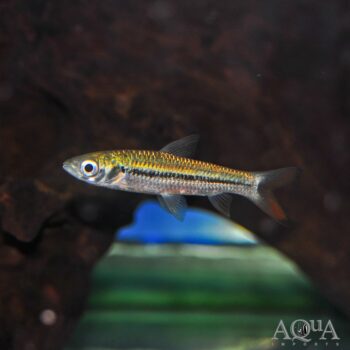
The Golden Shark or Cigar Shark is actually a large growing member of the barb family found throughout much of Southeast Asia. It is found in a wide variety of habitat types, from fast-moving rivers to still floodplains, and is considered a food fish in most of its range. In the aquarium, it is a hardy and peaceful species but due to its very large adult size is only appropriate for very large aquariums. They make good tankmates for other large Southeast Asian species like Datnoids, large catfish or predatory but otherwise peaceful species.A secure lid is important for this species as they are powerful jumpers.
-
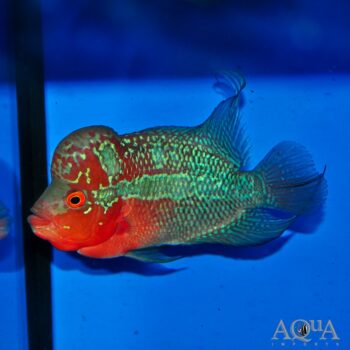
$109.99 – $199.99Price range: $109.99 through $199.99
An active, large-growing and beautifully colored cichlid, the Humphead Flowerhorn (also known as Cherry Red or Red Dragon Flowerhorn) is a man-made hybrid cichlid developed over years of line breeding. With their vivid red face, blue spangling and distinctive hump that males develop as they reach maturity, this strain of Flowerhorn is one of the first to become common in the hobby and remains a favorite today. This species is extremely aggressive towards other cichlids and tankmates should be chosen with caution. In the aquarium, they are hardy and undemanding but will display their best coloration when good water quality is maintained and when fed a varied, high quality diet.
-
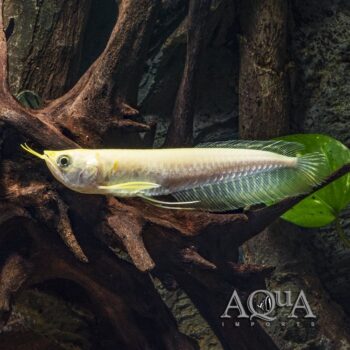
$139.99
One of the larger predatory fish found in the Amazon Basin, the Silver Arowana is part of an ancient family of fish known as the bonytongues. A highly adapted surface feeder, Arowana are usually found close to the water’s surface in heavily overgrown areas with lots of cover. They are incredible jumpers, with adults able to leap several feet out of the water, and need to be kept in securely covered aquariums. Due to their enormous adult size, the Silver Arowana is recommended only for dedicated aquarists who can accommodate these giants in either a large custom aquarium or even an indoor pond. Specimens offered for sale are acclimated to aquarium life and feeding well on frozen and prepared foods. The Gold or Golden form of silver arowana is similar to the more well-known Albino variant but has normally pigmented eyes (instead of reddish or pink in albinos).
-
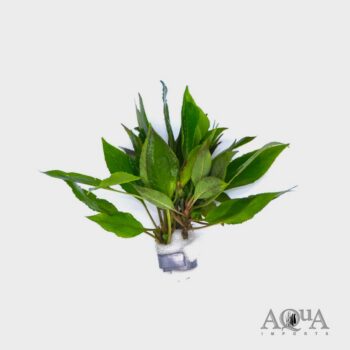
$9.99
Hygrophila corymbosa ‘Compact’ Care Level: Beginner Preferred Light Level: Low to moderate Placement/Size: A medium to large plant usually used for mid- or background planting Shipping Note: All our foods and aquatic plants ship FREE with any live fish order; OR food/plant only orders ship for a flat rate of $10.99
-
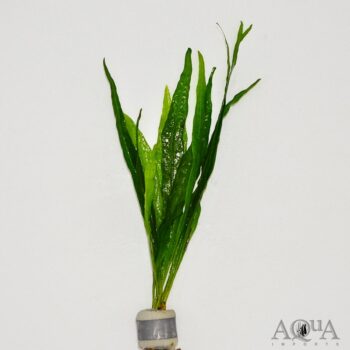
$9.99 – $11.99Price range: $9.99 through $11.99
Java Fern ‘Narrow Leaf’ (Microsorum pteropus var. ‘Narrow Leaf’) Care Level: Beginner Preferred Light Level: Low to moderate Placement/Size: A medium to large plant usually used for mid- or background planting Shipping Note: All our foods and aquatic plants ship FREE with any live fish order; OR food/plant only orders ship for a flat…
-
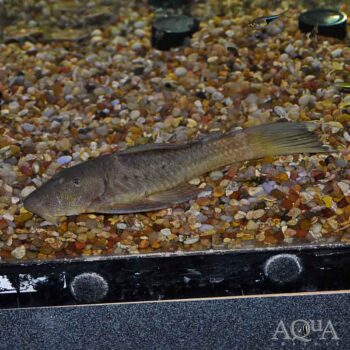
$59.99
A rarely seen and large growing relative of the more well known Rubber Pleco, the Giant Rubberlip Pleco originates from the rocky, fast-moving waters of the Rio Magdalena in Colombia. This species is hardy and adaptable, and among the most effective plecos for diatom and other algae control in larger aquariums. In the wild, they are commonly found in somewhat cooler, well-oxygenated water and should be provided plenty of cover in the aquarium. They are enthusiastic feeders and will readily accept fresh veggies, Repashy gel diet, and other prepared foods designed for herbivores and algae grazers.
-
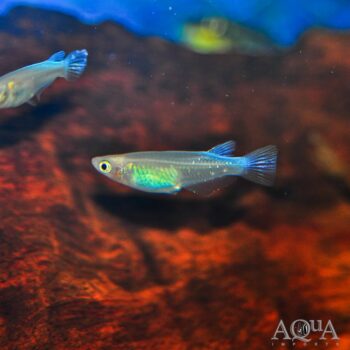
$8.99
A beautiful line bred form of the common ricefish or medaka, the Galaxy Medaka displays a unique iridescent and almost rainbow-like coloration that can change remarkably depending on the color and angle of the aquarium lighting. Like most ricefish, they are a very hardy fish and will do well in most aquariums. The species is an egg layer but will readily breed in the aquarium under good conditions.
-
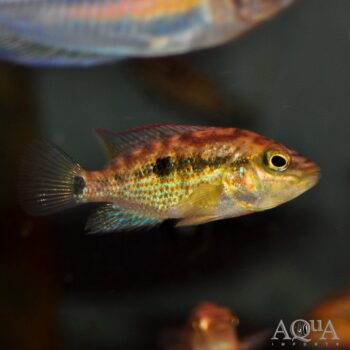
$27.99
A medium growing and aggressive Cichlid found in freshwater lakes and streams along the Southwestern Pacific Slope in Chiapas State, Mexico, and across the border in Guatemala. This species remains fairly uncommon in the hobby but popular with experienced cichlid keepers. With their pattern of vivid red spots and facial squiggles, moderate adult size, and outgoing nature, they make for impressive display fish as adults. In the aquarium they are hardy and undemanding, but tankmates should be chosen carefully due to their aggressive nature. Other medium sized Central American cichlids or hardy dither fish like Triportheus or Silver Dollar species are generally the best options.
-
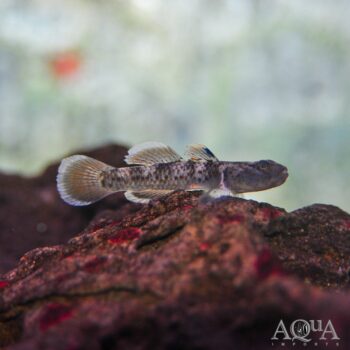
$14.99
The Ruby Spotted Goby is a smaller, beautifully marked goby typically found in fresh to light brackish waters along the coast of Taiwan and possibly mainland China. In the wild, they inhabit a variety of floodplain and estuarine habitat, but are more often found in pure freshwater conditions. In the aquarium, they adapt to a variety of conditions easily. As their name suggests, this species is distinguished by vivid ruby red spots across their entire body (more intense coloration is typically seen in males) along with deep red and blue in the dorsal and pectoral fins.
-
$74.99
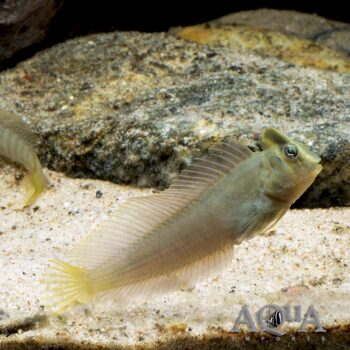
Originating from the coastal waters of Taiwan and Southern China, the Tophat Blenny is one of a very few species of Blenny that inhabits both fresh and brackish waters in the wild. A medium sized, curious fish with a unique namesake crest and a striped facial pattern, this fish inhabits a wide variety of estuarine and mangrove swamp habitat but are more often found in fresh or slightly brackish water than full marine conditions. In the aquarium, they adapt to a variety of conditions but will do best in at least low to moderate strength brackish water (5 – 15ppt salinity). They are peaceful towards most similar-sized tankmates but tend to spar with each other over territory, so be sure to provide plenty of cover and hiding places. This species is sexually dimorphic, with males typically exhibiting a larger crest and females generally being smaller and more colorful.
-
$5.99
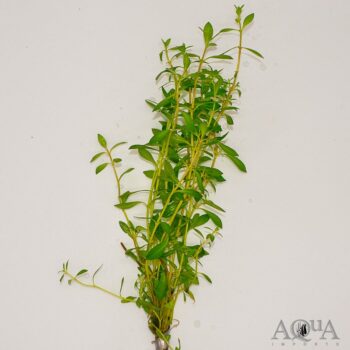
Needle Leaf Ludwigia (Ludwigia arcuata) Care Level: Moderate Preferred Light Level: Moderate to high Placement/Size: A medium to large plant usually used for mid- or background planting Shipping Note: All our foods and aquatic plants ship FREE with any live fish order; OR food/plant only orders ship for a flat rate of $10.99
-
Sale!
$3.99 Original price was: $3.99.$3.49Current price is: $3.49.
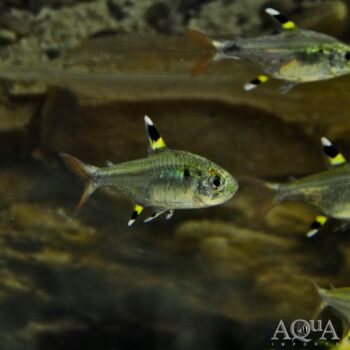
Easily recognizable for their silvery bodies and brightly colored fins, the Pristella Tetra (Pristella maxillaris) is the only member of the Pristella genus and is native to South American coastal rivers. Growing up to 2 inches, these fish are hardy, beautiful, and generally peaceful. The Pristella Tetra will thrive in a schooling group (ideally 10 or more) and can easily integrate into a freshwater community tank, growing up to 2 inches.
-
$24.99 – $29.99Price range: $24.99 through $29.99
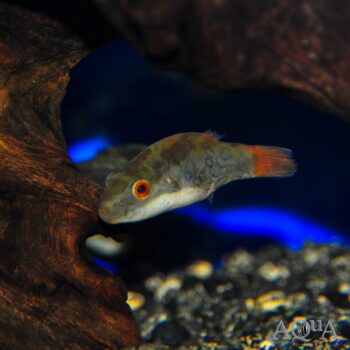
An uncommonly seen dwarf puffer species known from Borneo and Sulawesi, the Red Eye Red Tailed Puffer is a true freshwater puffer that in habits warm acidic waters. In the wild, they are often found in loose aggregations but are not necessarily as social as some other freshwater puffer species. Aquarium care should replicate their wild habitat as closely as possible, with soft water, little water movement, and plenty of cover in the form of driftwood, aquatic/floating plants, or rockwork. The addition of tannins from botanicals like Indian Almond Leaves are helpful to make this species feel at home in the aquarium. Like all freshwater puffers their specialized teeth form a beak that needs to be worn down by hard-shelled food items like freshwater snails or hard-shelled shrimp should be offered regularly in addition to other protein rich live or frozen foods. A relatively peaceful species, the Red Eye Red Tailed Puffer can be kept in groups provided plenty of space is provided, and the species is sexually dimorphic, with males displaying distinctive horizontal stripes along the body, and a more reticulated/spotted pattern shown in females.
-
$6.99 – $14.99Price range: $6.99 through $14.99
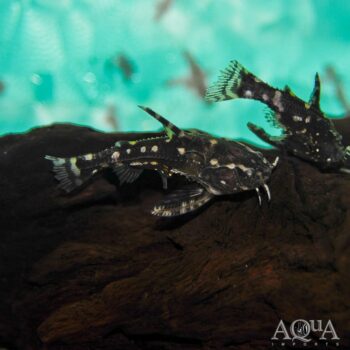
The Spotted Raphael Catfish or Spotted Talking Catfish is a widespread, medium sized Doradid Cat that has been popular in the aquarium hobby for many years. With their peaceful demeanor and attractive spotted pattern, this catfish is an ideal tankmate and “clean-up crew” fish for aquariums with medium to large fish provided plenty of cover is provided. In the wild, they are a cryptic species which tends to inhabit leaf litter and driftwood piles in warm, acidic water. A remarkably hardy and adaptable catfish, they will thrive in a wide variety of water parameters and due to their heavily armored body are rarely at risk of being bullied by larger tankmates.
-
$59.99 – $74.99Price range: $59.99 through $74.99
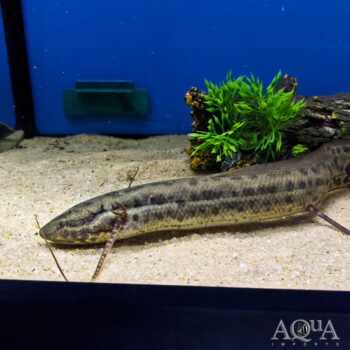
A large-growing and unusual fish found throughout much of West and Central Africa, the West African Lungfish is a member of the familiy Lepidosirenidae, an ancient lineage of fish that extends back almost 100 million years. In the wild, these fish inhabit all kinds of aquatic habitat, from shallow swamps to rivers but generally prefer calm, slow-moving waters alongside aquatic or emergent vegetation. Named for their unique, lung-like organ that allows them to breathe atmospheric air, lungfish are able to survive in water with essentially no dissolved oxygen and even long periods of drought. Juvenile lungfish feed largely on insect larvae, while adults are omnivorous, feeding on crustaceans, snails, freshwater clams, and generally anything else they can fit in their large, powerful jaws. In the aquarium, they are a hardy and adaptable species but should ideally be kept alone or with very fast-moving tankmates as they are likely to take bites out of other fish.
-
$16.99 – $19.99Price range: $16.99 through $19.99
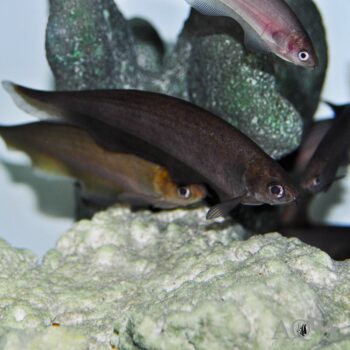
The African Black Knifefish is a widespread, medium-growing species found in freshwater streams and swamps throughout much of West and Central Africa. Unlike many other knifefish species, it is a social fish that is typically found in schools and should be kept in groups in the aquarium. The African Black Knifefish is a peaceful species and will generally get along well with all tankmates too large to be prey. In the wild, they are found in a wide variety of habitat types but show a preference for slower-moving shallow waters with plenty of cover in the form of submerged branches or aquatic vegetation.
-
Sale!
$124.99 – $379.99Price range: $124.99 through $379.99
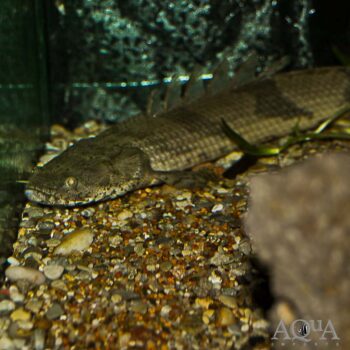
The Endlicheri Bichir or Saddled Bichir is a widespread species of Polypterus which inhabits various slow-moving shallow water habitats throughout much of West and Central Africa. It is a large growing and very heavy bodied Bichir, reaching sizes of over 30″ in the wild, and requires an appropriately large aquarium to house long term. Polypterus endlicheri is one of several so-called “lower jaw” group of Polypterus, so named for their distinctive heavy lower jaw that protrude over the upper lip. In the aquarium, they are hardy and undemanding like most bichir species, but should be kept with a tight-fitting and possibly weighted lid as they will attempt to jump if spooked or at night.
-
$99.99 – $224.99Price range: $99.99 through $224.99
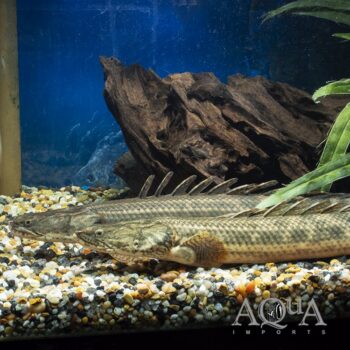
The Lapradei Bichir is a widespread species of Polypterus, found in various slow-moving shallow water habitats in much of lowland tropical West Africa. A large growing and robust species, this Bichir is capable of reaching sizes of over 30″ in the wild. Polypterus lapradei is one of several so-called “lower jaw” group of Polypterus, so named for their distinctive heavy lower jaw that protrude over the upper lip. In the aquarium, they are hardy and undemanding like most bichir species, but should be kept with a tight-fitting and possibly weighted lid as they will attempt to jump if spooked or at night.
-
$224.99
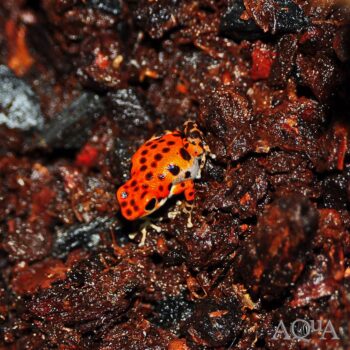
Originally from Red Frog Beach on Isla Bastimentos in Bocas del Toro, Panama, this highly coveted dart frog is recognizable for its red coloration with black spots and white belly and feet. These “Bastimentos Red Frog Beach” dart frogs (Oophaga pumilio) are captive-bred in Colorado. They generally do best in duos or trios at sexual maturity, and are an incredible example of rare biparental care in the wild.
-
$34.99 – $44.99Price range: $34.99 through $44.99
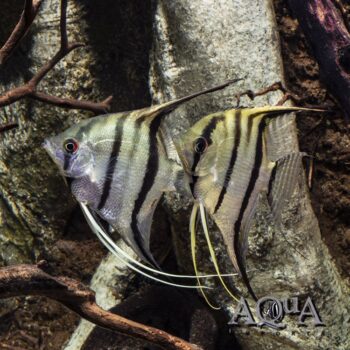
The Rio Momon Angel is a beautifully marked regional variant of the widespread Pterophyllum scalare named for its collection locale in the Middle and Upper Rio Momon, Peru. Sometimes known as the “Honey” Angel, fish collected from this locality tend to display highlights of gold or light brown along the dorsal surface, coloration which is most prominent in full grown fish. In the wild it is found in warm, acidic, heavily tannin-stained waters close to fallen branches or submerged driftwood piles. In the aquarium, they will do best when kept under similar conditions, ideally in a group of at least 5 fish and with plenty of cover. Like all freshwater angelfish, they are peaceful for a cichlid and will coexist with a wide range of tankmates provided they are not overly aggressive or small enough to become a meal.
-
$16.99
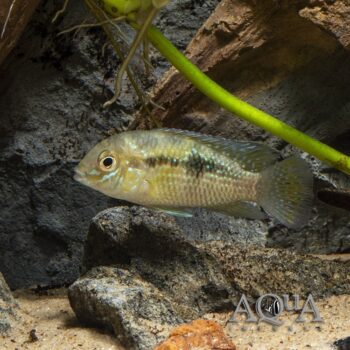
A smaller growing and attractively marked relative of the more well-known Green Terror (A. rivulatus), the Blue Spot Andinoacara or Blue Spot Acara is found in a wide range of habitats from Colombia’s Pacific Slope up to Southern Costa Rica. Although they are smaller growing and less overtly aggressive than many of their close relatives, they can still be territorial as adults and tankmates should be chosen carefully.
End of content
End of content