Showing all 6 resultsSorted by latest
-
$79.99 – $159.99Price range: $79.99 through $159.99
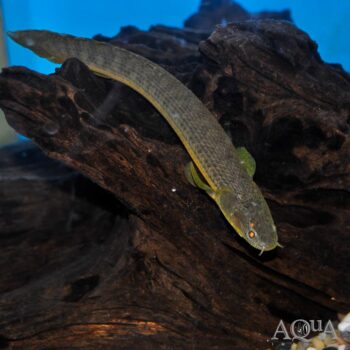
A medium sized member of the so-called “upper jaw” complex of Polypterus, the Zaire Green Bichir is a relatively new species to the trade which after examination by scientists was determined to be the true P. retropinnis (while most specimens in the trade sold as P. retropinnis before this were actually the newly described species P. mokelembebe). Originating from moderate to fast-flowing waters in the Congo River basin in Central Africa, they are hardy and undemanding like most bichir species but should be kept with a tight-fitting and possibly weighted lid as they will attempt to jump if spooked or at night.
-
$79.99 – $89.99Price range: $79.99 through $89.99
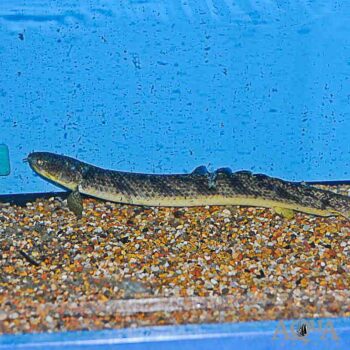
The Palmas or Shortfin Bichir was long known as a subspecies (P. palmas palmas) in the so-called “palmas complex” but recent taxonomic work has clarified the position of the 3 subspecies in that complex, with the Gold Dust Bichir (P. palmas buettikoferi) now recognized as a color form of variant of P. palmas and the Marbled Bichir (P. polli) being elevated to its own species. This species is found throughout West Africa from Senegal to Ghana with a variety of regional color forms known. It can be distinguished from the similar looking P. polli by an overall lighter pattern, spotted pectoral fins, and 7-9 dorsal fin rays. In the aquarium, they are hardy and undemanding, and with a maximum size of around 14″ they are more manageable as adults than some of their larger relatives. Like all bichir specie they should be kept with a tight-fitting and possibly weighted lid as they will attempt to jump if spooked or at night.
-
Sale!
$129.99
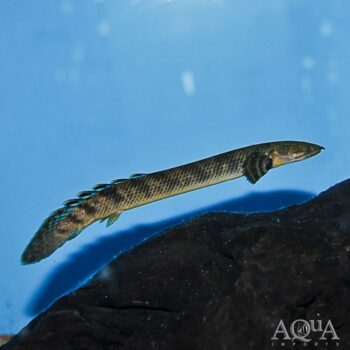
A rarely imported, medium-sized Bichir found in parts of the Congo River Basin in Central Africa, the Mokele Mbembe Bichir is one of the more recently described members of the genus (it had been previously misidentified as P. retropinnis). In the wild, it tends to inhabit acidic, blackwater creeks and rivers but is hardy and will adapt to a wide range of conditions in the aquarium. A member of the so-called “upper jaw” group of Bichirs due to the fact that their upper lip protrudes past the lower, like all Polypterus they require a tightly-covered aquarium as they will jump if given the chance.
-
$99.99 – $449.99Price range: $99.99 through $449.99
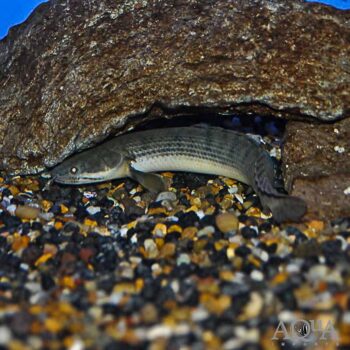
The Weeksi or Mottled Bichir is found in Central Africa, where it inhabits shallow waters in areas of low to moderate current and plenty of cover. This species is one of several so-called “upper jaw” group of Polypterus, named because their upper lip protrudes over the lower jaw. In the aquarium, they are hardy and undemanding like most bichir species, but should be kept with a tight-fitting and possibly weighted lid as they will attempt to jump if spooked or at night.
-
Sale!
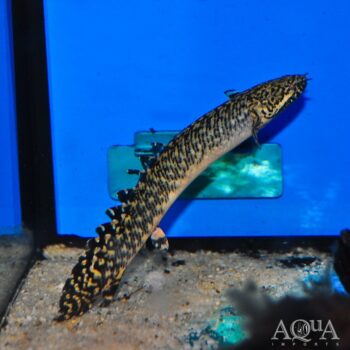
$29.99 – $199.99Price range: $29.99 through $199.99
The Ornate Bichir is a distinctively marked, large growing species found throughout parts of the Congo River Basin and surrounding areas in Central and East Africa. This species is exported from the Congo but is also commercially bred in Asia for the aquarium trade. The largest of the “upper jaw” group of bichirs, they can reach an impressive 24″ in size as adults in the wild. In the aquarium, they have been popular for many years due to their eel-like body shape, predatory nature, and unique appearance. Like all bichirs, they are hardy fish, requiring a large tank due to their adult size but are otherwise undemanding.
Size Note: Small size Ornate Bichirs are tank raised, larger sizes are wild collected
-
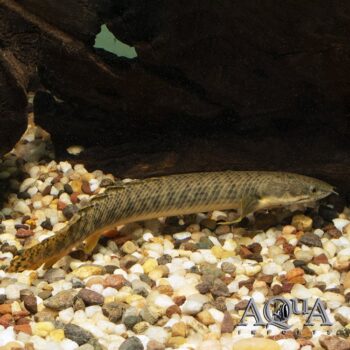
$39.99 – $79.99Price range: $39.99 through $79.99
The Marbled Bichir, Polypterus polli, is found in shallow, slow moving waters in Central Africa. Once thought to be a subspecies of P. palmas, it is now considered to be a distinct species. It is a smaller growing Bichir, only reaching 12-13″ as adults and is less predatory than some of their larger-mouthed relatives. The Marbled Bichir is one of several so-called “upper jaw” group of Polypterus, so named because their upper lip extends over the lower jaw. In the aquarium, they are hardy and undemanding like most bichir species, but should be kept with a tight-fitting and possibly weighted lid as they will attempt to jump if spooked or at night.
End of content
End of content