Showing all 2 resultsSorted by latest
-
$34.99 – $44.99Price range: $34.99 through $44.99
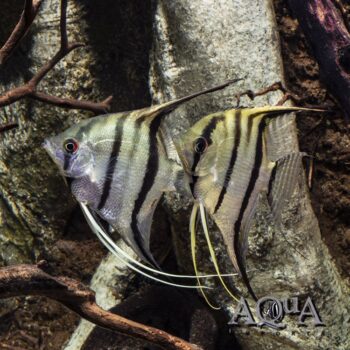
The Rio Momon Angel is a beautifully marked regional variant of the widespread Pterophyllum scalare named for its collection locale in the Middle and Upper Rio Momon, Peru. Sometimes known as the “Honey” Angel, fish collected from this locality tend to display highlights of gold or light brown along the dorsal surface, coloration which is most prominent in full grown fish. In the wild it is found in warm, acidic, heavily tannin-stained waters close to fallen branches or submerged driftwood piles. In the aquarium, they will do best when kept under similar conditions, ideally in a group of at least 5 fish and with plenty of cover. Like all freshwater angelfish, they are peaceful for a cichlid and will coexist with a wide range of tankmates provided they are not overly aggressive or small enough to become a meal.
-
$29.99 – $69.99Price range: $29.99 through $69.99
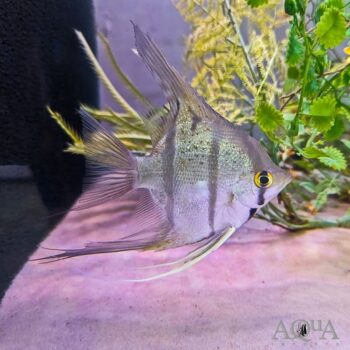
A distinctive regional variant of freshwater Angelfish, the Rio Nanay Angel is also called by the trade name “Peru Altum” although it is not the true Altum Angel (Pterophyllum altum) from the Orinoco basin of Colombia and Venezuela. This Angel is named for its collection locality, the middle Rio Nanay in Peru, a tributary of the middle Amazon. One of the characteristics that distinguishes this naturally occurring form of angel is its vivid reddish or pink spots which become more prominent with age. In the wild the Rio Nanay Angel is found in warm, acidic, heavily tannin-stained waters close to fallen branches or submerged driftwood piles. In the aquarium, they will do best when kept under similar conditions, ideally in a group of at least 5 fish and with plenty of cover. Like all freshwater angelfish, they are peaceful for a cichlid and will coexist with a wide range of tankmates provided they are not overly aggressive or small enough to become a meal.
End of content
End of content