Australian Desert Goby (Chlamydogobius eremius)
Price range: $14.99 through $16.99Product description coming soon.
Select options
This product has multiple variants. The options may be chosen on the product page

Showing all 20 resultsSorted by latest
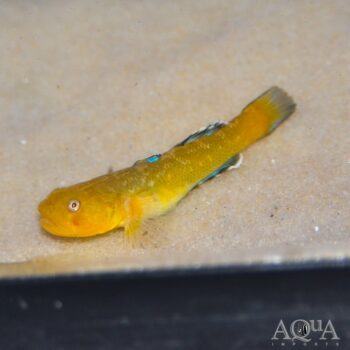
Product description coming soon.
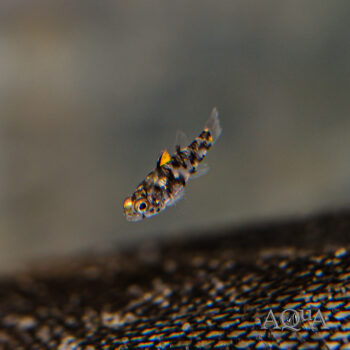
The Roux’s Pygmy Goby (Pandaka rouxi) is one of the smallest species of fish known, not obtaining a size larger than a half inch in length. These brackish nano fish can be challenging to keep, being such small micropredators, providing small enough food items is essential for their long-term care.
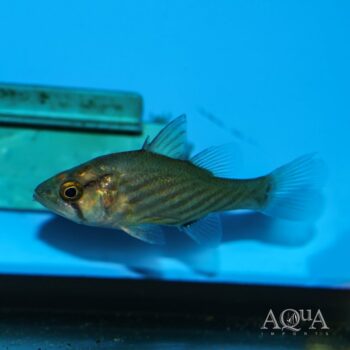
A unique species of the primarily marine Cardinalfishes (Apogonidae), the Wichmann’s Cardinalfish or Mouth Almighty Fish is native to the fresh waters of New Guinea. It is found primarily in freshwater lakes and slow moving tributaries with heavy aquatic vegetation or other cover waiting to ambush prey. In the aquarium, they are relatively hardy but may take some time to wean off live feeders.
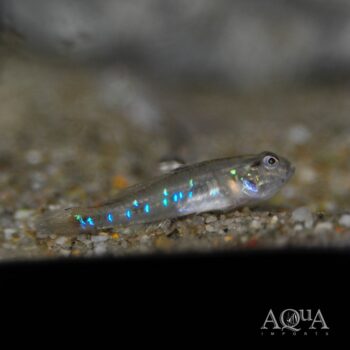
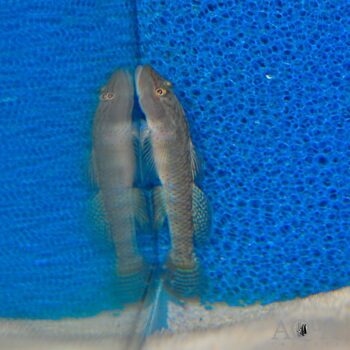
Product description coming soon.
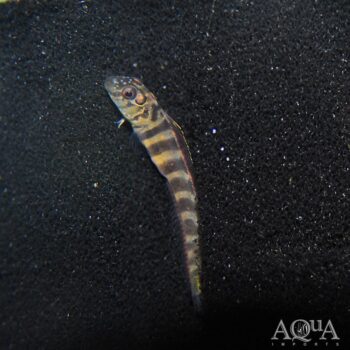
Originating from the coastal waters of Western India and Bangladesh, the Horned Blenny is one of a very few species of Blenny that inhabits fresh and brackish waters in the wild. A medium sized, active fish with an attractive, variable pattern of stripes and a notable ear shape marking, this fish inhabits a wide variety of estuarine and mangrove swamp habitat, but are more often found in fresh or slightly brackish water than full marine conditions. In the aquarium, they adapt to a variety of conditions but will do best in at least moderate strength brackish water (10-20ppt salinity). They can be hard on similar-sized tankmates and tend to spar with each other over territory, so be sure to provide plenty of cover and hiding places. They are best kept with larger fast swimming fish.
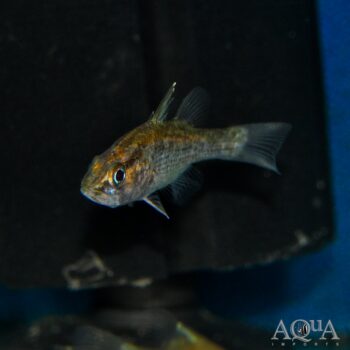
A unique species of the primarily marine Cardinalfishes (Apogonidae), the Papuan Freshwater Cardinalfish or Mouth Almighty Fish is native to the coastal waters of New Guinea and Northeastern Australia. It is found primarily in freshwater lakes and swamps with in areas with heavy aquatic vegetation or other cover waiting to ambush prey. In the aquarium, they are relatively hardy but may take some time to wean off live feeders.
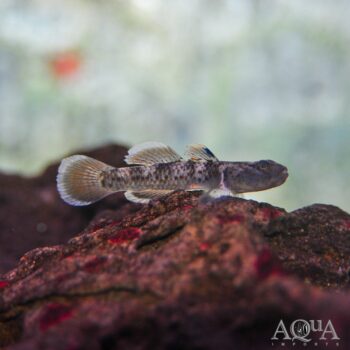
The Ruby Spotted Goby is a smaller, beautifully marked goby typically found in fresh to light brackish waters along the coast of Taiwan and possibly mainland China. In the wild, they inhabit a variety of floodplain and estuarine habitat, but are more often found in pure freshwater conditions. In the aquarium, they adapt to a variety of conditions easily. As their name suggests, this species is distinguished by vivid ruby red spots across their entire body (more intense coloration is typically seen in males) along with deep red and blue in the dorsal and pectoral fins.
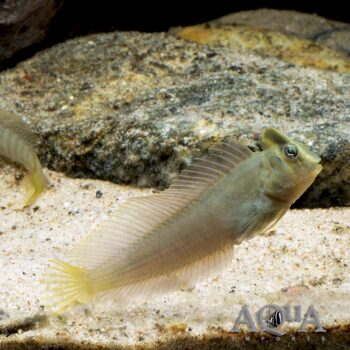
Originating from the coastal waters of Taiwan and Southern China, the Tophat Blenny is one of a very few species of Blenny that inhabits both fresh and brackish waters in the wild. A medium sized, curious fish with a unique namesake crest and a striped facial pattern, this fish inhabits a wide variety of estuarine and mangrove swamp habitat but are more often found in fresh or slightly brackish water than full marine conditions. In the aquarium, they adapt to a variety of conditions but will do best in at least low to moderate strength brackish water (5 – 15ppt salinity). They are peaceful towards most similar-sized tankmates but tend to spar with each other over territory, so be sure to provide plenty of cover and hiding places. This species is sexually dimorphic, with males typically exhibiting a larger crest and females generally being smaller and more colorful.
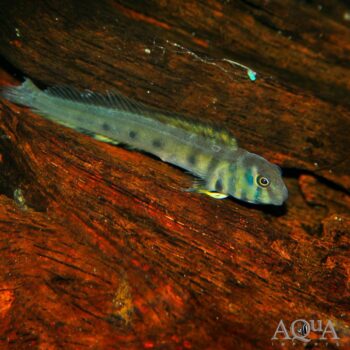
Originating from the coastal waters of Western India and Bangladesh, the Indian Zebra Blenny is one of a very few species of Blenny that inhabits fresh and brackish waters in the wild. A medium sized, active fish with an attractive, variable pattern of stripes and spots this fish inhabits a wide variety of estuarine and mangrove swamp habitat, but are more often found in fresh or slightly brackish water than full marine conditions. In the aquarium, they adapt to a variety of conditions but will do best in at least moderate strength brackish water (10-20ppt salinity). They are peaceful towards most similar-sized tankmates but tend to spar with each other over territory, so be sure to provide plenty of cover and hiding places.
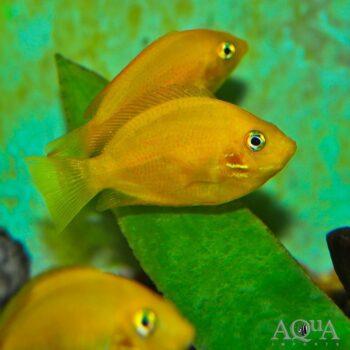
An colorful Old World Cichlid which inhabits fresh, brackish, and even occasionally pure marine habitat, the Orange Chromide originates in coastal regions of Sri Lanka and Southeastern India. In the wild, it tends to be found in groups and is a social fish in the aquarium, best kept in groups of 4-6. Although they are typically found in brackish waters, they are highly adaptable and will do fine in full freshwater long term as well (slightly hard water is best). The Orange Chromide is fairly peaceful for a cichlid and will usually get along with most similarly sized tankmates.
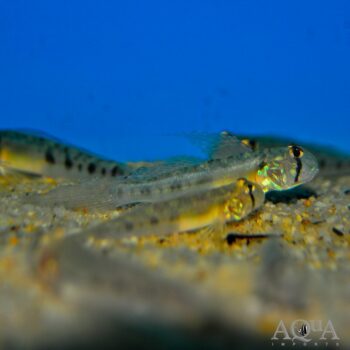
The Sharptail goby is found in fresh, brackish, and marine waters throughout much of the Indo-Pacific but is rarely seen in the hobby. A medium sized, active fish with attractive markings and elaborate fins, this fish inhabits a wide variety of estuarine and mangrove swamp habitat, but are more often found in fresh or slightly brackish water than full marine conditions. In the aquarium, they adapt to a variety of conditions but if kept in full fresh will do best in moderately hard water. They are peaceful towards most similar-sized tankmates and with each other, although adult males may spar over territory. Our Sharptail Gobies are kept in full freshwater with the addition of a small amount of aquarium salt.
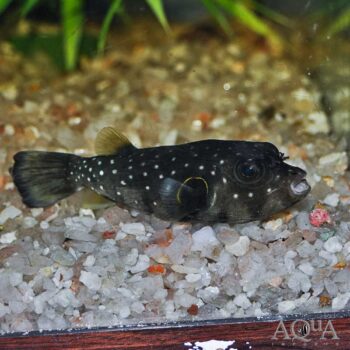
The Stars and Stripes or White Spotted Puffer is typically found in marine and reef habitats throughout the Indo Pacific, but like several other pufferfish species it occasionally ventures into brackish water areas like estuaries and lagoons and are able to adapt to salinity as low as 10ppt. These fish were collected in mangrove swamp habitat in Negombo Lagoon, Sri Lanka, where salinity ranges from 10 – 18ppt. Although they will likely migrate out to the Indian Ocean as they grow, juveniles may remain in brackish conditions for extended periods. In the aquarium, we recommend a salinity of around 15ppt with a gradual increase as the fish approach adulthood. A hardy, active, and outgoing species, they will do well with similarly sized fast moving tankmates like Scats, Monos, or Chromides.
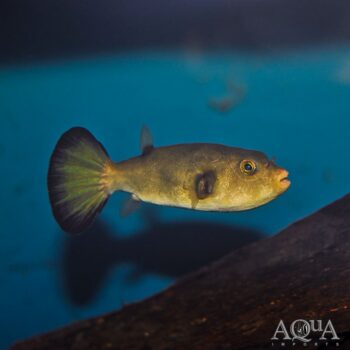
The Immaculatus or Yellow Eye Puffer is typically found in marine and reef habitats throughout the Indo Pacific, but like several other pufferfish species it occasionally ventures into brackish water areas like estuaries and lagoons and are able to adapt to salinity as low as 10ppt. These fish were collected in mangrove swamp habitat in Negombo Lagoon, Sri Lanka, where salinity ranges from 10 – 18ppt. Although they will likely migrate out to the Indian Ocean as they grow, juveniles may remain in brackish conditions for extended periods. In the aquarium, we recommend a salinity of around 15ppt with a gradual increase as the fish approach adulthood. A hardy, active, and outgoing species, they will do well with similarly sized fast moving tankmates like Scats, Monos, or Chromides.
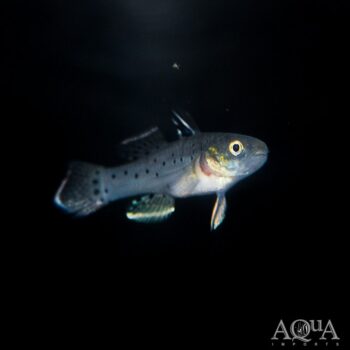
The Knight or Fan Goby is an interestingly marked, medium sized goby typically found in fresh to brackish waters throughout much of the Indo-Pacific. In the wild, they inhabit a variety of estuarine and mangrove swamp habitat, but are more often found in fresh or slightly brackish water than full marine conditions. In the aquarium, they adapt to a variety of conditions but if kept in full fresh will do best in moderately hard water. A moderately aggressive fish, dominant fish will bully other Knight Gobies unless kept in a larger group with plenty of hiding places. Knight gobies are remarkably hardy and make a unique addition to most freshwater or brackish water aquariums with similarly sized or larger tankmates.
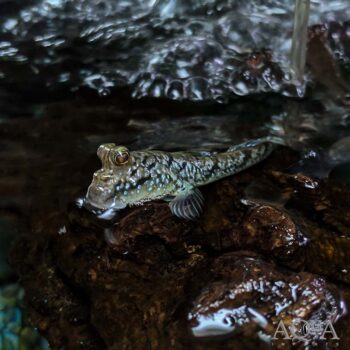
On the coasts of West Africa, the charming Atlantic Mudskipper (Periophthalmus barbarus) can be found from Senegal to Angola. These facultative oxygen-breathing creatures inhabit brackish waters close to mangrove swamps and lagoons, where they dwell on muddy substrates. These fish will eat a variety of meals in captivity, including feeder fish, frozen food, small insects, and flake food. The males’ brilliant coloring develops during the spawning season. The sexes are virtually identical outside of this season, however, males can be distinguished by their notably more territorial and aggressive behavior. The fish’s highset eyes, which give them a captivating froglike expression and 360-degree vision, are one of their most distinctive characteristics.
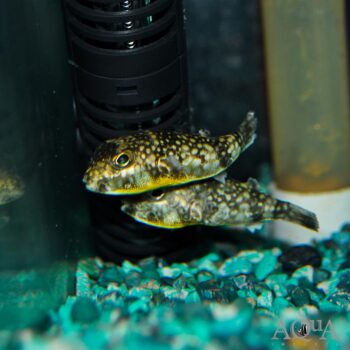
A widespread, medium growing species of puffer, the Milk Spotted Pufferfish can be found in brackish to marine coastal environments across most of the Indo-Pacific. An active swimmer, it is typically found in estuarine areas and mangrove swamps as juveniles while adults may migrate out to reefs or shallow seagrass flats. A predatory species, it uses its sharp beak to feed on crustaceans and bivalves in the wild. In the aquarium, they will accept a wide range of frozen protein-rich foods and the occasional live feeder shrimp.
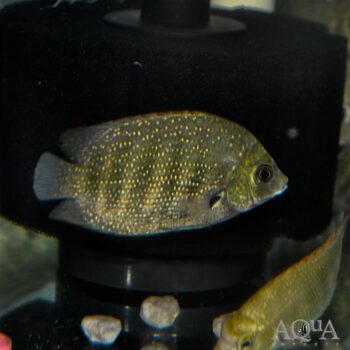
An unusual cichlid which inhabits fresh, brackish, and even occasionally pure marine habitat, the Green Chromide originates in coastal regions of Sri Lanka and Southeastern India. In the wild, it tends to be found in groups and is a social fish in the aquarium, best kept in groups of 4-6. Although they are typically found in brackish waters, they are highly adaptable and will do fine in full freshwater long term as well (slightly hard water is best). The Green Chromide is fairly peaceful for a cichlid and will usually get along with most similarly sized tankmates.
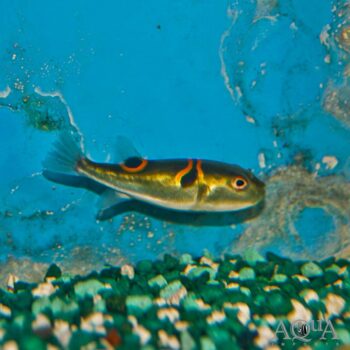
A colorful and distinctive member of the open water dwelling Takifugu puffers, the Orange Saddle or Orange Spot Fugu Puffer is found in coastal waters around China and Northern Vietnam, where it inhabits pure freshwater areas, brackish estuaries, and full strength marine waters. Generally, juvenile fish tend to be found in more freshwater habitat but the species does appear to move in and out of different salinities with ease. A fast moving and extremely active fish, they should be provided with plenty of open space in the aquarium and do best with the addition of some salt. A predator in nature, they should be given a varied diet including hard-shelled items like snails, clams, or whole shrimp to wear down their sharp beaks. As with many puffer species, they can be aggressive towards tankmates so larger, fast-moving fish are the safest option but even then should be added with caution.
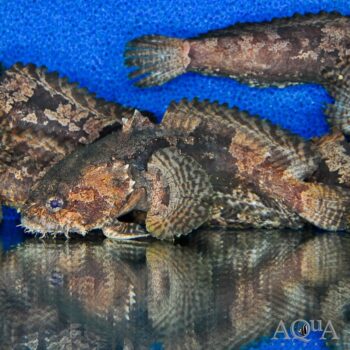
A unique predatory species, the freshwater “lionfish” is actually a species of toadfish found in marine and brackish waters throughout coastal Southeast Asia. A well-camouflaged ambush predator, they lie in wait for unsuspecting smaller fish and can take down fish nearly their own size with their surprisingly large mouths. In the aquarium, they are best kept in at least lightly brackish conditions and certainly benefit from the addition of at least some salt for long term success.
End of content
End of content
No products in the cart.