Showing 1–25 of 137 resultsSorted by latest
-

$16.99
Native to Lake Tanganika in Africa, the Dwarf Synodontis Catfish (Synodontis petricola) is also known as the Dwarf Cuckoo Catfish. The Pink Petricola Catfish is a selectively bred variant. This small catfish species grows up to 4.5 inches and is peaceful, making it an excellent choice for a community tank with similarly sized tankmates. With a light body, dark spots, and white fin margins, this fish’s elegant appearance only adds to its desirability in the hobby.
-

$14.99
Like most torrent catfish, the Yellow Wax Catfish (Amblyceps cerinum) inhabits swift-flowing freshwater streams with cobble and sand substrates. Like their name implies, they are exhibit an orange/yellow wax-like coloration. They are peaceful bottom-dwelling and sometimes called the Funny Face Catfish due to their unique facial features.
-

$12.99
The Gold Hovering Catfish (Rama chandramara) is a unique, small-growing species of Bagrid found in the rivers of India and Bangladesh. In the aquarium, they constantly hover in the water column and tend to school in large groups. With their schooling behavior and golden coloration, they make a fascinating addition to any peaceful community tank. They are best kept in groups of 10 or more.
-

$39.99
After recent revision, the genus Pareuchiloglanis has been reduced solely to the species Pareuchiloglanis poilanei, while the former congeners have been moved to other genera such as Barbeuchiloglanis, Sineuchiloglanis, and Tremeuchiloglanis. These rheophilic catfish are found only in Southern Vietnam, surprisingly at lower elevations where they thrive in warmer water temperatures than other sisorid hillstream catfish. This makes them suitable inhabitants for the tropical fish aquarium.
-

$12.99
A rarely seen catfish found throughout the lower Himalayan regions of India and Myanmar, the Indian Fighting Catfish or Longtail Catfish (Olyra longicaudata) is a small slender cat species inhabiting fast flowing clear streams. In the wild they are highly territorial for crevices and tight hiding places. Otherwise, they are peaceful towards other tank inhabitants.
-

$59.99
This parasitic Henonemus species was collected in the Rio Maranon and surrounding area of Peru. They use their strong sense of smell to seek out larger fish and feed on their scales and mucus. They are known to remove large chunks from other fish and should be housed with this in mind. Fish in this genus are also know to feed on gill filaments. In the aquarium, they do best in a large tank with plenty of open swimming space and moderate to strong current. They will accept bloodworms in captivity.
-
Sale!

$69.99 – $79.99Price range: $69.99 through $79.99
One several similar looking species of Batrochoglanis Catfish found throughout South America, Batrochoglanis sp. Venezuela is a medium growing species with a chunky body and wide mouth. In the wild, they are a cryptic ambush predator, relying on their camouflage pattern to blend into areas of leaf litter or submerged driftwood. In the aquarium, they are a hardy species that will rarely bother tankmates as long as they are too big to fit into their large mouths.
-
Sale!

$79.99 – $499.99Price range: $79.99 through $499.99
An uncommon and large growing driftwood catfish found throughout the Amazon and Orinoco Basins, the Megamouth Driftwood Catfish or Iron Head Driftwood Catfish has a distinctive heavy body, large head, and unmistakable uniform jet black coloration. In the wild, it spends most of its time hidden among submerged logs and tree roots, emerging at night to feed. In the aquarium they are hardy and undemanding, but will require plenty of cover. A shy species at first, they will quickly learn to come out of hiding when fed. In the aquarium, they prefer warm, slightly acidic water and require plenty of cover in the form of driftwood or caves.
-

$9.99 – $12.99Price range: $9.99 through $12.99
Marbled Talking Catfish (Amblydoras nauticus), also known as the Marbled Raphael Catfish, is a smaller and peaceful Doradid catfish, reaching only 3 inches in size. These fish are native to the Rio Nanay tributary of the Amazon in Peru. Famous for the sounds they make when threatened, Talking Catfish make noises by vibrating their pectoral fin spines in their sockets!
-

$19.99
The Striated Wood Catfish (Tatia cf. intermedia) is native to South America. These catfish, as their name suggests, are attracted to driftwood and take pleasure in fitting themselves into the holes and fissures found in it. These cute fish have a plump, hefty physique that makes their enigmatic nature even more hilarious. During feeding time, they will dart quickly around the tank in search of food.
-

$6.99 – $14.99Price range: $6.99 through $14.99
The Spotted Raphael Catfish or Spotted Talking Catfish is a widespread, medium sized Doradid Cat that has been popular in the aquarium hobby for many years. With their peaceful demeanor and attractive spotted pattern, this catfish is an ideal tankmate and “clean-up crew” fish for aquariums with medium to large fish provided plenty of cover is provided. In the wild, they are a cryptic species which tends to inhabit leaf litter and driftwood piles in warm, acidic water. A remarkably hardy and adaptable catfish, they will thrive in a wide variety of water parameters and due to their heavily armored body are rarely at risk of being bullied by larger tankmates.
-
Sale!

$59.99 – $79.99Price range: $59.99 through $79.99
An uncommon and large growing driftwood catfish found throughout the Amazon and Orinoco Basins, the Megamouth Driftwood Catfish or Iron Head Driftwood Catfish has a distinctive heavy body, large head, and unmistakable uniform jet black coloration. In the wild, it spends most of its time hidden among submerged logs and tree roots, emerging at night to feed. In the aquarium they are hardy and undemanding, but will require plenty of cover. A shy species at first, they will quickly learn to come out of hiding when fed. In the aquarium, they prefer warm, slightly acidic water and require plenty of cover in the form of driftwood or caves.
-
Sale!
$17.99 – $24.99Price range: $17.99 through $24.99
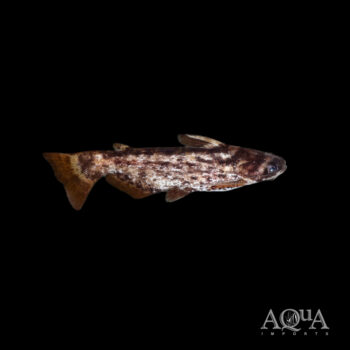
A unique, medium-growing wood catfish found in rivers along Colombia’s Pacific slope, T. fisheri is a hardy, active species ideal for most medium to large community aquariums. Like most woodcats, they are primarily nocturnal, spending most of the day hidden within driftwood or other shelter but this species does tend to spend more time out swimming in the open than other close relatives. Keeping them in a group of 3 or more will encourage more activity in the aquarium. Although they may eat small fish, they are a peaceful fish and make excellent tankmates for medium South or Central American cichlids.
-

$69.99
A driftwood catfish found throughout several river systems in Peru, the False Jaguar Catfish has a darker and generally more subtle pattern than its more well-known close relative but is very similar otherwise. In the wild, it spends most of its time hidden among submerged logs and tree roots, emerging at night to feed. In the aquarium they are hardy and undemanding, but seem to do best in small groups. A shy species at first, they will quickly learn to come out of hiding when fed. In the aquarium, they prefer warm, slightly acidic water and require plenty of cover in the form of driftwood or caves.
-

$14.99 – $29.99Price range: $14.99 through $29.99
Native to Lake Tanganika in Africa, the Dwarf Synodontis Catfish (Synodontis petricola) is also known as the Dwarf Cuckoo Catfish. This small catfish species grows up to 4.5 inches and is peaceful, making it an excellent choice for a community tank with similarly sized tankmates. With a light body, dark spots, and white fin margins, this fish’s elegant appearance only adds to its desirability in the hobby.
-

$5.99 – $14.99Price range: $5.99 through $14.99
The Striped Raphael Catfish is a widespread, medium sized Doradid Cat that has been popular in the aquarium hobby for many years. With their peaceful demeanor and attractive striped pattern, this catfish is an ideal tankmate and “clean-up crew” fish for aquariums with medium to large fish provided plenty of cover is provided. In the wild, they are a cryptic species which tends to inhabit leaf litter and driftwood piles in warm, acidic water. A remarkably hardy and adaptable catfish, they will thrive in a wide variety of water parameters and due to their heavily armored body are rarely at risk of being bullied by larger tankmates.
-

$5.99
A small and attractively patterned catfish found throughout much of the Orinoco and Meta River drainages in Colombia and Venezuela, the South American Bumblebee Catfish has been a favorite in the aquarium hobby for many years. With their small adult size, peaceful nature, and colorful black-and-tan pattern, they make an excellent addition to most medium community aquariums. Shy at first, this species will quickly learn to come out when fed and although peaceful towards most tankmates they may attempt to eat very small fish or shrimp.
-

$12.99
The Asian Stone Catfish (Hara jerdoni), also known as the Asian Stone Mini Catfish, the Anchor Catfish, or the Asian Moth Catfish, is a small member of the order Siluriformes. Growing up to only 1.25 inches, these fish are much smaller and more manageable than many other catfish found in the aquarium hobby. They are native to slow-moving freshwaters of India and Bangladesh and spend most of their time on the substrate, scavenging for food. Asian Stone Catfish prefer to be in groups and will show their most natural behavior in an environment with plenty of decor and with other members of the same species. As a small and peaceful fish, the Asian Stone Catfish is an excellent choice for many freshwater community tanks.
-

$12.99
One of the smallest species of catfish known, the Pygmy Talking Catfish is a unique and uncommonly imported Doradid found throughout the middle Amazon and Essequibo basins. In the wild, they are a cryptic species which inhabits leaf litter and driftwood piles in warm, extremely shallow water. In the aquarium, they are a hardy and unusual addition to a nano or small fish community aquarium. A scavenger and opportunistic feeder, they will accept most sinking frozen and prepared foods for very small fish.
-

$9.99 – $16.99Price range: $9.99 through $16.99
A long time favorite in the aquarium hobby, the Spotted Pictus or Angelicus Catfish is a medium sized, active, schooling catfish found throughout much of the Amazon and Orinoco basins in South America. In the wild, they usually inhabit shallow water with medium to fast-moving current and typically shoal in large groups. A hardy aquarium fish, they should be given plenty of open space for swimming and are best kept in groups of 6 or more. They make an excellent addition to larger aquariums with peaceful South or Central American Cichlids.
-

$14.99 – $22.99Price range: $14.99 through $22.99
A unique armored catfish and a favorite in the aquarium hobby for decades, the porthole catfish is found in shallow waters throughout much of the Amazon Basin. Peaceful, active, and social, they are best kept in small groups in the aquarium and will get along well with most similarly-sized tankmates.
-

$29.99 – $64.99Price range: $29.99 through $64.99
An attractively marked, medium sized catfish, the Giant Bumblebee Catfish (Pseudopimelodus bufonius), sometimes also called Jello or Jelly Cat, is found throughout the Orinoco and Amazon basins. In the wild, it tends to be found in relatively shallow, slow moving waters – often buried in leaf litter – and is an ambush predator, feeding on small fish, insects, and crustaceans. In the aquarium, they are extremely hardy and undemanding fish, feeding on most sinking prepared foods. Like most catfish, they are nocturnal, and will spend most of the day in hiding so be sure to offer several hiding places.
-

$39.99 – $359.99Price range: $39.99 through $359.99
A unique and heavily armored catfish found throughout the Amazon and its tributaries, the Irwin’s Catfish or Giant Talking Catfish is typically a gentle giant in the aquarium, ignoring most fish and being well protected from even the most aggressive tankmates. In the wild, their diet largely consists of aquatic snails, crustaceans, fruit and vegetation, but they will readily accept almost any sinking food. A great scavenger to help manage leftover food in large cichlid or predatory fish displays, they do grow to a huge adult size and will require a tank of 180 gallons at the bare minimum.
-

$9.99 – $11.99Price range: $9.99 through $11.99
The Glass Catfish or Ghost Glass Cat (Kryptopterus vitreolus) has been popular in the aquarium trade for decades due to its unique, almost completely transparent body and active behavior. In the wild, they inhabit a variety of freshwater habitats in Southeast Asia, from clear water streams to quiet swampy areas, where they are typically found in large shoals. A peaceful, schooling fish, they are relatively hardy in the aquarium but prefer slightly soft water and excellent water quality. They should be kept in groups of at least 5 fish so they can form a school. Fast moving or nippy tankmates should be avoided as they can stress out the more peaceful Glass Catfish.
-

$9.99
The Shaw’s Bee Catfish (Pseudolaguvia shawi), is native to the slow-moving freshwaters of India and Bangladesh and spend most of their time on the substrate, scavenging for food. They prefer to be in groups and will show their most natural behavior in an environment with plenty of decor and with other members of the same species. As a small and peaceful fish, the Shaw’s Bee Catfish is an excellent choice for a nano freshwater community tank.
End of content
End of content