Showing 101–125 of 195 resultsSorted by latest
-

$179.99 – $339.99Price range: $179.99 through $339.99
The Yellow Titanic Pleco is a color variant of L273 known for striking, almost metallic yellow markings. This large, robust, and aggressive species of Pseudacanthicus (commonly known as cactus plecos), originates in the rocky, clear waters of the Rio Tapajos in Brazil. Territorial and largely carnivorous by nature, this species grows to over a foot in length and requires a fairly large aquarium with lots of cover. They prefer warmer water temperatures (80F ) and will do best with moderate to strong current.
-
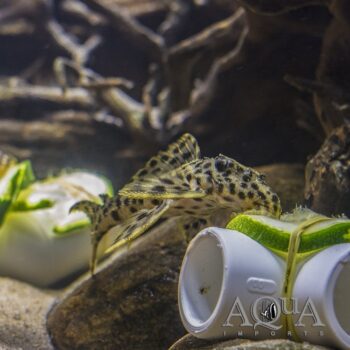
$44.99 – $169.99Price range: $44.99 through $169.99
A colorful and uniquely patterned member of the genus Leporicanthicus, the Golden Vampire Pleco is found in the warm, clear, fast-moving waters of Brazil’s Rio Xingu where it inhabits rocky shallow and even rapids. In the aquarium, it should be provided with plenty of cover and regular feedings of protein rich feeds such as Repashy gel diet or other prepared feeds. Like most plecos from this region, they will do best at high temperatures (82 – 86F), lots of water movement and a variety of rocks and caves in which to establish territories. This species is generally less aggressive than others in its genus and grows to a more manageable adult size (about 8″), but like most of its close relatives it should be provided a protein rich diet.
-
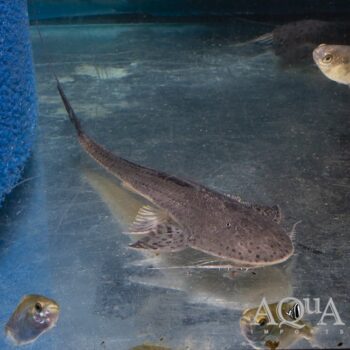
$54.99
The Spot Face or Spoon Face Loricaria is an uncommon, larger-growing Loricariid found in the Ucayali and other Western Amazon Tributaries. In the wild, it inhabits broad, sandy shallows usually in areas of moderate to strong current. In the aquarium, it requires a bed of fine sand which it will spend most of its time burrowed in and plenty of open space. Like most of its relatives it is sensitive to poor water quality so large frequent water changes, plenty of current and well-oxygenated water to thrive.
-
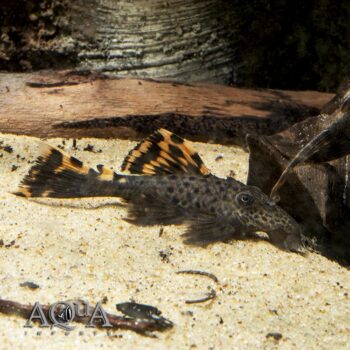
$349.99 – $399.99Price range: $349.99 through $399.99
Native to the upper Orinoco basin, the L091 ‘Dragon Fin’ Three Beacon Pleco (Leporacanthicus triactis ‘dragon fin’) is a rare color variant of L091 that displays vivid orange and black throughout the majority of the dorsal and in some cases, caudal fin. They also typically have a lighter tan body coloration with black spots compared to normal L091, which tend to be darker overall. These plecos are more carnivorous in nature and should be offered a protein rich diet such as Repashy gel insectivore diets or Fluval Bug Bites Pleco formula. Like most of their relatives in the genus Leporacanthicus, the L091 is a relatively territorial species which should be provided with plenty of hides and cover in the aquarium.
-
$34.99 – $37.99Price range: $34.99 through $37.99
A medium growing pleco, the Rhino or Alligator Pleco is named for their unique horn-like protrusions and is found throughout the middle Amazon and its tributaries like the Napo and Maranon.Typically found in and around submerged wood in turbid, white water areas, this species is hardy, adaptable, and is an excellent nuisance algae grazer for medium to large community aquariums. In the aquarium, it prefers plenty of cover and will appreciate natural driftwood for grazing. Rhino plecos should be offered a varied diet high in vegetable matter like Sera’s Catfish Chips, Fluval Bug Bites Pleco Formula or other specialty pleco foods.
-
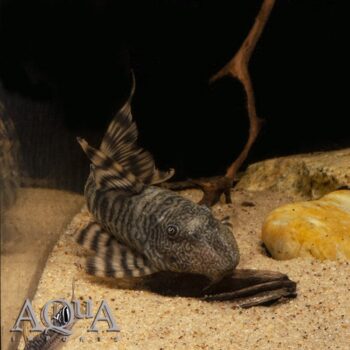
$39.99 – $59.99Price range: $39.99 through $59.99
A beautifully marked “tiger” pleco of the genus Panaqolus, the L226 displays beautiful vivid orange and black coloration when kept under optimal conditions. Originating from the soft, warm waters of the Nanay, Momon, and Amazon river around Iquitos, Peru, L226 are usually found in and around sunken trees and large patches of driftwood in the wild. Like its close relatives, it is a wood eater (xylivore) and in the aquarium should be provided with ample driftwood as well as other nutritious sinking foods like Repashy’s xylivore formula gel diet.
-
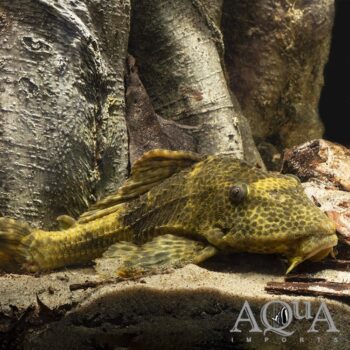
$139.99
A beautifully patterned medium sized Hypostomus from the Rio Negro in Brazil, Colombia and Venezuela, the L167 or Weberi Pleco inhabits warm, acidic blackwater areas in the wild. In the aquarium, they are hardy and adaptable, but will do best in relatively soft water and when given plenty of driftwood or other hides. They should be offered a varied diet including fresh veggies, sinking prepared foods, and gel diets like Repahy’s Soylent Green or Bottom Scratcher.
-
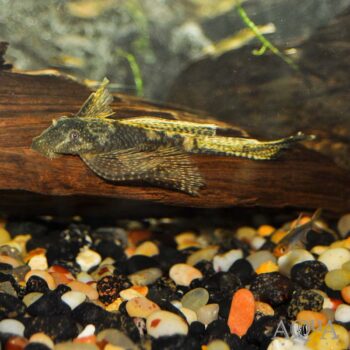
$14.99 – $59.99Price range: $14.99 through $59.99
The Common Bristlenose or Bushynose Pleco (Ancistrus sp.) is one of the more popular species of pleco in the aquarium hobby due to its hardiness, peaceful nature, and relatively small adult size. The longfin form has been selectively bred for impressive long, flowing pectoral and caudal fins. As with most species in the genus Ancistrus, these fish are ideal aquarium inhabitants, grazing on nuisance algae while still being safe with most live plants and peaceful towards tankmates.
-
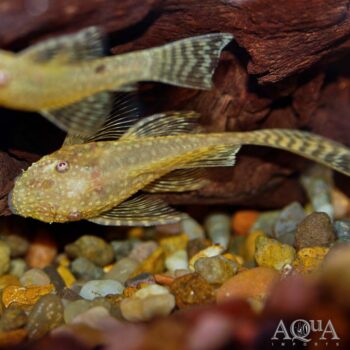
$12.99 – $17.99Price range: $12.99 through $17.99
The albino form of the Common Bristlenose or Bushynose Pleco (Ancistrus sp.) is one of the more popular species of pleco in the aquarium hobby due to its hardiness, peaceful nature, and relatively small adult size. The longfin form has been selectively bred for impressive long, flowing pectoral and caudal fins. As with most species in the genus Ancistrus, these fish are ideal aquarium inhabitants, grazing on nuisance algae while still being safe with most live plants and peaceful towards tankmates.
-
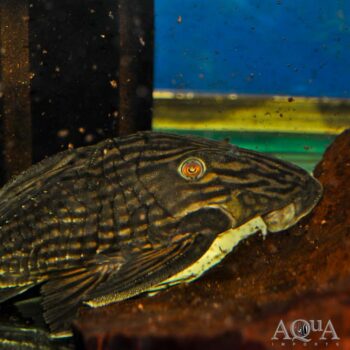
$319.99 – $379.99Price range: $319.99 through $379.99
A vibrantly colored and distinctly marked variant of Royal Pleco, the so-called Woodgrain Royal originates from the waters of the middle Tocantins river in Brazil. Its common name comes from the fine, intricate pattern of black stripes set against the tan body coloration. Like all species of Panaque, they have specialized teeth and are adapted to eat and even digest wood, although the Woodgrain Royal Pleco also feeds on submerged vegetation and invertebrates. Conditions in the aquarium should be as close to their wild habitat as possible, with moderate to strong current, warm temperatures, and excellent water quality. Due to their specialized diet, we recommend providing driftwood for grazing and feeding a specialty diet like Repashy Morning Wood.
-
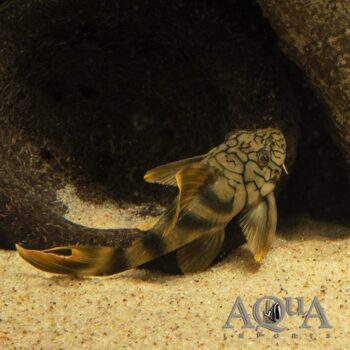
$49.99 – $69.99Price range: $49.99 through $69.99
A medium sized pleco found in the Rio Demini, a tributary of the middle Rio Negro in Brazil along with parts of Guyana, the L135 Worm Line Pleco is named for the unique scribbled line pattern that adorns its face. In the wild, they are found in warm, acidic, waters in areas of moderate current and will do best in similar conditions in the aquarium. This species may be the same as L121 which is known from nearby Guyana. A hardy and easy to care for pleco, they will do well with most tankmates but should be given plenty of cover in the form of driftwood or caves so they can establish territories. This species will eat a variety of sinking, gel, and fresh foods in the aquarium, and should be offered a varied diet high in protein.
-
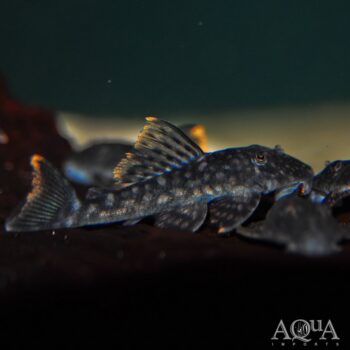
$19.99 – $24.99Price range: $19.99 through $24.99
A small growing pleco found in the Rio Ventuari and its tributaries in Venezuela, the L106 Orange Seam Pleco is named for the vibrant orange trim along the outer edges of its dorsal and caudal fins . In the wild, they are found in warm, acidic, fast-moving waters and will do best in similar conditions in the aquarium. A hardy and easy to care for pleco, they will do well with most tankmates but should be given plenty of cover in the form of driftwood or caves so they can establish territories. This species will eat a variety of sinking, gel, and fresh foods in the aquarium, and should be offered a varied diet high in protein.
-

$39.99 – $49.99Price range: $39.99 through $49.99
Product description coming soon.
-
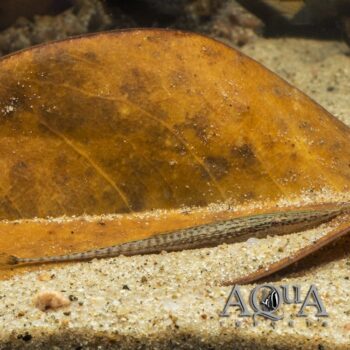
$9.99
An unusual dwarf species of whiptail cat, the Green Dwarf Farlowella or Pygmy Stick Catfish is an algae and biofilm grazing species found in parts of the Orinoco and Rio Negro in Colombia, Venezuela, and Brazil. In the wild, their twig-like appearance is effective camouflage against predators and allows them to graze on sunken tree branches and driftwood. In the aquarium, they are usually active and outgoing algae grazers that do a great job with diatoms and hair algae both on the glass and on decor. Safe for planted aquaria, they are compatible with nearly any tankmates.
-
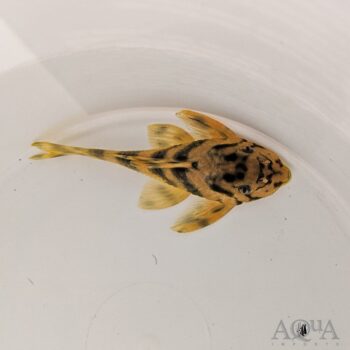
$34.99
A medium sized and attractively marked species of Peckoltia very similar in pattern to the sought after L134 Leopard Frog Pleco from Brazil, the L202 False Leopard Frog or Lineola Pleco is found in the Rio Ventuari and its tributaries in Venezuela. In the wild, they are found in warm, acidic, fast-moving waters and will do best in similar conditions in the aquarium. A hardy and easy to care for pleco, they will do well with most tankmates but should be given plenty of cover in the form of driftwood or caves so they can establish territories. False Leopard Frog Plecos will eat a variety of sinking, gel, and fresh foods in the aquarium, and should be offered a varied diet high in protein.
-
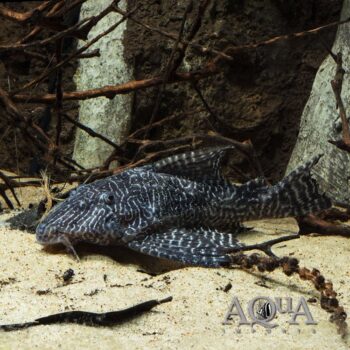
$64.99 – $249.99Price range: $64.99 through $249.99
With intricate black and white markings and its impressive lyre tail, the King Arabesque or Moa Pleco remains a sought after rarity in the aquarium hobby much less common than the unrelated L260 or Queen Arabesque. Originating in remote stretches of the Peru/Brazil border, this medium growing pleco is a wood eater like the rest of its genus but should be given a varied diet including algae- and protein-based foods. In the aquarium, they appreciate some current and plenty of driftwood for cover and for grazing.
-
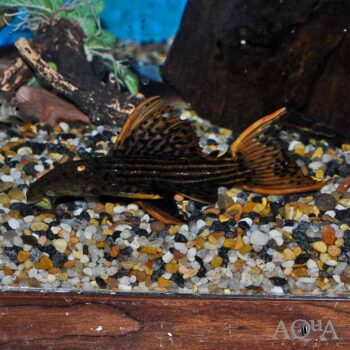
$399.99 – $574.99Price range: $399.99 through $574.99
With their high contrast pattern of jet black spotting on a dark brown body and deep red-orange fins, he Scarlet Cactus or L025 pleco is one of the most sought after species in its genus. This heavily armored pleco is found in the fast-flowing rocky waters of Brazil’s Rio Xingu where they inhabit warm, clear, soft waters typically close to rapids. Like most species in the genus Pseudacanthicus, they are almost prehistoric in appearance with prominent spines along the pectoral, dorsal, and caudal fins. The variant known as “7 pointer” is typically found in the upper Rio Xingu near Sao Felix and are so named for showing vivid red coloration on all of their fins. With an adult size of up to 18″, this species requires a large aquarium with excellent water quality and moderate to strong current.
-
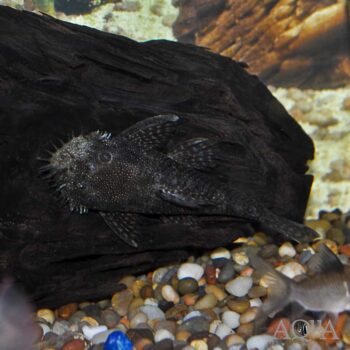
$44.99
An attractively marked species of Ancistrus found in the Tocantins and Araguaia Rivers in Southeastern Brazil, A. aguaboensis inhabits rocky, relatively fast moving waters in the wild and is distinguished from other fish in the genus by its uniform, attractive pattern of white spots. most other bristlenose plecos, they are hardy and easy to care for. This species is easy to sex and will reproduce in the aquarium, with males displaying much larger and more pronounced bristles along the nose and face.
-
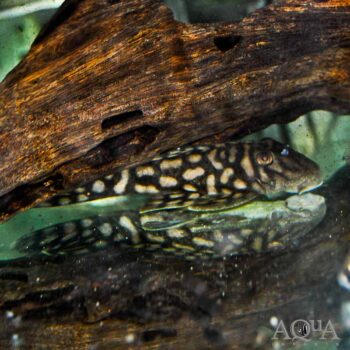
$89.99
A rare and distinctively marked pleco from Brazil’s fast-flowing Rio Xingu, the L354 or Big Spot Polka Dot Pleco inhabits rocky shallows in the wild. Like most plecos from this river, they prefer warm, soft, well-oxygenated water. In the aquarium, they should be given plenty of shelter in the form of rocks, caves, or driftwood. A peaceful species, they will typically get along well in groups.
-
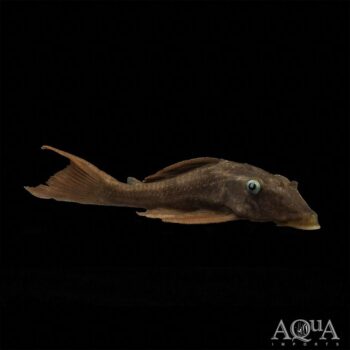
$39.99 – $229.99Price range: $39.99 through $229.99
A colorful, medium growing Hypostomus species found in the clear waters of Brazil’s Rio Tapajos, the L137 or Blue Eyed Red Fin Pleco makes an excellent aquarium fish for a large community or predator aquarium. Like most of their close relatives, they will graze on nuisance algae and should be given a varied diet including fresh vegetables and prepared foods.
-

$84.99 – $89.99Price range: $84.99 through $89.99
One of the largest and most impressive plecos, Acanthicus adonis is found throughout much of the middle Amazon and Tocantins river basins in South America. With their heavy armor, sharp spines, and huge adult size, this pleco is a true monster fish and adults are suitable only for the largest aquariums. They are slow growers however, often taking years to reach a significant size. The rare Albino form of this pleco is occasionally seen in the wild but has also been captive bred in Asia. The white spots on normal colored specimens display yellow in Albinos.
-
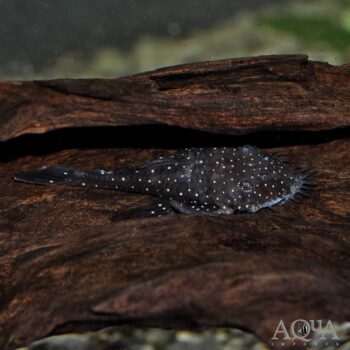
$59.99 – $69.99Price range: $59.99 through $69.99
A colorful and uniquely-shaped Loricariid, the L255 Spotted Medusa Pleco is distinguished from similar species by the bright white spots covering most of the body. Like its close relative the L034, it is found in the clear, fast-moving waters of the Xingu in Brazil where it inhabits rocky shallows. In the aquarium, they prefer clean, well-oxygenated water and ample hiding places in the form of rocks, driftwood, or caves. Although both males and females have extensive bristles on the nose, mature males are easy to distinguish as the bristles grow to a huge size. An omnivore by nature, they will readily accept veggies, sinking prepared foods like Fluval Bug Bites Pleco formula, or Repashy Gel Diet.
-
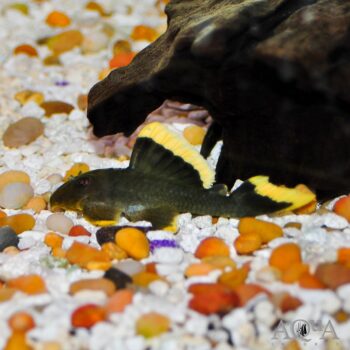
$59.99 – $84.99Price range: $59.99 through $84.99
A vibrantly marked, medium growing pleco, the Mango or Magnum Pleco (Baryancistrus chrysolomus) is found in the rocky, warm, and fast-flowing Rio Xingu in Brazil. Due to their unique wild habitat, these fish require somewhat specialized conditions to thrive in the aquarium and may not be the best choice for the average community tank. They will do best in warmer (80F), well-oxygenated water with moderate to strong current, and can be shy if kept individually – keeping multiple fish together along with ample hiding places is best. Although they will eat vegetables and algae-based foods, they also readily accept frozen bloodworms and carnivore diets like Repashy insectivore gel diet.
-
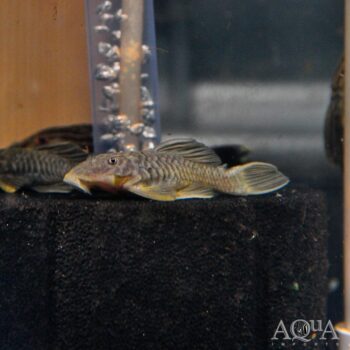
$29.99 – $44.99Price range: $29.99 through $44.99
A unique, heavily armored pleco from the Tocantins river basin in Eastern Brazil, the L056 or Chubby Pleco gets its name from its unusually wide, flattened body shape. In the wild, they are found in areas of moderate to fast water movement and typically live in rocky areas. They are a hardy and undemanding pleco in the aquarium but should be offered plenty of cover and excellent water quality should be maintained through frequent large water changes. An omnivore, they will accept most sinking foods and fresh veggies but be sure to offer some protein rich options like Repashy gel diet or Fluval Bug Bites Pleco Formula regularly.
-
$299.99 – $399.99Price range: $299.99 through $399.99
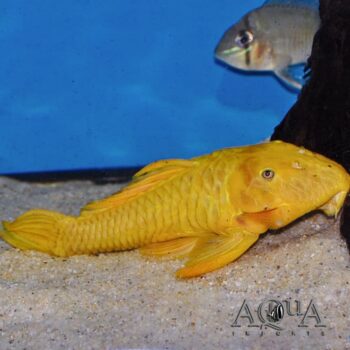
A unique, heavily armored pleco from the Tocantins river basin in Eastern Brazil, the Rubber or Chubby Pleco gets its name from its unusually wide, flattened body shape. In the wild, they are found in areas of moderate to fast water movement and typically live in rocky areas. The species is normally a grey color in nature but certain rare and very sought after specimens show a striking all yellow or partially yellow and black coloration. They are a hardy and undemanding pleco in the aquarium but should be offered plenty of cover and excellent water quality should be maintained through frequent large water changes. An omnivore, they will accept most sinking foods and fresh veggies but be sure to offer some protein rich options like Repashy gel diet or Fluval Bug Bites Pleco Formula regularly.
End of content
End of content