Showing 101–117 of 117 resultsSorted by latest
-
$39.99 – $69.99Price range: $39.99 through $69.99
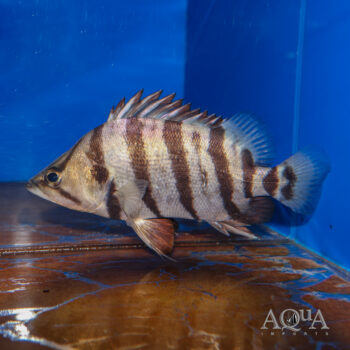
The most widespread species in the genus Datnioides, the Silver Datnoid is found along the coastline of much of Southeast Asia and extending to the Eastern coast of India. It inhabits a wide variety of habitat including slightly brackish waters in some parts of its range. Like its relatives, it is a powerful predator adapted to feed almost entirely on smaller fish and invertebrates. The Silver Datnoid is the hardiest of the Datnoids in the aquarium and will typically thrive under a wide range of conditions. It is also slightly more aggressive than its relatives so choose tankmates with care.
-
$14.99
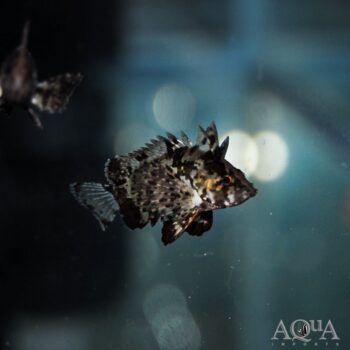
A fascinating dwarf waspfish found in slightly brackish to marine waters in the Indo-Pacific, the Leaf Goblinfish (also known as Indian Butterfly Goby) only grows to an adult size of about 4″. In the wild, they are a cryptic species typically found in shallow water among vegetation or other cover. They are an ambush predator, waiting for insect larvae, small crustaceans, and tiny fish. In the aquarium, they can be challenging to wean off live foods at first but will usually accept frozen foods like brine, mysis, and bloodworms over time. An adaptable fish usually found in intertidal zones, they can handle a wide range of salinity up to full strength marine but will do well at the lower range of brackish water salinities as well.
-

$5.99
A less common and strikingly patterned relative of the popular Siamese Algae Eater, C. reticulatus originates from the streams and rivers of Southeast Asia but is now bred commercially for the aquarium trade. Like their close relatives, the Reticulated Siamese Algae Eater is an active, medium-sized social fish that feeds on a variety of common nuisance algae species in the aquarium. They will graze on diatom algae films on glass and decor as well as the difficult to eradicate black hair or black beard algae. Best kept in groups of 6 or more, they are live plant safe and hardy additions to most medium to large community aquariums.
-
$4.99 – $5.99Price range: $4.99 through $5.99
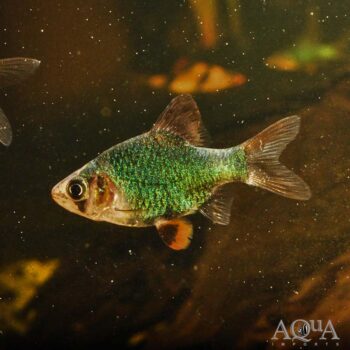
A classic aquarium fish and one of the most popular species in the hobby, the Tiger Barb is an attractive, fast-moving schooling fish best kept in groups of 5 or more. They can be considered a semi-aggressive fish but typically if kept in a large enough group they will ignore other tankmates. A hardy and adaptable fish, the Tiger Barb makes an excellent addition to most medium to large community aquariums and a great dither fish for many Central and South American Cichlids. The “Green” variant is a selectively bred strain that displays a unique green body coloration instead of the typical black stripes.
-
$4.99
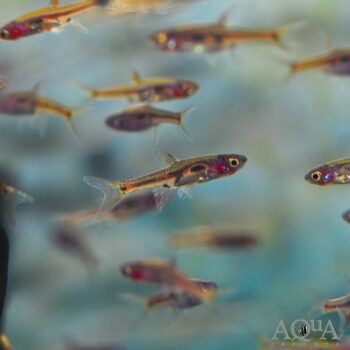
An ideal fish for nano aquariums, the Phoenix Rasbora or Red Micro Rasbora inhabits warm, acidic, shallow waters throughout the island of Borneo. With their vibrant coloration and peaceful, active nature, they are extremely popular in the hobby and a favorite with planted tank hobbyists. Typically found in true blackwater swamps and creeks, this dwarf rasbora will do best and display optimal color and behavior when provided with an environment similar to their wild habitat, and will benefit from the addition of some tannins from Catappa Leaves or similar botanicals. This species is very similar to its close relative the Chili or Mosquito Rasbora but can be distinguished by less uniform red coloration and a broken (vs. continuous) horizontal black stripe extending across the body. In the aquarium, they are hardy and will generally thrive under a wide range of conditions but will exhibit their best color if kept in warm, slightly soft water and in groups of at least 10. With their small adult size, larger or fast moving tankmates should be avoided but they will thrive with most small peaceful fish and invertebrates.
-

$4.99
The Ceylon Algae Eater or Stone Sucker is a medium growing species found in clearwater rocky streams throughout much of Sri Lanka, where it is found in loose aggregations feeding on algae growths and vegetation among the substrate. In the aquarium, they are an active fish and useful grazer that will readily eat diatom and other forms of nuisance algae. Hardy and adaptable, they are best kept in a group of 3-5 specimens.
-
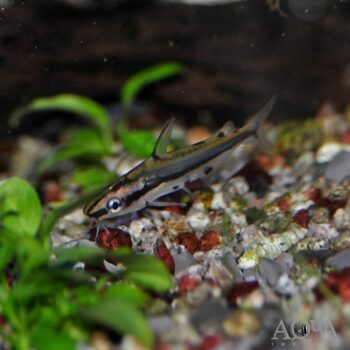
$8.99
A unique schooling catfish found in the acidic blackwater streams of Borneo and Sumatra in Indonesia, the Shadow Catfish is a small-growing and peaceful species well suited for aquarium life. They prefer slightly soft water but are otherwise hardy and undemanding in the aquarium. Best kept in groups of 6 or more, these catfish will readily accept most prepared foods and are peaceful towards all tankmates.
-
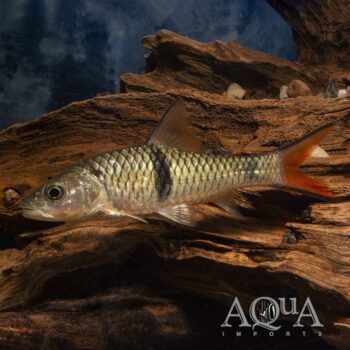
$39.99 – $44.99Price range: $39.99 through $44.99
A large growing schooling fish found in clear, fast-moving waters in Thailand and Myanmar, the Hampala or Sidebar barb (Hampala macrolepidota) is a predatory but relatively peaceful barb. In the aquarium, they make an excellent dither fish for other large predatory fish and will do best with some water movement and frequent large water changes. Like many larger barbs, they can be skittish and first and will do best in a group of 3-5 fish. Some cover in the form of driftwood or artificial plants (live ones will be eaten) will help them settle into the aquarium environment.
-
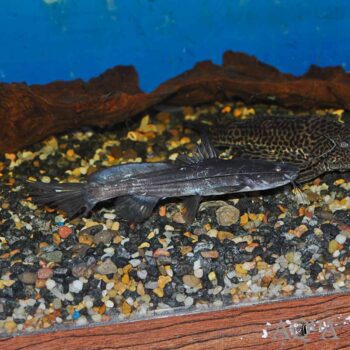
$46.99
A rarely seen catfish found in parts of Borneo, Indonesia, very little is known about the Dragon or Rooster Catfish in the wild. In the aquarium, it appears to be hardy and undemanding, and with a maximum size of about 8″ it is very suitable for medium to large tanks. With their unmistakable long, flowing tail and active nature they make for a unique and showy addition to any medium/large fish community.
-
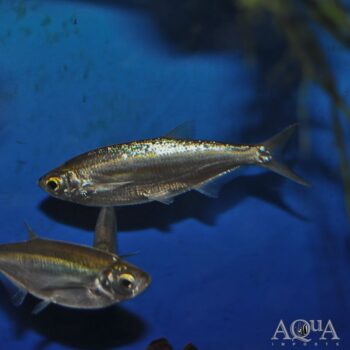
$24.99
A unique and rarely seen Cyprinid found throughout much of Southeast Asia’s freshwater rivers and lakes, Paralaubuca harmandi is so poorly known in the aquarium hobby that it does not yet have a common name. A loosely schooling fish usually found in shallow water areas, they are fast swimmers and extremely active in the aquarium – like most schooling species best kept in a group of 3-5 or more. With their size and active nature, they make excellent dither fish for aquariums with larger cichlids or other predatory species.
-
$39.99 – $99.99Price range: $39.99 through $99.99
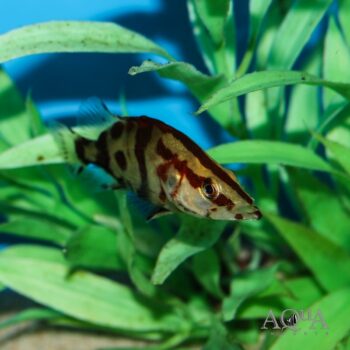
A rare and colorful predatory species from the rivers and lakes of Central China, the Red Perch or Mandarin Perch sports beautiful red and yellow markings and an intricate pattern that becomes more pronounced with age. Care in the aquarium is similar to that of the datnoids or tigerfish, but Chinese Red Perch are able to tolerate much cooler temperatures as they originate in temperate areas.
-
$9.99 – $19.99Price range: $9.99 through $19.99
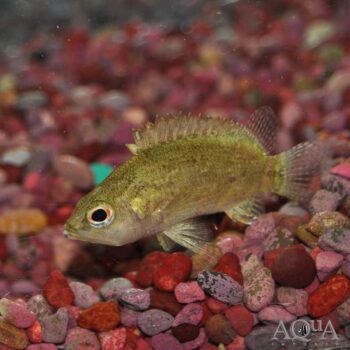
A cryptic and unusual ambush predator, the Asian Leaf Fish or Nandus nandus is found throughout much of South and Southeast Asia, especially in and around coastal river systems where they inhabit both fresh and slightly brackish waters. Their body shape, coloration, and behavior allow them to mimic dead leaves and get close to unsuspecting prey items like small fish. In the aquarium, they are generally peaceful with tankmates too large to be eaten but due to their shy nature should not be kept with fast-moving or aggressive species.
-
$44.99 – $299.99Price range: $44.99 through $299.99
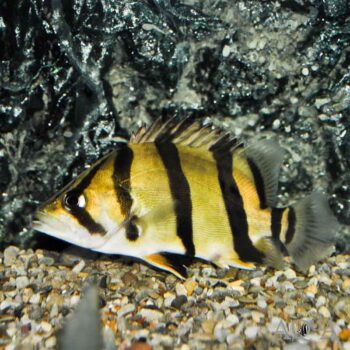
The beautifully marked Thinbar Datnoid or NTT (Northern Thailand Tiger) is one of the more sought after species of the genus Datnioides in the hobby. Found in the Mekong basin in Northeastern Thailand, Laos, and parts of Cambodia, this species generally adapts well to the aquarium and makes for an impressive display specimen. They prefer clear, well-oxygenated water and are sensitive to water quality, so regular water changes are important to keep them thriving.
-
$499.99
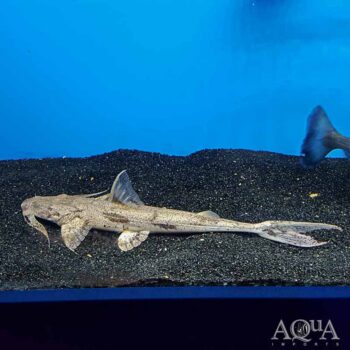
A rare species of the famed Goonch Catfish of Southeast and South Asia, the Crocodile Goonch Catfish (Bagarius suchus) is found in the rocky rapids of the middle Mekong in Thailand, Laos, and parts of Cambodia. With their elongated body and broad sensory barbels, these catfish are highly adapted to life in the rocky, fast-moving waters they inhabit in the wild. The Crocodile Goonch is among the smaller members of its genus but still reaches a substantial size, approaching 2 feet as adults. In the aquarium, they should be kept in similar conditions to the wild, with clean, well-oxygenated water and strong current. Rocks and other hides should be provided and they will generally do best with low or subdued lighting.
-
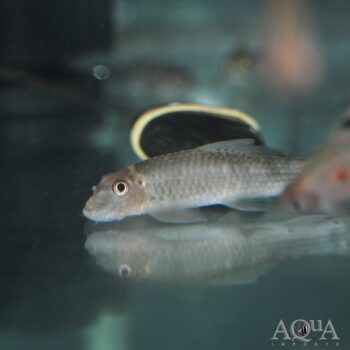
$21.99
A unique grazing species from the Salween River along the Thai-Myanmar border, the Humphead Garra is found in rocky, fast-flowing habitat and makes a unique and active grazer for a larger aquarium.
-
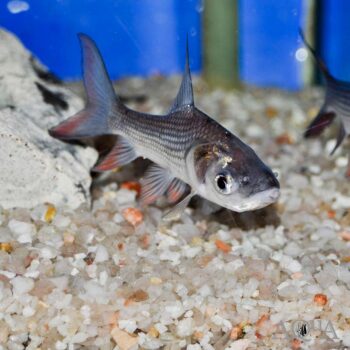
$49.99 – $99.99Price range: $49.99 through $99.99
One of the largest fish found in Southeast Asia’s Mekong Basin, the Siamese Giant Carp is an important food fish through much of its range. Considered to be one of the largest freshwater fish in the world, it is aquacultured in large farms in Thailand primarily for the food fish trade. Due to its immense size and active swimming habits, this fish requires a truly enormous custom aquarium or indoor pond. It is relatively peaceful however and will coexist well with other large tankmates.
-
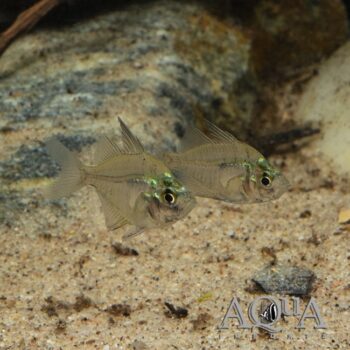
$3.99
One of several small Glassfish or Glass Perch found throughout the waters of Southeast Asia, the Highfin or Indian Glassfish inhabits a wide range of habitat types throughout its range, from coastal drainages to inland peat swamps. Hardy and adaptable, they make a unique addition to small to medium sized community aquariums due to their translucent appearance and peaceful, schooling nature. Contrary to some outdated information about this species, they are largely found in pure freshwater habitat and do not require nor prefer brackish conditions. In the aquarium, they are best kept in groups of 5 or more with other small, peaceful tankmates.
End of content
End of content